Choosing a fence material for a commercial property is a decision about security objective first and appearance second. Commercial fence material selection in Orland Park, IL works best when it starts from what the perimeter must actually do: control vehicle and pedestrian access, preserve sightlines, screen a service yard, or signal a secure boundary to customers and staff.
Define the Security Objective Before the Material
Two commercial properties of similar size can need completely different fencing. A retail center that must stay visible from the street has different requirements than a service yard that needs to hide equipment from view. Before comparing chain link, steel, aluminum, wrought iron, vinyl or wood, confirm what the perimeter is expected to deliver:
- Perimeter visibility — whether staff, cameras or passing traffic need an unobstructed view of the property line.
- Threat level — the realistic risk of vehicle intrusion, after-hours trespass or equipment theft.
- Screening needs — how much of the interior operation should stay out of public view.
- Maintenance tolerance — how much repainting, repair or panel replacement the property team can absorb.
- Lifecycle expectation — how long the fence must perform before major replacement.
How Each Objective Narrows the Choice
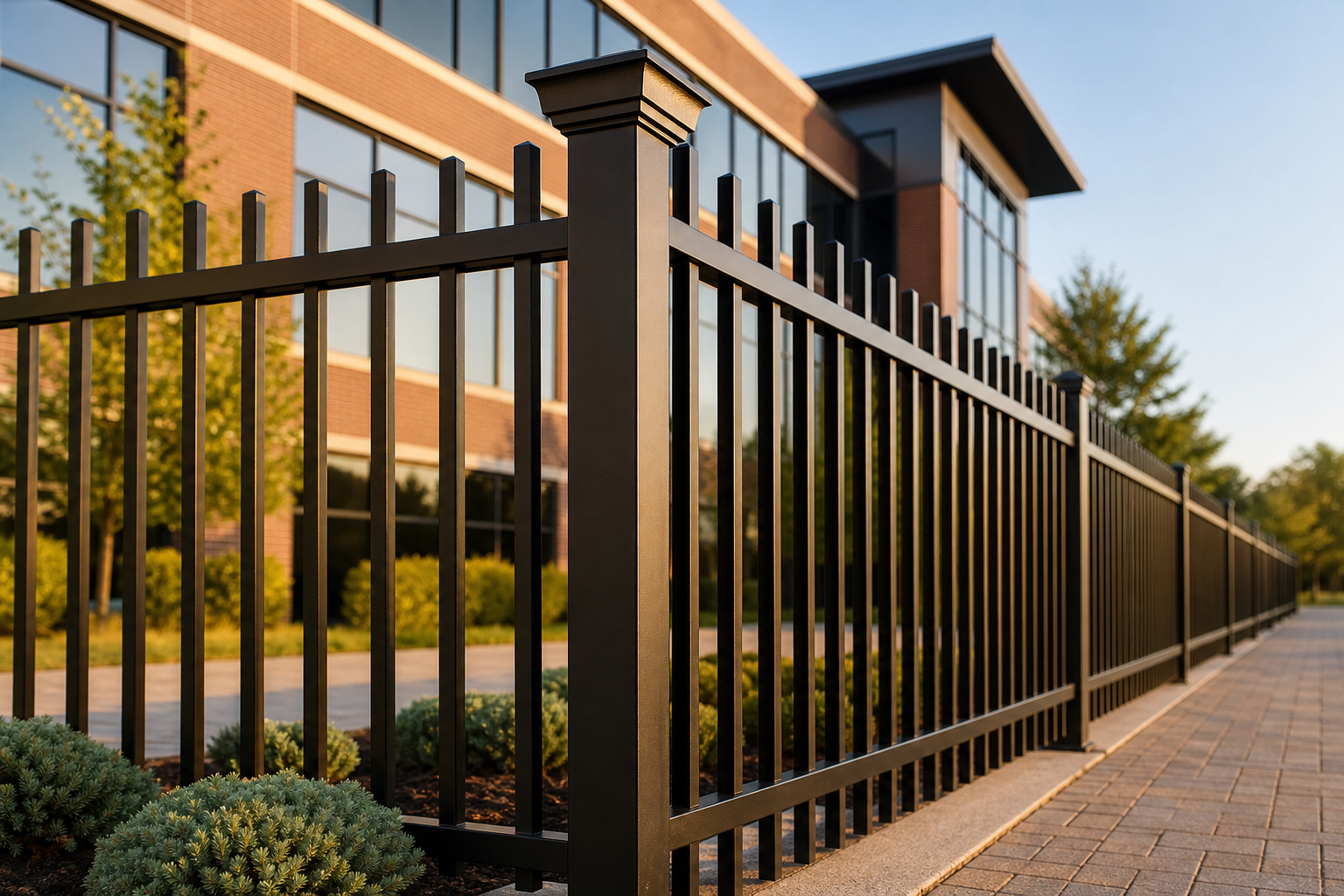
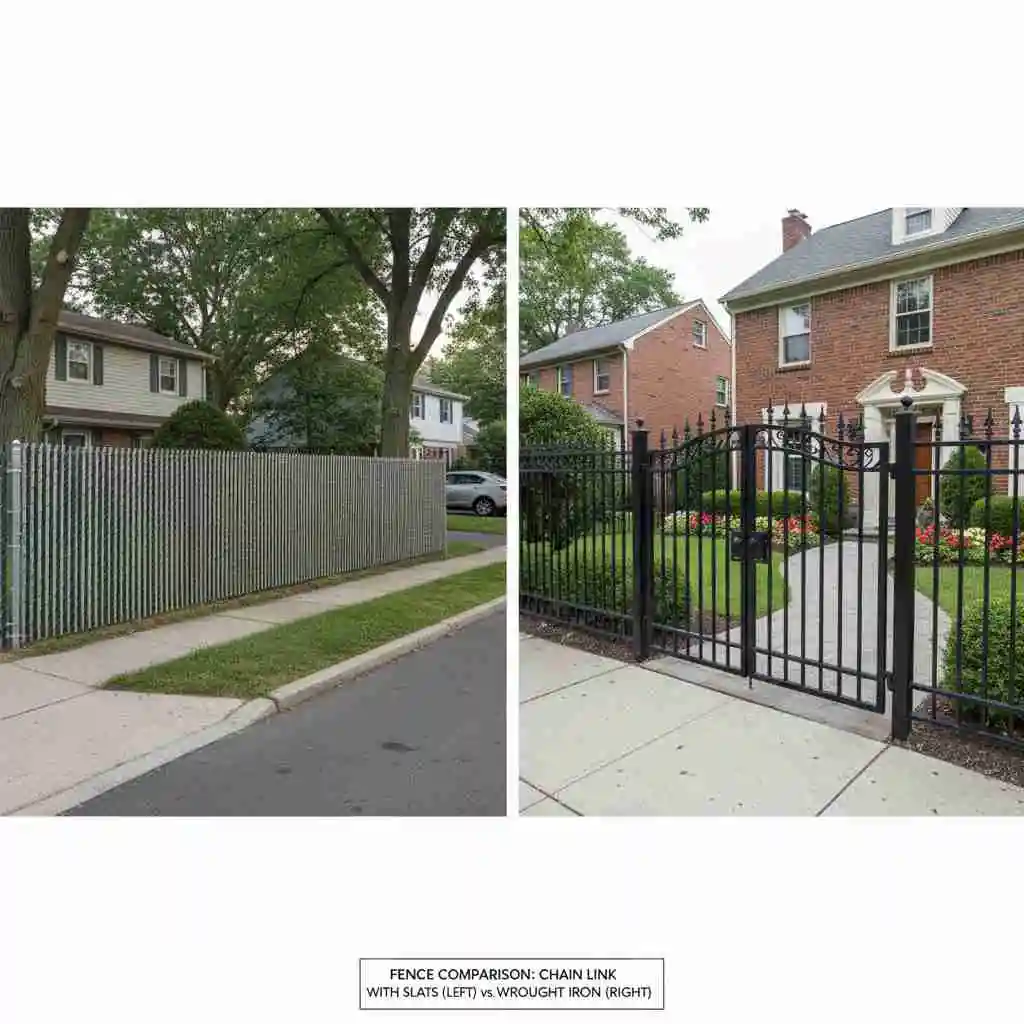
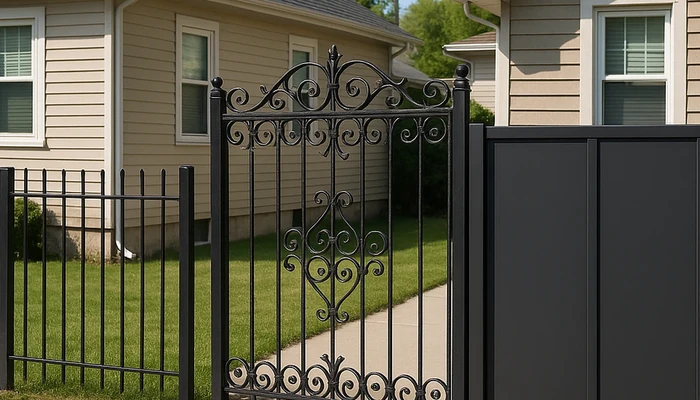
Where visibility and cost control matter most, chain link fence remains the practical baseline for large commercial perimeters, especially when combined with privacy slats for partial screening. Where deterrence and a finished look carry weight — frontage, customer entry points or office-facing boundaries — steel fence and ornamental options such as wrought iron or a commercial aluminum fence in Orland Park, IL deliver a more substantial presence.
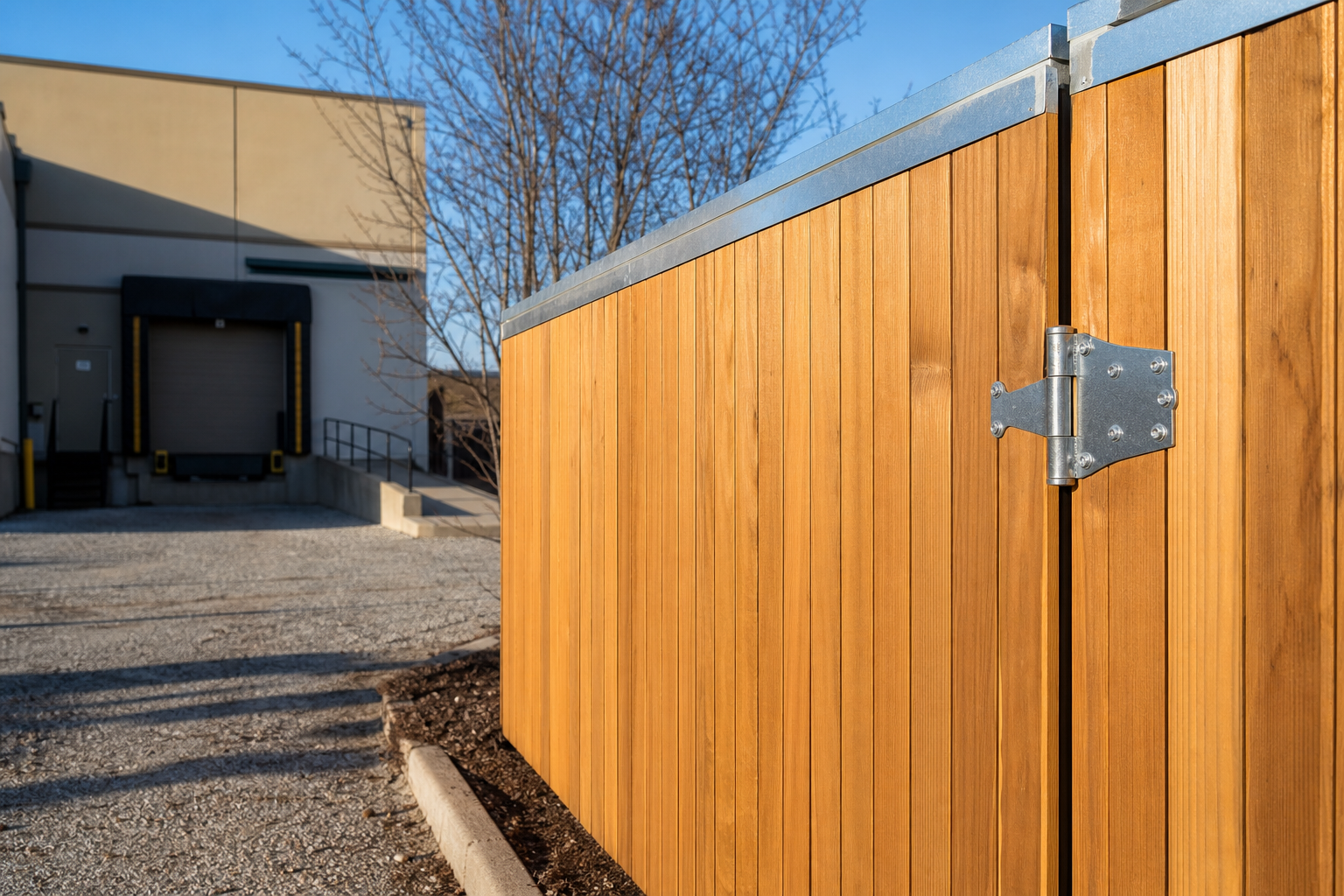
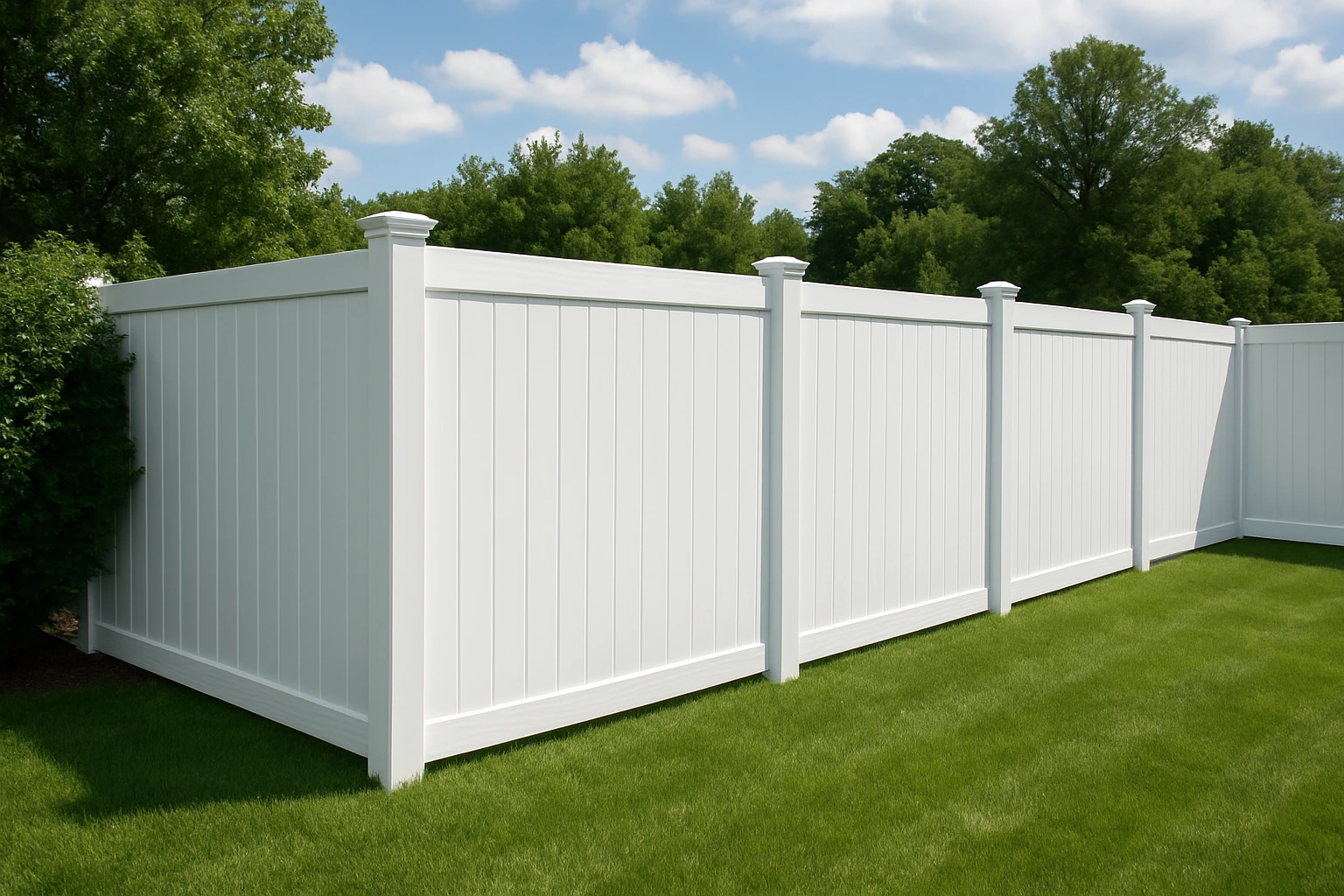
Where screening and noise separation matter, solid vinyl or wood assemblies are usually chosen, but they also bring wind load, footing and repair considerations that open systems do not. A commercial fence company in Orland Park, IL typically maps these trade-offs against the site before recommending a panel type.
Maintenance and Lifecycle Realities
Maintenance tolerance quietly decides more commercial projects than style does. Vinyl and aluminum hold finish well with minimal attention, which suits long-term retail and office properties. Steel and wrought iron need periodic coating to avoid rust loss, but reward that effort with structural durability. Wood needs the most ongoing care and is usually reserved for boundaries where appearance justifies the upkeep.
Gates and Access Control Often Decide the Material
Gates change the answer more than most property managers expect. An automated slide or swing gate needs a frame material and post spacing that can carry the operator load, and access control hardware must integrate with the chosen panel. A perimeter plan that adds a gate and card or keypad access usually narrows the material list quickly — and that decision belongs early in the conversation, not after the fence line is set.
Match the Material to the Property’s Role
Commercial fencing in Orland Park, IL covers a broad range of property types, and the right answer shifts with each one. A corporate office or retail plaza usually favors a clean ornamental look with controlled vehicle entries. A service or storage yard prioritizes enclosed volume, gate width and visibility from the office. A facility with regulated perimeter requirements needs the panel and height to satisfy both the site plan and the local code review.
Because those priorities compete, the most useful step is a short site assessment that documents the perimeter length, gate locations, grade changes and security goals. That documentation lets a commercial fence contractor in Orland Park, IL propose one or two material systems instead of a catalog of options.
Our Commercial Fencing Team works with commercial-grade materials so the finished perimeter holds up to daily vehicle traffic, weather exposure and the way the property is actually used. If you are comparing options for a specific site, share the property type, approximate fence length, gate needs and security concern, and we will narrow the material list to the ones that fit.