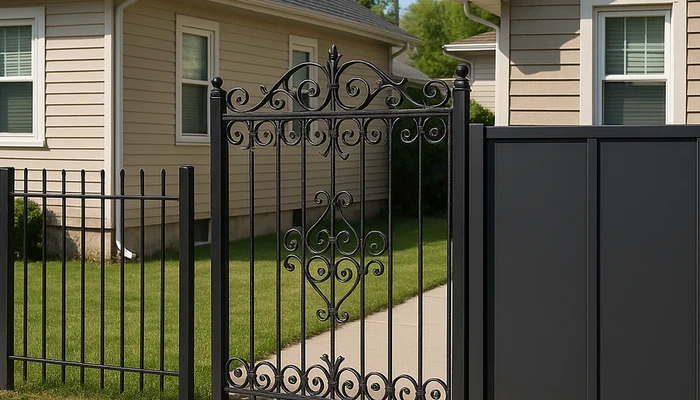
A commercial fencing project looks simple from the outside. Inside, it runs as a sequence of decisions: measure the site, define what the fence has to do, choose the system that fits the property, and build it without interrupting loading docks, parking or daily access. That sequence is the backbone of the Commercial Fencing Process Lombard IL clients see from the first walkthrough to the final sign-off.
The Commercial Fencing Team is a professional commercial fencing team working on commercial and industrial fencing scope. Chain link fencing, steel fencing and aluminum fencing make up the core of most projects, with gate and hardware choices driven by how the property actually operates, not by a generic package.
Step 1 – Site Assessment and Scope Definition
Every project starts with a walkthrough, not a quote. We read the fence line, gate positions, service lanes and points of entry, and we look at how vehicles and people move across the property during a normal day. Utility stubs, hard corners and grade changes are flagged here so they do not become surprises later. Client priorities get captured in the same pass: what has to stay protected, what has to keep moving, and what timeline the site can tolerate.
Step 2 – Written Scope and System Selection
From the assessment we build a written scope: fence line, length, height, system, gate hardware and installation sequence. When a property needs commercial fence installation in Lombard, IL, the scope defines what installation actually means on that site, including post spacing, footer depth, tension and gate alignment, instead of a vague line item. Owners get options to compare, so the decision lands on the property’s needs rather than on a single hard sell.
Step 3 – Mobilization and Installation
Delivery, laydown areas, utility locates and start dates are confirmed before the crew arrives. Commercial fence installers in Lombard, IL working on a business property have to keep docks, parking and entry points open, so staging and daily sequencing are planned in advance. Where a site requires it, the build is phased, and a named project contact stays reachable for questions during the work.
Step 4 – Final Walkthrough and Handoff
The job is not treated as finished until it is walked with the client. Gates are cycled, tension is checked, hardware is verified and the site is cleaned. The point of the walkthrough is simple: what was scoped is what gets signed off, and any punch items are logged before the crew leaves.
What Sets the Process Apart
Informal fence work tends to show up as vague scopes, single-bid pressure and crews that disappear once the truck pulls out. A structured process looks different: written scopes, named contacts, phased schedules and a documented final review. That record is how commercial fencing contractors in Lombard, IL keep earning repeat work and referral work across properties.
What You Need to Start
Four items open the process: the property address or nearest cross street, a rough idea of the fence line and any gates, the main security or operational concern, and a target timeline. Photos of the existing fence and entry points help, but they are not required.
Commercial fencing in Lombard, IL starts the same way every time: a quick review of the request, a walkthrough scheduled at a time that suits the property, and a written scope back in the client’s hands. The first interaction is a scoping conversation, not a pitch.