Below is a commercial fence material comparison Lockport IL facility managers, store operators and property teams can apply directly: how each option handles deterrence, sightlines, upkeep, gate hardware and day-to-day use. The answer changes depending on whether the fence runs along a dock apron, a customer entrance, a service yard or a parking row.
Deterrence, Cut Resistance and Climb Resistance
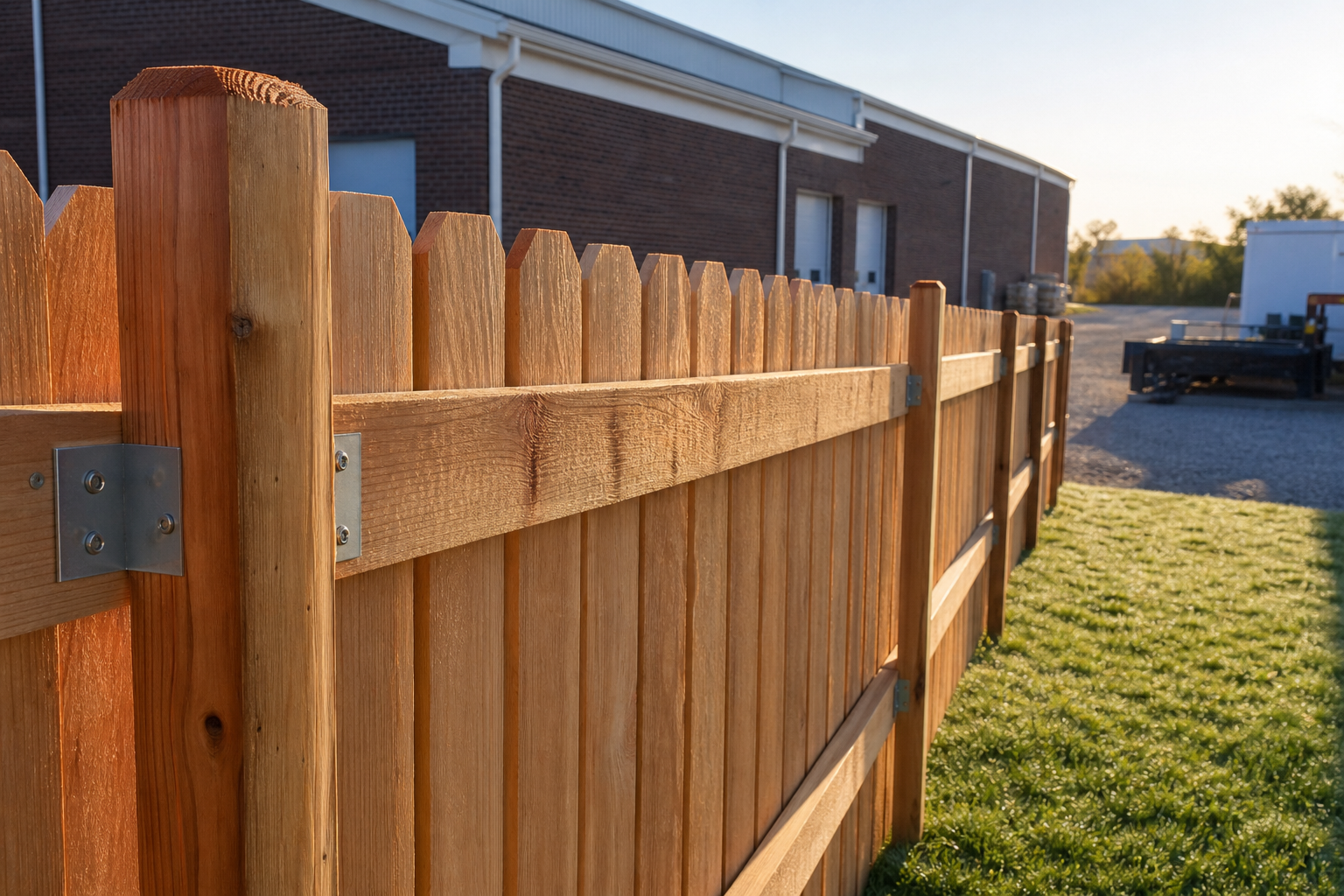
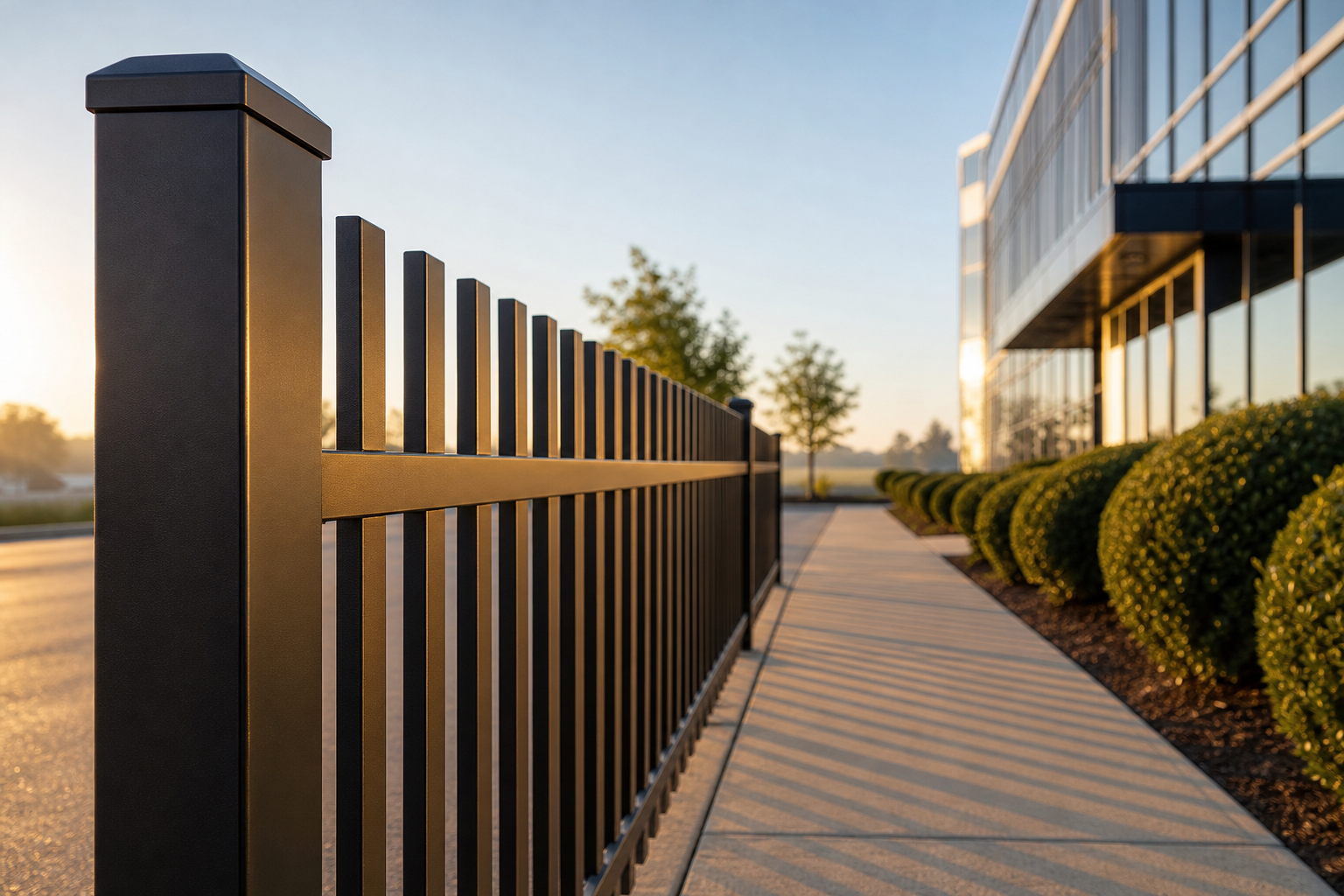
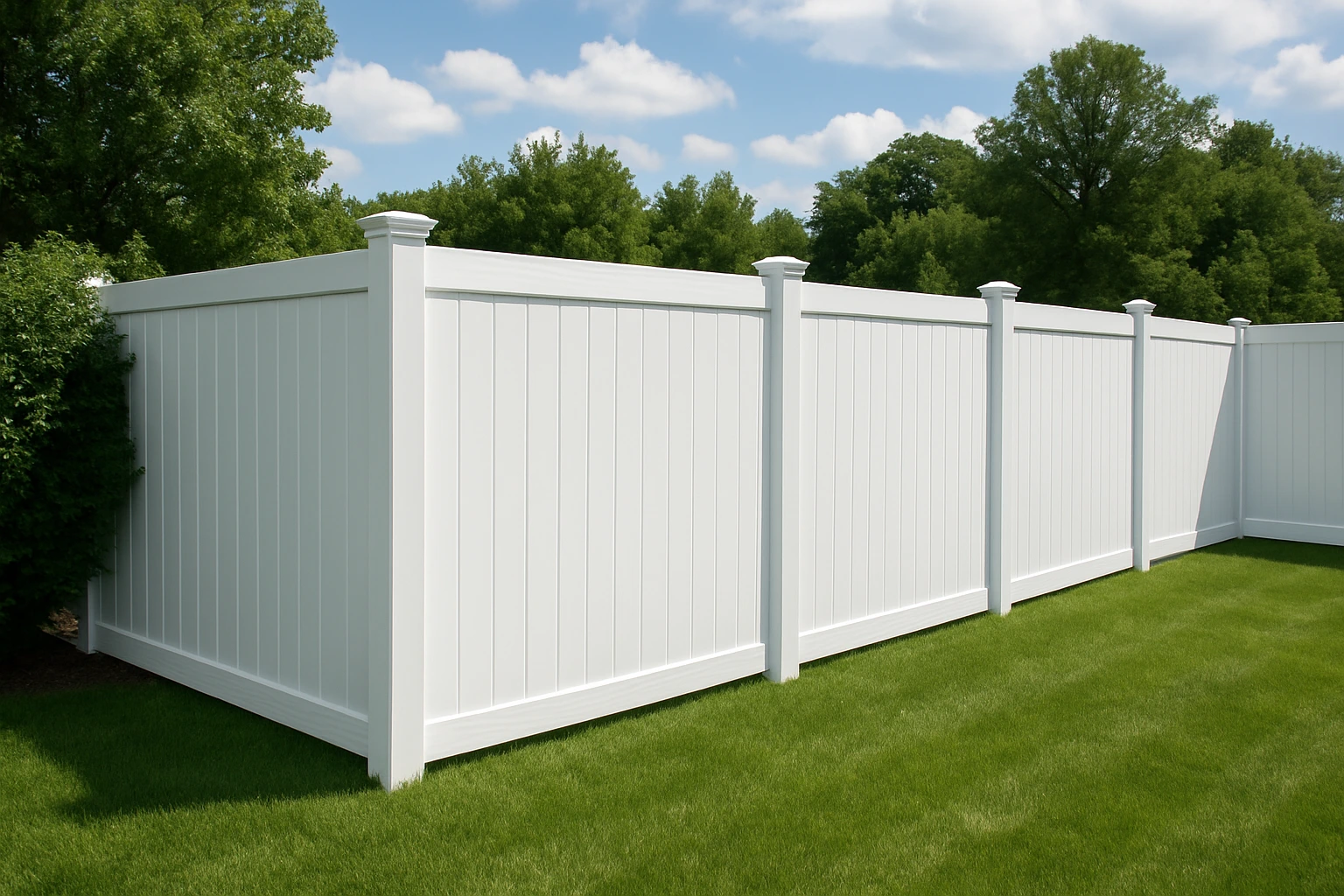
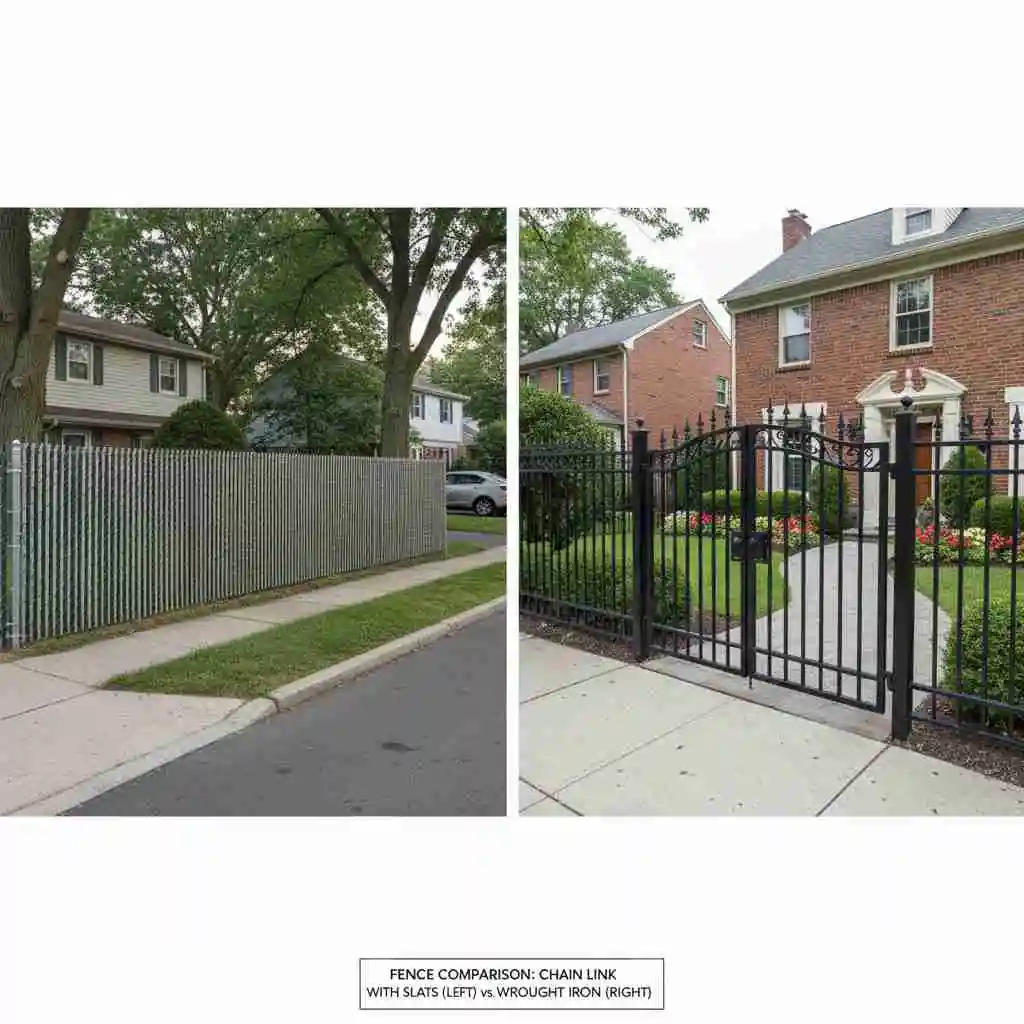
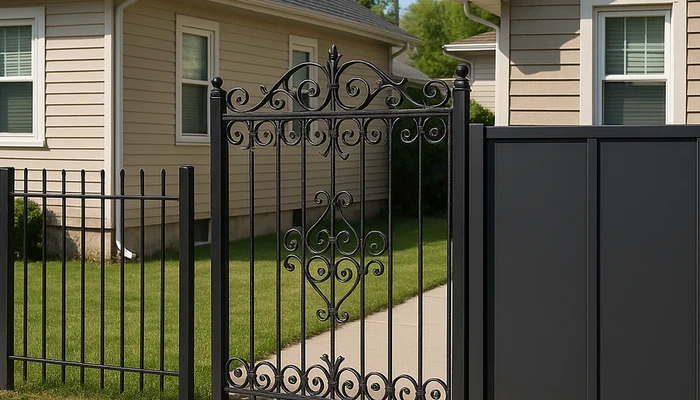
Cut and climb resistance is what separates the metal options from the panel products. Steel holds its shape under pressure and resists being pried apart at the rails, which is why it shows up at gates, fuel islands and equipment storage. Wrought iron and ornamental iron use tall pickets and narrow spacing to slow climbing and read as a deliberate barrier at an entrance. Chain link installs faster over long runs than anything else, so the quality details — heavier gauge, correct tension and a bonded vinyl coating — carry most of the durability. Aluminum sits in between: rigid enough for a rack or spear-top profile across wide spans, light enough to avoid oversized posts, and without the rust cycle of untreated steel. Wood and vinyl create a solid visual block, but neither is engineered as a cut- or pry-resistant barrier, so they belong where appearance and screening matter more than forced-entry delay.
Sightlines and Visibility Trade-Offs
Warehouses generally want camera, guard and dock lines of sight preserved, and open designs — chain link, aluminum picket and wrought iron — keep the yard readable from the office, the gate position or a mounted camera. Retail and mixed-use sites have the opposite need along their back edges: a solid run of wood or vinyl screening hides dumpsters, pallet stacks, carts and condenser pads from customer view and from the street. Deciding open versus solid line by line, rather than for the whole property at once, is usually what keeps a site both watchable and tidy.
Maintenance Over the Life of the Fence
Chain link, powder-coated steel, aluminum and vinyl ask for the least routine work: rinse the line, check tension and hardware, replace a bent rail or panel. Wood is the highest-touch choice, needing sealing or staining and reacting to moisture movement and freeze-thaw cycles. Wrought iron and ornamental iron last for decades, but the coating needs touch-ups at welds, scratches and nicks or rust starts at the details. Over a 15-to-25-year horizon, that difference in upkeep is usually the larger long-term cost, not the material itself.
Gate Compatibility and Access Control Hardware
Gate hardware is where material choices get expensive to reverse. Chain link, steel and aluminum all carry cantilever and slide gates well and accept operator arms, loops, keypads and card readers without custom fabrication. Wrought iron and ornamental iron swing gates look strong at an entrance but add weight, so posts, hinges and operator capacity have to be sized up from the start. Wood gates are the least friendly to automation — swelling, sagging and seasonal movement mean constant adjustment. If a site needs a drive gate, a man gate and a controlled delivery entrance, keep the gate material consistent and confirm the operator load before the fence line is staked.
Where Each Material Fits on a Warehouse or Retail Property
There is no single best material for every warehouse or retail site in Lockport; the deciding factor is which of these five criteria the property can least afford to compromise. On a warehouse or industrial property, the practical mix is usually chain link or steel around the truck court, service drive and yard, with ornamental iron or aluminum at the main entrance and a limited amount of wood or vinyl screening the cans and equipment pads. Retail properties flip the emphasis. A commercial aluminum fence in Lockport, IL can hold a storefront-grade look at a lighter weight than iron, while the loading and trash area behind the building stays metal. Commercial fencing in Lockport, IL often pairs an appearance-facing material along the street edge with a hard-use material on the working side, which keeps the curb view and the service yard doing two different jobs.
Commercial parcels around Lockport combine one long street frontage with a deeper service yard or drive behind the building, and that layout is what usually forces a two-material decision instead of a single choice. Starting with a commercial fence company in Lockport, IL means mapping the lines first — which runs want visibility, which want screening, and where gate hardware has to be planned before anything is ordered.