A commercial fence material comparison for Schiller Park, IL properties gets easier when it starts with how the site is used rather than with the product name. Traffic volume, sightlines, how often a drive gate opens, and how the perimeter holds up to road salt and freeze-thaw cycles all change the ranking. A material that wins on a spec sheet can still be the wrong call for a loading yard or a customer-facing frontage.
For a warehouse or industrial yard, the practical answer usually points to a rigid, high-visibility material that tolerates repeated impact and salt exposure. Decorative materials earn their place where the fence line is also part of the storefront or entrance. The comparison below is organized by site condition instead of by product line, so each material is judged on where it actually performs.
Where Each Material Fits on a Commercial Site
Treat the table as a first filter, then confirm the choice against height, setback and screening requirements before ordering material.
Commercial fence material fit by site condition | Material | Strongest Fit | Main Trade-Off |
|---|
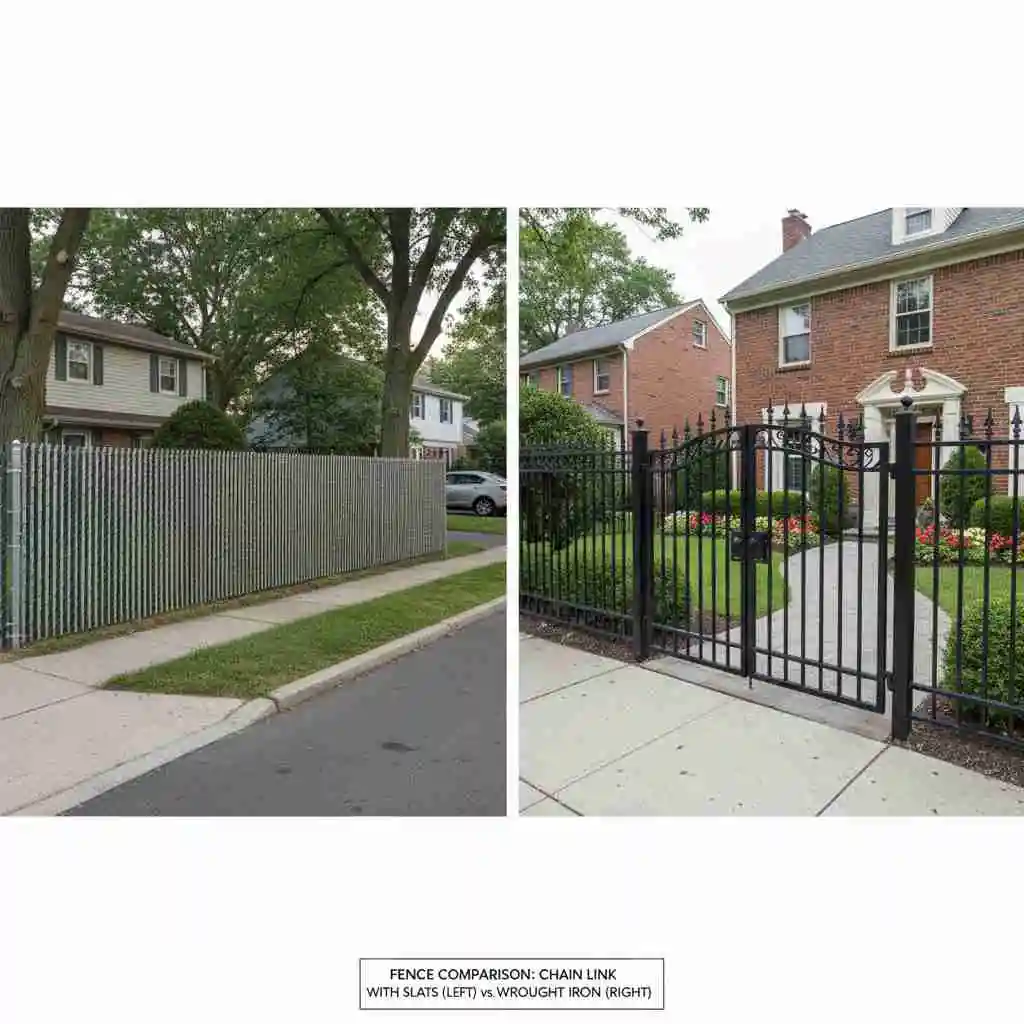
| Chain link | Large perimeters, parking areas, service lanes and yards where camera sightlines matter | Privacy and appearance need slats or screening on visible frontage |
| Steel | High-security perimeter runs and areas with vehicle or equipment contact | Heavier material and higher cost; corrosion protection matters |
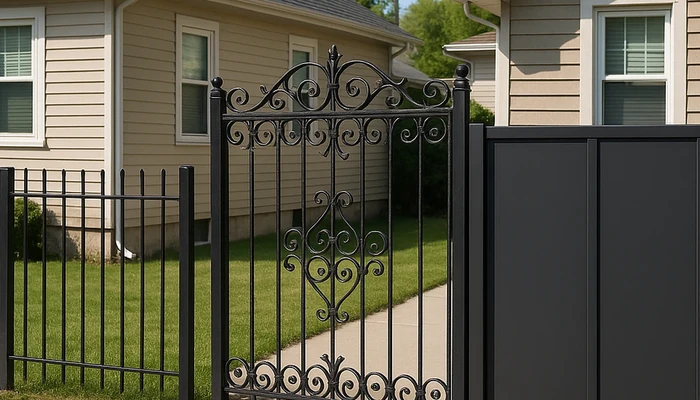
| Aluminum | Entrances, frontage and office perimeters where finish and rust resistance matter | Less impact resistance than steel in heavy-use areas |
| Wrought iron | Ornamental frontage and property lines that need a traditional look with strength | Periodic refinishing; heavier framing at gates |
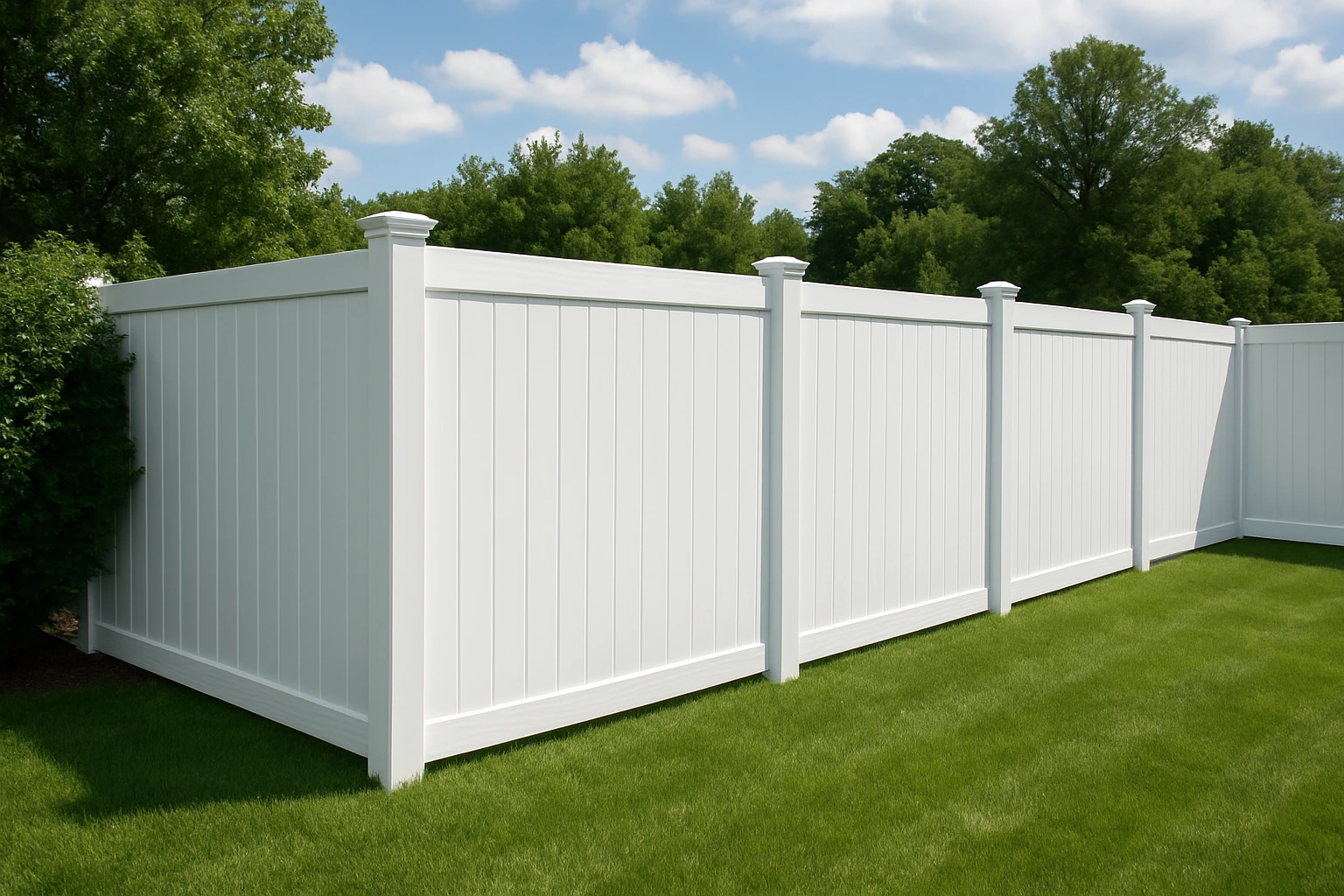
| Vinyl | Screening and privacy along property lines with low maintenance and consistent color | Not a first choice for high-impact service areas; cold can make it brittle |
| Wood | Solid visual buffers around yards, docks and waste areas | Regular maintenance as boards move with moisture |
Screening, Security, and Access Control Pull in Different Directions
If the goal is surveillance, open materials keep cameras and patrols effective along the perimeter. If the goal is to block views of equipment, inventory or waste areas from the street, solid screening takes priority, and fence height and orientation start to matter as much as the material itself. Access points change the math again: a wide drive gate on a heavy material needs more structural support and different hardware than a pedestrian gate on the same run, and the gate is often what decides whether the fence line holds up over the years.
From Comparison to a Buildable Spec
A material comparison only helps if it survives contact with the site. The sequence that keeps a project on track usually runs in four steps:
- Walk the property and note how each run is used: employee parking, customer entry, loading, storage or buffer.
- Measure linear runs and mark corners, gates and grade changes before anything is specified.
- Check planned heights, setbacks and screening against village requirements, since fence work in Schiller Park requires a permit and plan review.
- Assign material per run instead of forcing one product across the whole perimeter.
That last step is where most projects improve. A property can carry an open, durable material along the working yard and a decorative one along the customer-facing side, often for less than upgrading the entire perimeter to the heaviest option. Commercial fencing in Schiller Park, IL that mixes materials this way also keeps gate hardware decisions simpler, since every gate has to be specified against the material and frame it hangs on.
When two options remain close, the tie-breakers are usually drainage, gate frequency and long-term maintenance. Comparing commercial fence installation in Schiller Park, IL proposals side by side only works if each one covers the same runs, heights, gate operators and hardware; otherwise the lower number is often just a smaller scope. A commercial fence contractor in Schiller Park, IL who walks the property first can usually eliminate one of the two options in a single visit.
Where perimeter risk is higher, high security fencing in Schiller Park, IL tends to be specified by performance rather than appearance: heavier framework, tighter mesh or solid panel, fewer uncontrolled access points, and gates matched to the traffic they receive. That decision belongs at the start of the comparison, not at the end.
If two materials still look equally plausible for the same perimeter, describe the property type, the approximate linear runs, the gate and access needs, and how each side of the site is used. That is usually enough to narrow the comparison to the one or two options that fit. Chicago Commercial Fencing serves commercial properties across Schiller Park and the surrounding Cook County corridors; reach the team through the contact page.
 Skip to content