Commercial fence scope terms in Grayslake, IL follow a similar vocabulary from vendor to vendor, but the definitions behind them are not standardized. Two proposals can both list a 6-foot chain link perimeter and still describe very different work. Reading those terms as a set of decisions, not as a list of line items, is what lets you compare bids on equal footing.
The list below covers the vocabulary that appears most often when you review commercial fencing in Grayslake, IL proposals, what each term actually controls, and the question worth asking before you approve anything.
Perimeter Layout: The Lines the Fence Follows
Perimeter layout describes the route the fence takes, not just total linear footage. A proposal should show where the fence starts, where it turns, how it ties into a building wall, and what happens at property lines and easements. Two vendors can quote identical footage while routing the fence behind a dumpster pad versus in front of it, and that single difference changes material counts, gate placement, and how much of the yard stays usable.
Ask for the layout marked on a site drawing or a current survey rather than described in words. If the drawing shows a line cutting across a loading apron or blocking a drive aisle, the layout is the part worth renegotiating, not the material.
Access-Control Points and How Gate Count Is Counted
Access-control points are the openings the fence must leave for vehicles, deliveries, and staff. Gate count is how many of those openings receive a gate leaf, but proposals differ on whether a 20-foot double drive gate counts as one gate or two, whether pedestrian openings are tallied separately, and whether hardware and posts are included or listed as alternates.
Line the gate count up against your actual traffic pattern: service entrances, trash pickup, employee parking, and any emergency access route. A low gate count usually means someone walks farther, or that a gate ends up propped open for most of the day.
Post Spacing, Gauge and Coating: Where Materials Get Specific
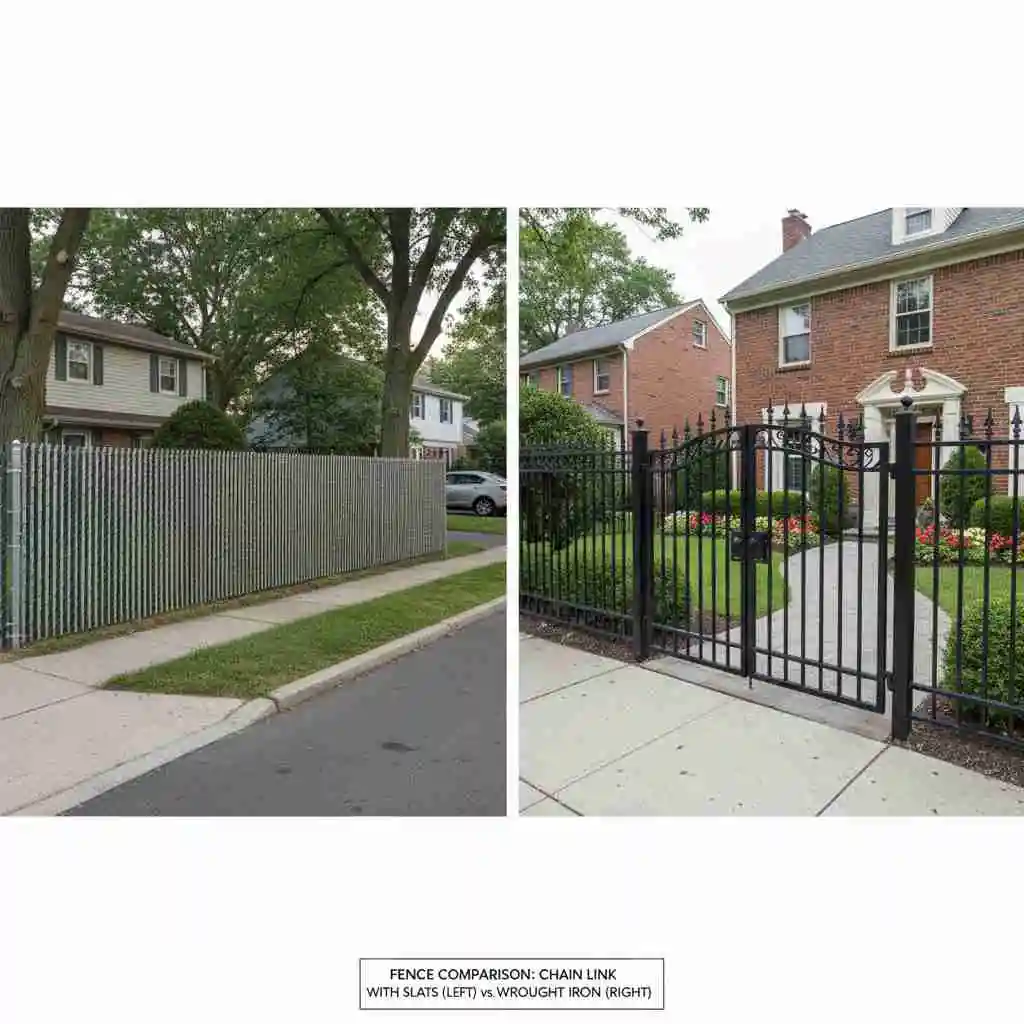
Post spacing is the distance between vertical posts, and it drives how much the fence moves, how it handles wind load, and how it survives being nudged by a truck. Gauge and coating describe wire thickness and the protective finish on metal fencing, from standard galvanized to galvanized with color coating or a heavier section. A proposal that omits gauge and coating is not a comparable line; it is a price with no material behind it.
This is also where the fence system shows up in the scope. A chain link quote, a steel or ornamental quote, and a vinyl or wood quote each state post spacing and material grade differently, so compare the same system against the same system. Every commercial fence installation in Grayslake, IL proposal should name material, finish, and spacing in writing.
Finished-Side Orientation and Phasing Language
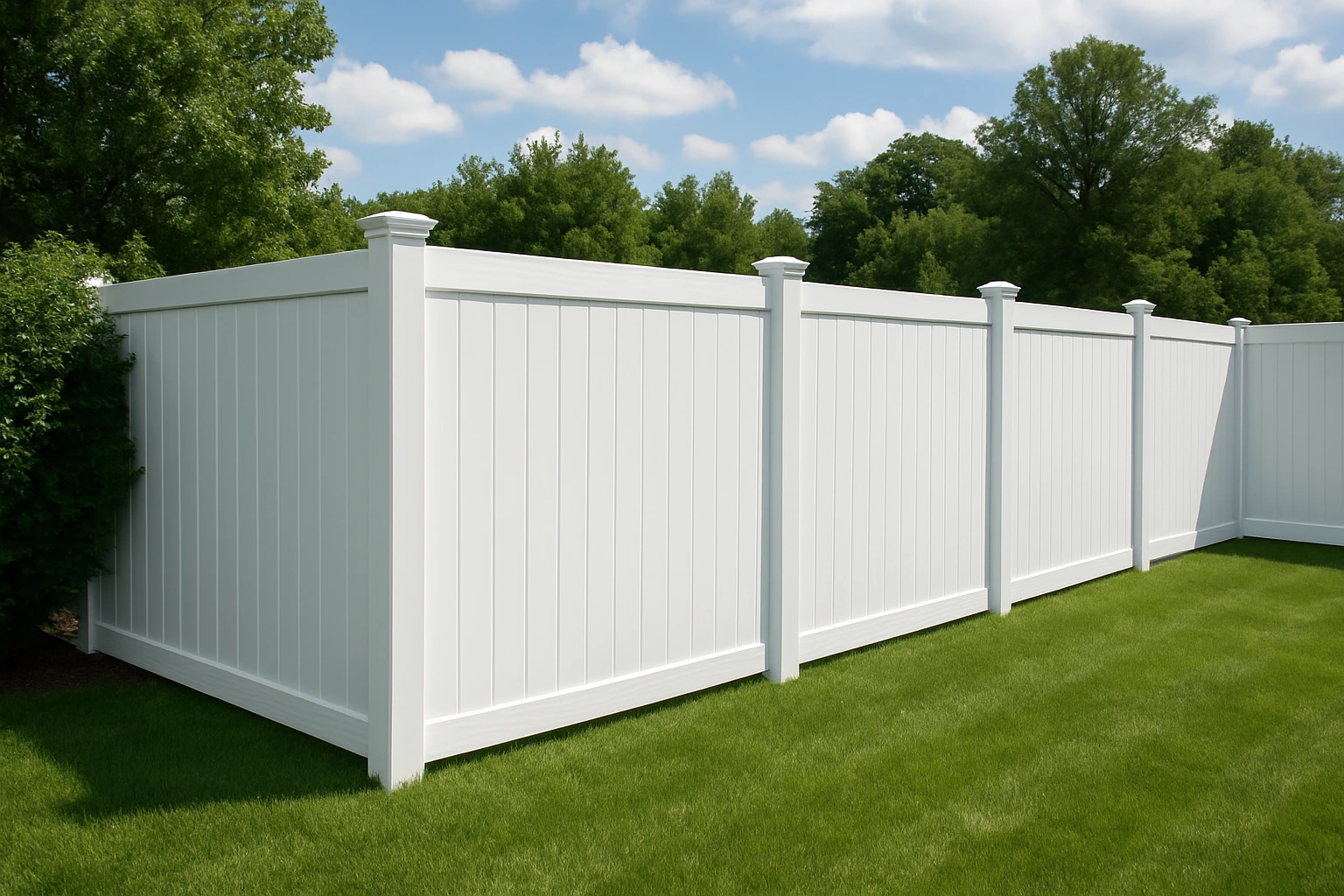
Finished-side orientation identifies which face of the fence presents as the good side, which matters for appearance, for how the structure reads from a public street, and for how the scope accounts for rails and fasteners. It should be stated, not assumed, particularly on ornamental and vinyl systems where the difference is visible from a distance.
Phasing terms describe how work is broken up around operating hours: which sections go first, how staged protection is handled, and what a partial perimeter means for the days in between. A scope that simply says install fence leaves the schedule open. A scope that lists phases, even briefly, tells you the vendor has thought about your business day.
A Short Glossary to Bring to the Comparison Table
- Perimeter layout — the drawn route of the fence, including corners, tie-ins, and easement constraints.
- Access-control points — every planned opening for vehicles, deliveries, and people.
- Gate count — the number of openings receiving gate leaves, with a stated rule for doubles and pedestrian gates.
- Post spacing — the distance between posts, which sets rigidity and wind performance.
- Gauge and coating — wire thickness plus the protective finish system on metal components.
- Finished-side orientation — which face of the fence presents as the finished surface, and who sees it.
- Phasing — the order of work and any temporary measures used while the perimeter is incomplete.
Compare one proposal against another by matching term to term. Where one document is vague and the other is specific, the specific one is easier to hold to and easier to budget. When wording still leaves an opening, a commercial fence contractor in Grayslake, IL should be able to point to the drawing line or the specification that fills it in, whether the property sits in Grayslake or elsewhere in Lake County, Illinois.
 Skip to content