Selecting among commercial fence materials in Lake Zurich, IL usually comes down to three questions: how much physical resistance the perimeter needs, how much of the site should stay visible from the street, and how much maintenance the property team can absorb over the life of the fence. The comparison below is written for facility managers, property managers, and business owners reviewing bids, so each material is matched to the commercial situations where it performs best rather than ranked as a general favorite.
Chain Link Fence: Long Runs, Storage Yards, and Service Courts
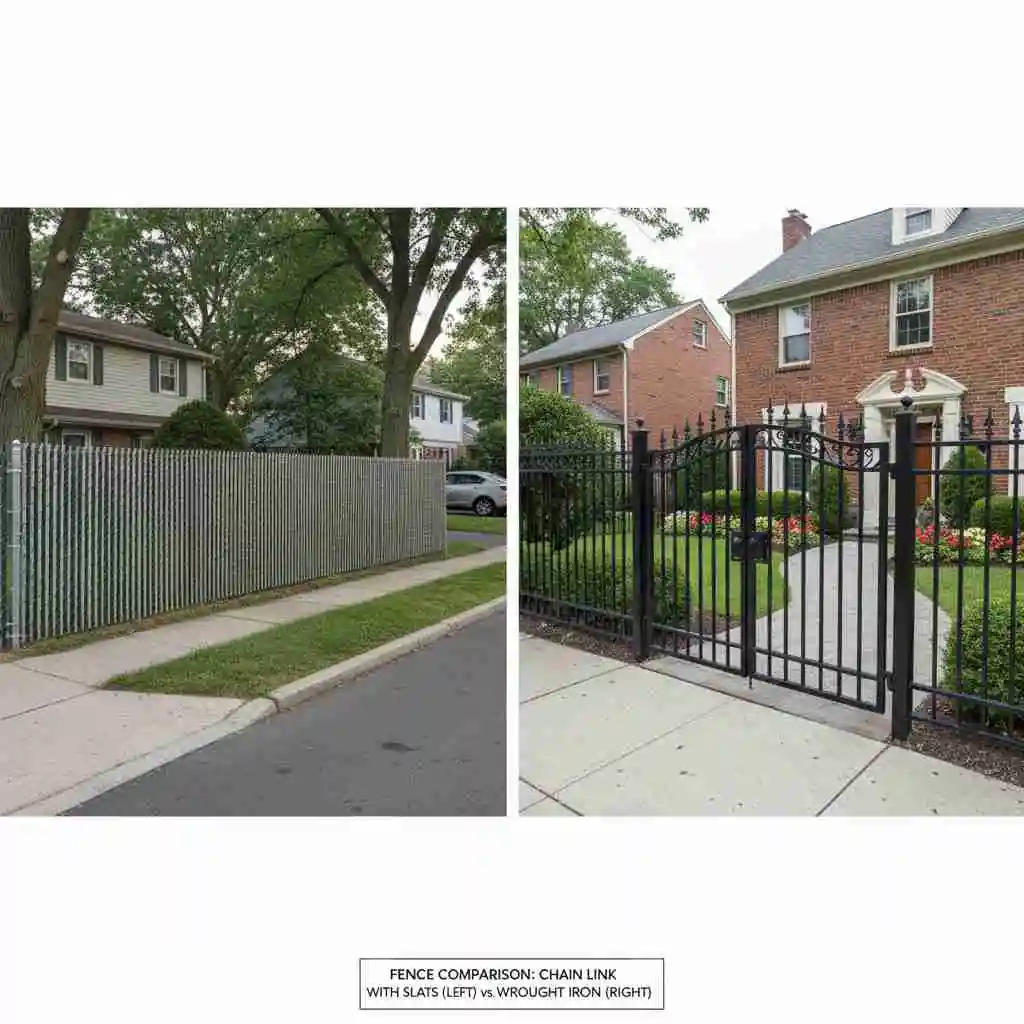
Chain link stays the practical choice when the perimeter is long and the goal is definition and controlled access rather than ornament. It fits contractor lots, equipment storage areas, service courts, and parking fields, and the open weave keeps the site readable for staff and camera coverage. Galvanized and vinyl-coated finishes hold up through freeze-thaw cycles, and privacy slats can be added where screening matters more than open sightlines.
Steel Fence: Sites That Need a Heavier Barrier
Where cut resistance, climb resistance, or vehicle contact is a real concern, steel outlasts lighter-gauge options. Steel systems pair naturally with high security fencing in Lake Zurich, IL for equipment yards, utility compounds, and facilities that restrict after-hours entry, especially where the fence line also carries card readers, keypads, or gate operators. It is the material selected when the perimeter is treated as part of the security plan rather than a property line.
Aluminum Fence Installation: Frontage That Still Looks Managed
Aluminum is the usual pick for customer-facing frontage, office entries, and mixed-use properties where the fence should define a boundary without blocking the view. It resists rust, holds a factory finish, and needs very little upkeep compared with painted alternatives. Because the profile is lighter than steel, it is best reserved for areas where appearance and low maintenance matter more than heavy impact resistance.
Vinyl Fence: Screening Mechanical and Service Areas
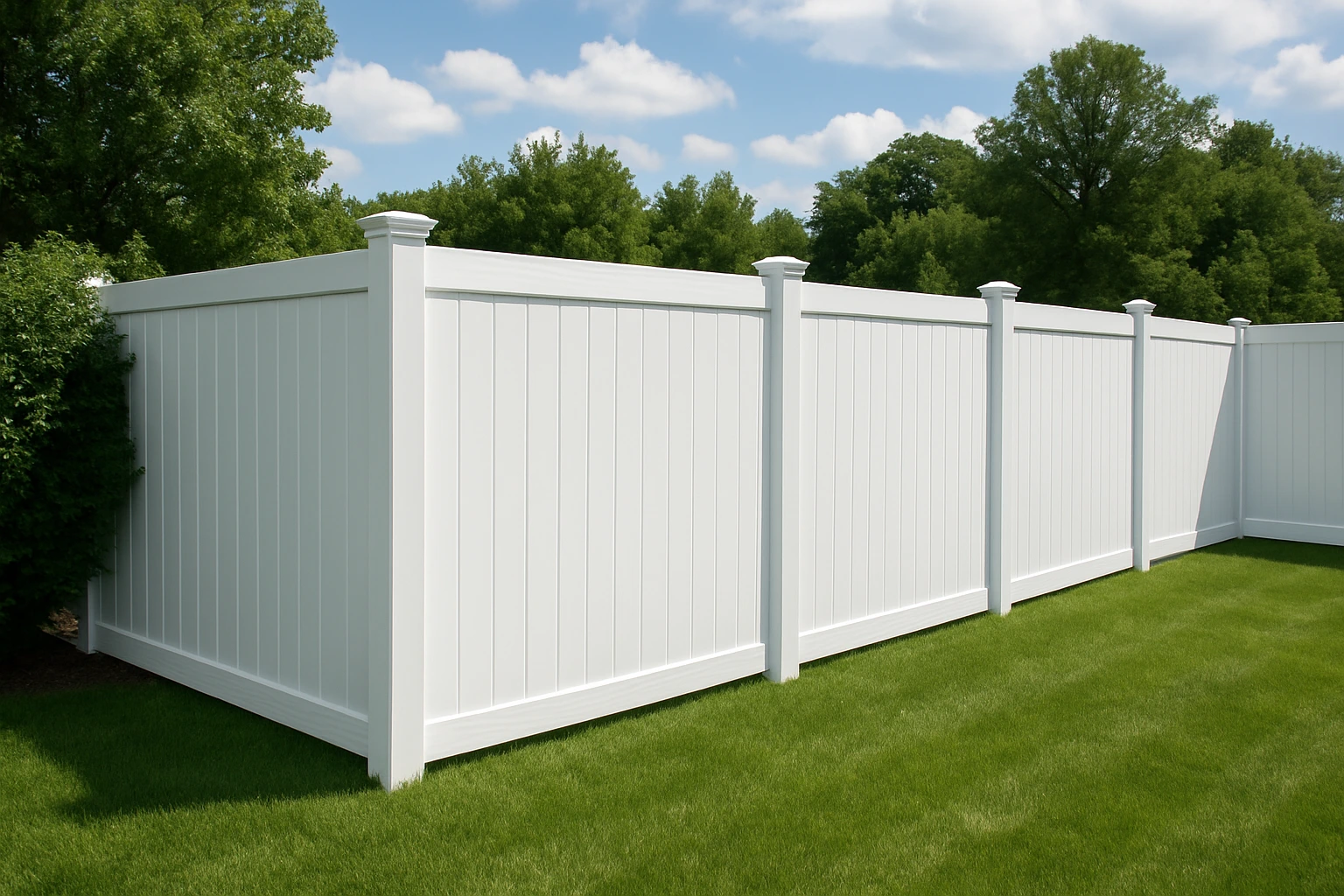
Vinyl is efficient at hiding what customers should not see: dumpster pads, condensers, loading zones, and utility areas. It never needs repainting, wipes down easily, and delivers consistent color across a long run, which is why property managers often use it to keep a uniform look across several buildings. The trade-off is that vinyl flexes more in temperature swings and offers less physical resistance than steel or wrought iron.
Wood Fence: Enclosure and Privacy Around Patios and Courtyards
Wood remains the most flexible way to enclose an outdoor area such as a restaurant patio, a daycare play space, courtyard seating, or a rear service zone. Solid board construction blocks sightlines completely, and the material takes staining, painting, and custom heights more easily than metal systems. It also asks for the most attention over time in northern Illinois conditions, with periodic sealing and board replacement part of ownership.
Wrought Iron Fence: Entrances, Walkways, and Signature Frontage
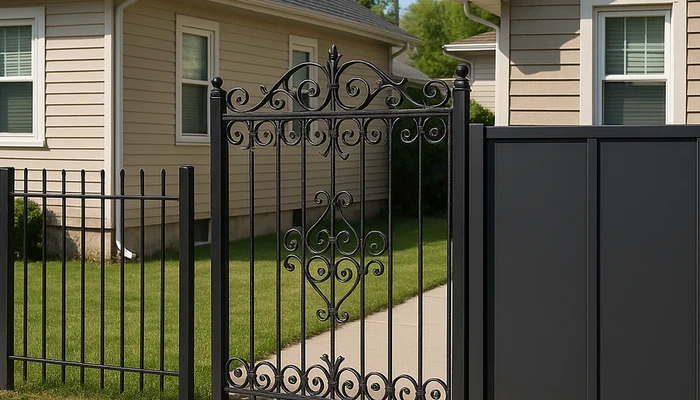
Wrought iron is chosen when the fence is part of the property’s appearance rather than a background element. It works at main entrances, along walkways, and around office parks, places of worship, and municipal grounds where a defined, detailed look is expected. Built and finished correctly, it holds its shape for decades and pairs well with ornamental gates and pedestrian entries.
How to Narrow the List Before You Compare Bids
The decision gets simpler once site conditions are on the table. Grade changes, drainage paths, gate posts, and the turning radius of service vehicles often eliminate one or two options immediately, and commercial fence installation in Lake Zurich, IL has to account for all of them regardless of which material is specified. A working commercial fence contractor in Lake Zurich, IL typically narrows the list during the first walkthrough by asking what the perimeter must actually do: deter entry, hide equipment, define parking, or present the property to customers.
Most commercial fencing in Lake Zurich, IL ends up as a mix rather than a single system. A heavier barrier along a rear property line, a decorative run at the street-facing entry, and screening around service equipment solve three different problems on the same site. That combination approach is often what separates a perimeter that works for a decade from one that gets replaced in a few years.
Use the short list below to keep the comparison focused:
- Security level: steel and wrought iron for heavier resistance; chain link and vinyl for definition and screening.
- Sightlines: aluminum and chain link stay open; wood and vinyl close the view.
- Maintenance: aluminum, vinyl, and chain link need the least attention; wood needs the most.
- Service life: steel, wrought iron, and aluminum hold their finish longest in commercial use.
- Gate integration: steel and wrought iron frames carry the weight of automated gates more comfortably than light profiles.
Material choice also has to line up with how the Village treats fences in front, side, and rear yard conditions, which is why placement gets confirmed early rather than after posts are set.
 Skip to content