 Skip to content

Temporary Fence Plans for Chicago Sidewalk Closures and Active Jobsites
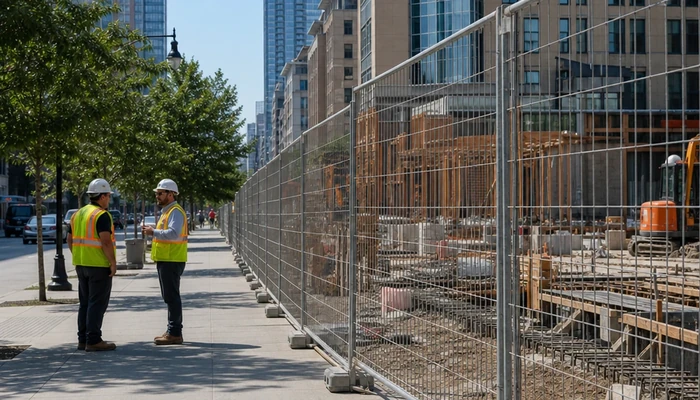
A sidewalk closure beside a construction project can change a familiar walking route in an instant. A temporary fence may help separate people from work activity, but placing panels along the curb is only one part of a safe plan. The route people use, access to nearby buildings, delivery needs, changing work conditions, and applicable approvals all matter.
Temporary Fence Plans for Chicago Sidewalk Closures and Active Jobsites help project teams think through those details before work begins. A useful plan identifies the work area, how pedestrians will move around it, where gates belong, who will inspect the barrier, and what will happen when the site changes. It should be coordinated with the project’s traffic-control and safety planning—not treated as a substitute for either.
This guide explains common temporary barrier choices, planning questions, access and visibility considerations, and practical inspection routines. Requirements depend on the location and scope of work, so verify current rules with the appropriate City of Chicago departments and project professionals. In the Chicago, Illinois area, sidewalk conditions and available space can vary considerably from one block to the next.
What a temporary fence plan should accomplish
A temporary fence plan is a site-specific description of how a barrier will be used during a limited period. It can include a marked site sketch, fence type and approximate limits, gate locations, pedestrian routing, delivery access, inspection responsibilities, and a process for adjusting the setup. The plan may be a drawing, a written sequence, or part of a larger construction and public-way package, depending on the project.
Its purpose is not simply to keep people out. A good plan makes the boundary understandable, supports authorized site access, and considers how people approach and pass the work area. It also gives the project team a shared reference when a crew, delivery, or work phase changes the site.
- Separate: Show which areas are active work zones and which are open to the public.
- Guide: Explain the intended pedestrian route when a sidewalk is closed or narrowed.
- Control access: Identify gates and who may use them, including workers, deliveries, and emergency personnel as applicable.
- Communicate: Coordinate the barrier with required signs, markings, lighting, and traffic-control measures.
- Maintain: Assign responsibility for checks, repairs, and changes during the work.
A fence alone does not establish a complete pedestrian safety system. People may still encounter vehicle traffic, uneven surfaces, temporary ramps, materials, or work activity beyond the fence line. The overall site plan needs to address those conditions with the appropriate project and safety professionals.
Start with the site, not the fence panel
Before selecting panels, walk the affected area and record what people will encounter. Look at the sidewalk from both directions, then consider nearby intersections, driveways, transit stops, building entrances, loading areas, and accessible routes. A barrier that seems clear from the job entrance may create a confusing or blocked approach from the other end of the block.
Map the limits of work
Mark where the work starts and ends, where equipment or materials may be staged, and which parts of the public way could be affected. Include the building face, curb line, street crossings, and important fixed features. Note narrow points and places where a gate swing, panel foot, stored material, or delivery could interfere with movement.
Record the conditions that may change during the project. A trench, scaffold, concrete pour, demolition activity, or utility repair may require a different boundary or access arrangement at different times. Rather than assume one setup will work for every phase, identify likely changes and who will authorize and communicate them.
Identify the people and movements to account for
Think beyond the construction crew. People using the route may include residents, customers, people with disabilities, children, older adults, cyclists near the work zone, and visitors unfamiliar with the block. Consider the times when foot traffic is busiest, as well as deliveries, waste collection, and service access.
In Chicago, a short closure can affect a building entrance or a regular route even when the work area itself is small. Check for nearby entrances and destinations before settling on a detour. Where an accessible route or public-way condition is uncertain, ask the responsible project professional or agency rather than improvising a route in the field.
- Walk the area in both directions and note where a person first sees the closure.
- Identify the proposed alternate route and any crossings or changes in level along it.
- Check whether signs can be seen before a person reaches a blocked path.
- Review gate positions and vehicle movements for conflicts with pedestrian travel.
- Record who will reassess the layout when the work zone expands, contracts, or moves.
Choosing a temporary barrier system
Temporary barriers range from lightweight portable panels to more substantial, engineered systems. The best fit depends on the exposure, duration, surface, site layout, anticipated wind, required access, and the rules that apply to the project. A barrier that works for a short, controlled interior task may not suit an exposed sidewalk beside a busy street.
| System | Potential strengths | Questions to resolve |
|---|---|---|
| Portable mesh panels | Quick to position and adjust; openings can preserve visibility. | How will panels be joined, stabilized, and checked against movement or tampering? |
| Temporary chain-link panels | Can define a more continuous work-zone boundary and accommodate controlled gates. | Are feet, braces, and gate hardware clear of the required travel path? |
| Solid or privacy panels | Can screen work and reduce direct views into some areas. | Could limited visibility, wind exposure, or added weight create a new concern? |
| Water-filled or ballast-supported units | May provide a substantial, movable boundary where a suitable system is selected. | Does the design suit the surface, location, and project-specific impact or stability needs? |
| Special-purpose protective systems | May address higher exposure or unusual site conditions when properly designed. | What professional design, approvals, installation, and inspection are required? |
This table is a starting point, not a performance specification. Product names and construction alone do not prove that a system is suitable for a particular public-way condition. Ask the supplier or responsible professional for the system’s intended use, installation instructions, connection details, stability requirements, and limits.
Mesh, solid panels, and visibility
Mesh panels can let people see activity and landmarks beyond the barrier. Visibility may help a route feel less enclosed, but it does not remove the need for clear signs and a well-defined path. Mesh can also allow dust or small debris to pass, depending on the material and surrounding controls.
Solid panels can screen work, but they may block sightlines and catch more wind than open mesh. That can matter near a corner, driveway, crossing, or exposed sidewalk. Consider what people need to see before choosing an opaque system, and have wind and anchoring questions reviewed for the actual product and location.
Panel support, connections, and gates
Temporary systems rely on more than the panel itself. Feet, braces, ballast, couplers, hinges, and latches all affect how the barrier behaves. Follow the system manufacturer’s instructions and the approved project documents. Do not remove, relocate, or improvise supports to make room without a qualified review.
Gates should be limited to the access the work requires. Decide whether they need to open inward or outward, how they will be secured, and whether an open gate could block pedestrians or expose the public to active work. Provide a consistent practice for closing and securing gates after each entry.
For a broader look at how fencing can fit into a layered security plan, see this overview of perimeter security considerations. For projects that use mesh barriers in public settings, the guide to mesh fences for public spaces offers related background.
Plan pedestrian routing and access carefully
When a sidewalk is closed, the route around the work can be as important as the fence line. The project team should identify where people are directed, how they learn about the change, and whether the route remains usable through every phase. A detour should not lead people into an unplanned conflict with vehicles, equipment, or another obstruction.
Consider the route from a person’s point of view. Is the closure apparent early enough to make a safe choice? Can the person follow signs without guessing? Does the route remain clear near doors, driveways, crossings, and temporary surfaces? Are there pinch points where a panel foot or sign stand reduces usable space? These questions should be checked in the field, not just on paper.
- Keep the pedestrian path distinct from the work zone and vehicle access.
- Place signs where they can be understood before a person reaches the closure.
- Keep gates, panel feet, stored materials, cords, and equipment out of the intended route.
- Coordinate temporary changes with deliveries and the work schedule.
- Check that barriers remain aligned and that the route does not end abruptly.
Exact dimensions, signs, and accessibility requirements depend on current laws, permits, and project conditions. Do not use a generic online diagram as approval for a specific sidewalk closure. Ask the project manager, safety lead, traffic-control professional, or relevant public authority to confirm the applicable requirements.
Approvals, codes, and project coordination
Work that occupies or changes a public way may involve permits, reviews, or other approvals. The responsible requirements can depend on the location, type of work, duration, barrier design, and whether the project affects streets, sidewalks, or other public space. A private property owner’s permission does not necessarily cover use of public space.
For that reason, build approvals into the schedule before equipment arrives. Confirm which party is responsible for applications, drawings, insurance information, traffic-control coordination, and inspections. Keep approved documents available to the field team, and make sure later changes are reviewed when required rather than treated as informal adjustments.
Chicago requirements can change, and details may differ by project. Verify current instructions directly with the relevant City of Chicago department and project professionals. Chicago Commercial Fencing recommends treating local requirements as a planning question to confirm, not a detail to guess from another job’s setup. For context about how local rules affect permanent commercial projects, read this discussion of local regulations and commercial fencing; temporary public-way work still needs its own project-specific review.
Industry and resilience resources can help teams think about durable planning, but they do not replace an approval or site-specific design. The International Code Council member discussion resource provides a place to explore code-related professional discussion. The American Society of Civil Engineers also describes guides and conference topics on resilience and sustainability. Use such resources for general context, then confirm applicable rules with the authority responsible for the work.
Wind, weather, and Chicago conditions
Temporary fences are exposed to weather throughout their service life. Wind can act on panels, especially solid surfaces, and can shift or overturn a system that is poorly suited to its setting. Rain, snow, ice, temperature swings, and freeze-thaw conditions can also affect the ground, supports, access route, and hardware.
Do not assume a panel that remained stable yesterday will remain stable after a storm, a change in ground condition, or a nearby excavation. Use only the support and connection method approved for the system and site. If movement, leaning, loose connections, damaged feet, or unusual vibration appears, keep people clear of the affected area and have a qualified person assess and correct it.
- Check the forecast and site exposure as part of planning, especially for long or solid panel runs.
- Follow manufacturer requirements for ballast, bracing, spacing, and surface conditions.
- Inspect after strong winds, heavy precipitation, freezing conditions, or nearby impacts.
- Keep snow, ice, and standing water from concealing damaged supports or obstructing the route.
- Do not add tarps, banners, or coverings without confirming that the system can safely support them.
Seasonal conditions are one reason a written inspection routine matters. A temporary barrier may remain in place longer than expected, and site teams can change during that time. A clear record helps the next person understand what has been checked and what needs attention.
Signage, lighting, and clear communication
A barrier communicates a boundary, but people may still need to know why a route has changed and where to go. Signs should be coordinated with the project’s approved traffic and pedestrian plan. Their location, wording, visibility, and condition matter. Too many competing messages can be as confusing as too few.
Keep signs securely mounted and readable. Check that they are not hidden by parked vehicles, stored materials, vegetation, an open gate, or a panel angle. If work continues in low light, follow the project requirements for lighting and visibility. Do not add electrical equipment or lighting in a way that creates a trip, shock, glare, or access hazard.
Where signs are attached to fence panels, confirm that the added surface area and attachment method are suitable for the barrier system. In particular, do not treat a panel as an unrestricted signboard: a large covering can change its exposure to wind. The project’s safety lead or system supplier can help determine acceptable attachment methods.
For business and property teams interested in the role of signs on permanent boundaries, this guide to effective fence signage covers general communication and placement considerations. Temporary jobsite signs should still follow the applicable project plan and rules.
Installation and daily operation
Installation should follow the system instructions and approved site documents. Before work starts, confirm the delivery location, access route, surface conditions, panel sequence, and required supports. Assign someone to check the completed setup against the plan before the public encounters it.
During daily operations, keep the barrier in its intended position. Workers should know which gates they may use, how to secure them, and whom to tell if a panel is struck or moved. Avoid propping gates open or creating informal openings for convenience. When the work area expands, the route changes, or equipment moves, pause to reassess the layout before proceeding.
- Brief the crew: Review boundaries, permitted entries, pedestrian routing, and who to contact about a problem.
- Check the setup: Confirm that connections, supports, gates, signs, and route clearances match the approved arrangement.
- Control deliveries: Coordinate vehicle entry and unloading so the public is not directed into an active movement area.
- Close access points: Secure gates when they are not in use and return moved panels to their approved position.
- Record changes: Note significant adjustments, the reason for them, and who authorized the revised setup.
If the project involves a higher-risk activity, unusual exposure, or a barrier with structural demands, involve the appropriate qualified professional. A general-purpose temporary panel is not a substitute for a designed protective system when the site calls for one.
Inspection, repairs, and change management
Inspection frequency should match the project requirements, conditions, and system instructions. At a minimum, assign a responsible person to check the barrier at the intervals specified by the project plan and after events that could affect stability or access. A brief visual check can catch a leaning panel, open gate, missing connector, or sign that has fallen out of view.
A simple log can record the date and time, inspector, weather or site events, observed issues, corrective action, and any escalation. If a condition cannot be corrected safely at once, follow the project’s procedure for restricting access and notifying the responsible lead. Do not leave a known opening or unstable section unreported.
What to look for during a check
- Panels are upright, connected, and located where the plan shows them.
- Feet, braces, ballast, and anchors are present and in the required position.
- Gates latch and do not obstruct the pedestrian route when opened or closed.
- No sharp edges, protruding ties, damaged mesh, or loose hardware create an exposure.
- Signs remain legible, visible, and consistent with the current route.
- The route remains clear of debris, cords, materials, and standing water.
- Recent work, deliveries, weather, or vehicle contact has not altered the setup.
Repairs should use compatible parts and follow the product instructions. Do not patch a damaged structural connection with an improvised tie or remove a support without review. If an impact or repeated movement has damaged a panel, gate, or support, have the responsible person determine whether it should be replaced or evaluated before the area is returned to normal use.
Common planning mistakes to avoid
- Choosing panels before mapping the route. This can leave too little room for safe movement or place supports where people need to walk.
- Assuming one layout fits every phase. Excavation, deliveries, and changing work limits can require a revised arrangement.
- Ignoring the approach to the closure. A detour that is visible only after someone reaches the barrier may confuse people.
- Using a barrier as the whole safety plan. Fencing does not replace traffic control, signs, accessibility planning, or other required safeguards.
- Adding coverings without review. Banners and tarps can change wind exposure and may affect system stability.
- Leaving inspection ownership unclear. If nobody is assigned, small issues may go unnoticed between work shifts.
- Making field changes without coordination. Moving a panel for convenience can block a route or expose the public to work activity.
- Assuming another project’s approval applies. Conditions and requirements vary; verify the current rules for this site.
These mistakes are often avoidable with a short pre-work walk-through, clear responsibility, and a process for reviewing changes. For help evaluating permanent fence choices for a business property, see this overview of the role a business fence can play. Temporary construction barriers have a different purpose and should not be confused with a permanent security installation.
Costs and realistic planning expectations
Temporary fence costs vary with the system, length, height, rental period, delivery distance, installation needs, gate count, support requirements, site access, and frequency of relocation. A complex sidewalk arrangement may also require coordination or supporting traffic-control measures beyond the fence itself. Any estimate should state what it includes and what could change the price.
When comparing proposals, ask whether transport, setup, takedown, gate hardware, stabilization, routine checks, repairs, and extensions are included. Confirm how extra time is billed if a project runs late. Ask whether relocation is included or charged separately, and who is responsible for restoring the approved configuration after a delivery.
Costs and timelines are project estimates, not guarantees. They can change when the work limits, approval conditions, weather, or site access changes. Keep an allowance for adjustments and avoid choosing a system based only on its initial rental rate. A low upfront cost may not reflect the full effort needed to install, secure, inspect, and move it safely.
When to ask a professional for help
Get qualified guidance when the setup may affect public traffic, accessible routes, a deep excavation, a high-wind location, a large solid panel run, or a structure that needs engineered support. Professional review is also appropriate after a vehicle strike, repeated movement, uncertain ground conditions, or any sign of instability. If the responsible authority requires a specific plan or approval, follow that process before setting up the barrier.
A qualified fencing provider can help identify practical panel, gate, and support options, explain product limitations, and coordinate with the project team. The provider does not replace the authority having jurisdiction, the project engineer, or the safety professional responsible for the overall work. Each party should understand its role before the public-facing setup is put in place.
If a project also calls for a lasting perimeter after construction, the material and design decision is separate from the temporary closure plan. You can explore commercial fencing options as a starting point for that distinct discussion.
Frequently asked questions
Is a temporary fence enough to make a sidewalk closure safe?
No. A fence helps define a boundary, but the project may also need an approved pedestrian route, signs, traffic control, lighting, accessible access, or other measures. The correct combination depends on the site and current requirements. Have the responsible project professionals confirm the complete plan.
Does every sidewalk closure need a permit?
Requirements depend on the location and work. Work affecting a public way may require permits or other approvals, but the exact process is project-specific. Verify current requirements with the appropriate City of Chicago department before occupying or changing a public sidewalk.
Can I use portable mesh panels for any jobsite?
No single panel type suits every location. Consider the work, public exposure, duration, wind, surface, gate needs, and system instructions. Confirm that the selected product and its supports are suitable for the actual conditions and any project requirements.
Are solid panels better than mesh panels?
Not always. Solid panels may screen work, while mesh can preserve more visibility. Solid surfaces can also affect sightlines and wind exposure. Choose based on the site and plan, and have support and visibility concerns reviewed before installation.
How often should a temporary fence be inspected?
Follow the project plan, system instructions, and applicable requirements for inspection frequency. Assign a responsible person and check after events such as strong winds, heavy precipitation, nearby impacts, or changes to the work area. Record issues and corrective actions.
Can a fence gate open onto the sidewalk?
Gate placement and swing should be evaluated against the pedestrian route and approved site plan. An open gate must not create an obstruction or expose people to active work. Confirm the design and operating procedure with the responsible project professional.
Can signs or banners be attached to temporary panels?
Only when the attachment and added surface are suitable for the system and consistent with the project plan. A banner can increase wind exposure, and a sign can obstruct visibility or become loose. Check manufacturer guidance and obtain a qualified review when needed.
What should happen if a panel is hit or starts leaning?
Keep people away from the affected area and notify the responsible site lead. Follow the project’s procedure for securing or restricting access, then have a qualified person inspect and repair or replace the damaged components. Do not rely on an improvised fix for a structural problem.
Does this guide replace Chicago’s current rules or a project safety plan?
No. It offers general educational guidance only. Requirements change and vary by location and project. Confirm current rules with the relevant authorities and rely on the approved project documents and qualified safety, traffic-control, or design professionals.
Build the plan around people and changing conditions
Temporary Fence Plans for Chicago Sidewalk Closures and Active Jobsites work best when they begin with the site, not a panel catalog. Map the work limits, identify the people and routes affected, select a system that suits the conditions, coordinate the required approvals, and give someone responsibility for checks and changes.
For Chicago, Illinois projects, local requirements and block-by-block conditions deserve careful attention. Verify the current rules, follow approved documents, and seek qualified help when stability, access, or public safety is uncertain. When a lasting boundary is also being considered, Chicago Commercial Fencing can help explain material and layout options without treating a permanent fence as a replacement for a temporary jobsite safety plan.
About Chicago Commercial Fencing
Chicago Commercial Fencing serves homeowners and businesses in Chicago, Illinois and nearby communities. The company works with residential and commercial projects involving wood, vinyl, aluminum, steel, and other fence materials, with an emphasis on practical guidance, clear expectations, and attention to applicable codes. For questions about a permanent property boundary, visit Chicago Commercial Fencing to learn more.
fences security, fence repair chicago, fence options chicago, fencing Bedford Park, fence Forest Park, security fence Lisle IL, fence Mount Prospect IL, fence repair Northlake, fence in the city of Glen Ellyn IL, custom fence Broadview
