The six materials most often specified for Northlake, IL business properties — chain link, steel, aluminum, wrought iron, vinyl and wood — differ far more in how they perform than in how they look. A material that suits a retail frontage can fail at a loading perimeter, and a fence that deters casual intrusion at a storage yard may be the wrong pick for a customer-facing parking lot. The comparison below frames each option by security level, visibility, maintenance load and expected lifespan so the choice rests on operating conditions rather than appearance alone.
Chain Link and Steel for Loading Aprons and Equipment Yards
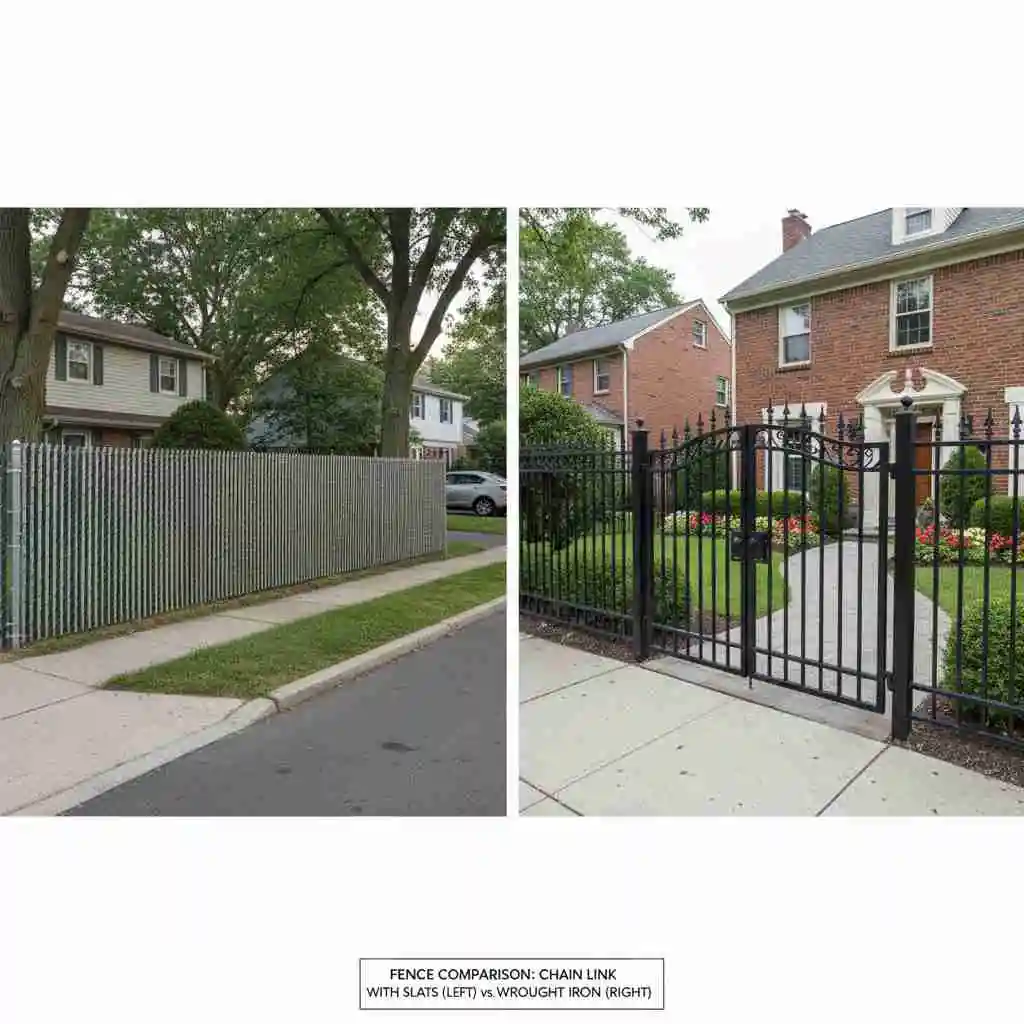
Chain link stays the workhorse for commercial fencing in Northlake, IL where perimeter length, airflow and wide vehicle sightlines matter more than a finished look. Galvanized or vinyl-coated chain link over a heavy-gauge framework absorbs the repeated gate cycles and truck traffic common around warehouse and dock aprons, and it upgrades cleanly with privacy slats or barbed wire when deterrence has to rise. Steel — welded mesh, expanded metal and heavier post systems — moves the same perimeter into high security fencing in Northlake, IL territory: tighter apertures, stiffer frames and harder-to-cut fabric make climbing and cutting less practical, which is why equipment yards, utility compounds and controlled-access lots tend to specify steel over standard chain link. The trade-off is finish; steel wants periodic recoating to hold appearance, while galvanized chain link fades into the background for years.
Aluminum, Wrought Iron and Vinyl Where Frontage Appearance Carries Weight
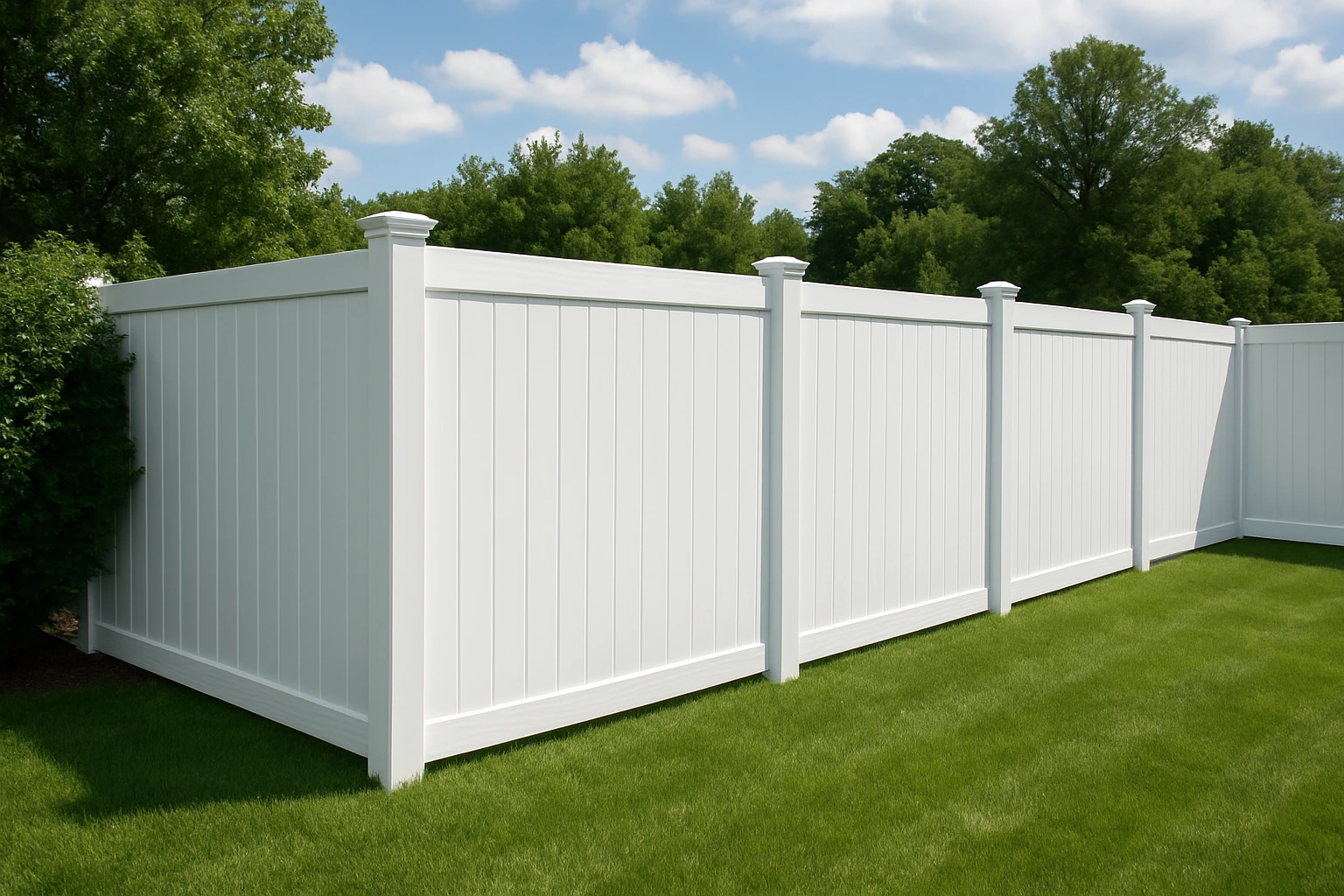
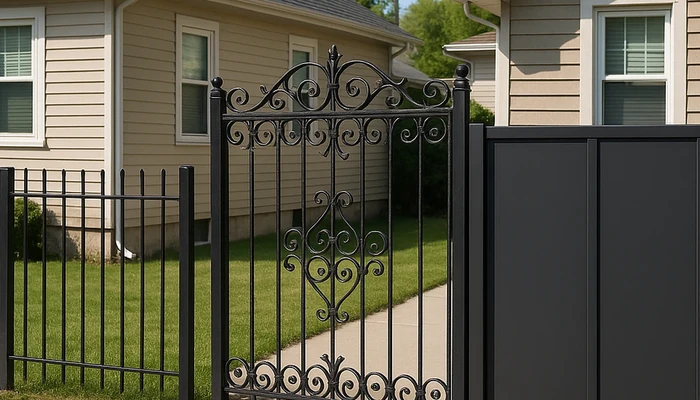
Retail centers, offices and multi-tenant properties along the North Avenue and Lake Street corridors usually need perimeter definition that reads as property, not fortification. Aluminum installation delivers that look with extruded rails and pickets that will not rust, which suits customer-facing frontage where the lot still needs to stay visible. Wrought iron offers a similar ornamental profile with more mass and a traditional weight; it holds up across a long service life but needs periodic repainting or powder-coat touch-ups to stand up to Midwest winters. Vinyl occupies its own lane — solid or semi-private panels that screen equipment pads, dumpster enclosures or service yards from the street without the recurring paint cycle wood and iron require.
Wood for Screening, Sound and Fast Repairs
Wood still earns a place on commercial sites that need screening, sound buffering or a quickly repairable enclosure, typically around utility structures, storage zones or rear service areas. It is the easiest material to modify on site, and also the one most exposed to moisture and freeze-thaw cycling, so staining and board replacement become routine over its service life.
Reading the Comparison Against the Property
When a commercial fence contractor in Northlake, IL walks a site, the questions that decide the material are usually the same: how much perimeter faces public view, how often gates cycle, whether the fence must block sightlines or preserve them, and how much upkeep the property can absorb. Chain link and steel answer deterrence and traffic; aluminum, wrought iron and vinyl answer presentation, privacy and low upkeep; wood answers screening and flexibility. Whether the work is placed with a large fence corp or a local fence contractor, the same rule holds — every commercial fence installation in Northlake, IL should be allowed to use more than one material across a mixed property instead of forcing a single system from curb to back lot.
Comparing bids gets easier when each proposal states the material, gauge, post spacing and finish behind the number. A material recommendation is only as good as the conditions it was measured against, so the practical next step is a site review that turns this comparison into a written specification for your Commercial Fence Company in Northlake IL project.
 Skip to content