Bids for perimeter work often use the same words to mean different things, and that gap is where change orders begin. The definitions below cover the terms that decide what a commercial fencing in Hodgkins, IL proposal actually includes, from how the perimeter is measured to who owns the gate hardware after the punch list is closed.
Installation and Scope Terms
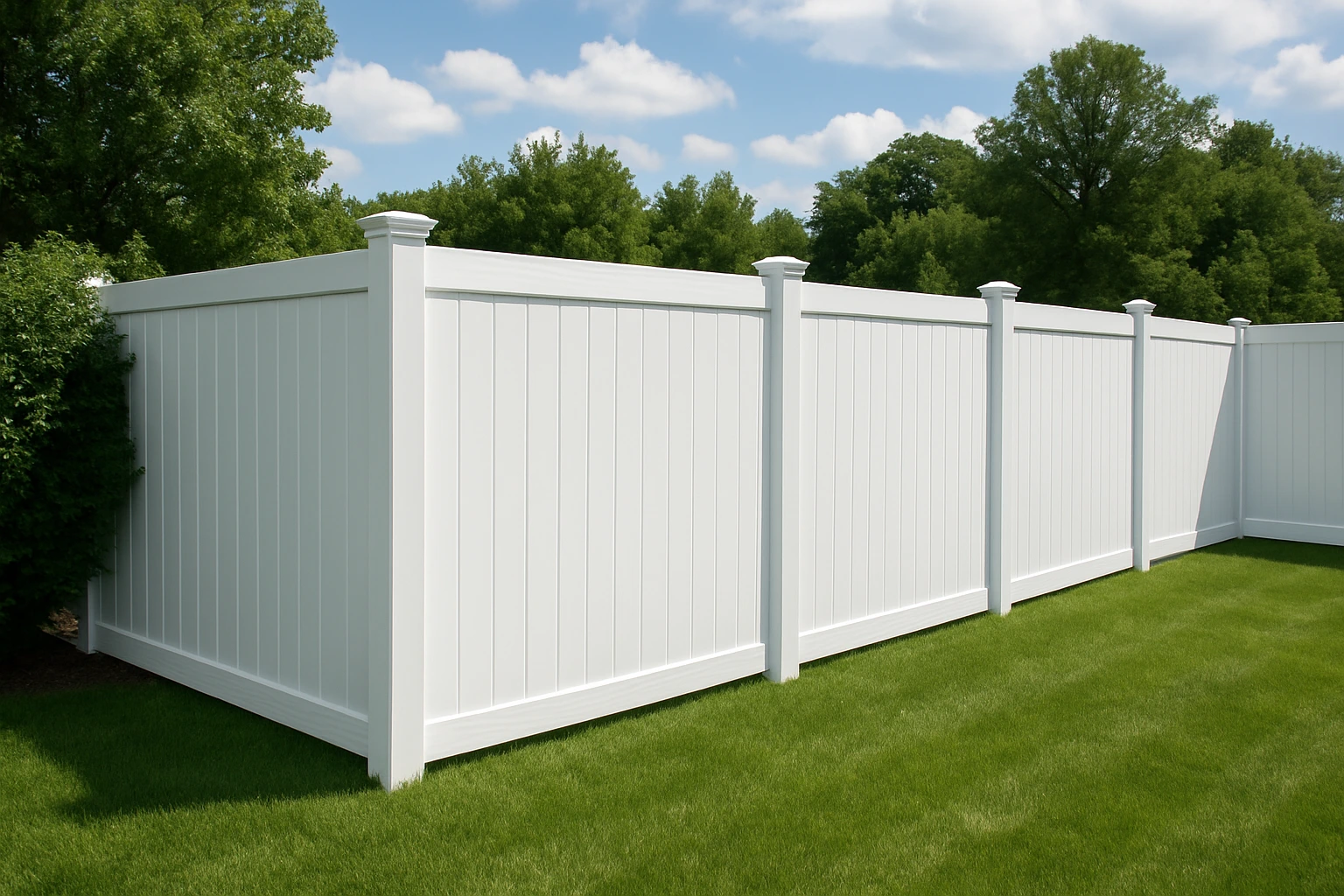
Commercial fence installation — Building a fence system for a business, industrial, municipal, or multifamily property, including posts, footings, panels, gates, and hardware sized for vehicle traffic, mowers, and daily use rather than occasional backyard wear.
Industrial fence installation — Installation on sites with heavy equipment traffic, loading areas, or long runs, where post spacing, footing depth, and gate openings are planned around trucks, trailers, and yard operations instead of pedestrian use.
Linear footage — The measured length of each fence run, in feet. It drives material quantities, post counts, and crew time, so a proposal should list it per fence line instead of giving one property-wide total.
Fence height and gauge — Height is measured from finished grade to the top of the fabric or picket. Gauge describes the thickness of the wire or metal, and lower numbers mean heavier material. A bid that names height but never names gauge has not answered the durability question.
Setback — The distance a fence must sit inside the property line or away from a street, alley, or sidewalk. Hodgkins regulates fences as structures, so setbacks and corner visibility limits are confirmed with the Village before the layout is staked.
Right-of-way — The strip of land a municipality or utility controls along a street, alley, or easement. Fence lines that stray into a right-of-way can be ordered removed at the owner’s expense, which is why boundaries are verified before the first post hole is dug.
Site assessment — An on-site review of grade changes, drainage, buried utilities, overhead lines, gate approach radius, and snow storage areas. Those findings feed the layout, the footing plan, and the final number, and they are why a commercial fence contractor in Hodgkins, IL should not quote a firm price from a photograph alone.
Perimeter and Security Terms
Perimeter security — The combined effect of fence line, gates, lighting, cameras, and controlled entry points. A fence is one layer of that system, and it works better when the gate and detection hardware are planned in the same package.
Perimeter definition — Making the operational boundary visible and unmistakable so deliveries, parking, and after-hours activity stay inside the intended area. It is a site-control function as much as a security one, and it is often the reason a facility fences before it adds cameras.
Temporary fencing — Panels and bases installed for a defined phase of construction and removed afterward. It separates active work zones from public access and is normally contracted separately from the permanent fence.
Anti-climb and topping — Design choices such as small mesh openings, flush hardware, and angled or barbed toppings that make a fence harder to scale. Hodgkins restricts barbed, electric, and sharply pointed fencing with limited exceptions, so any topping is checked against the current code before it is quoted.
Access control — The hardware and rules that determine who can open a gate and when, including keypads, card readers, intercoms, loop detectors, and remote fobs. It is specified at the same time as the gate, because a heavy gate paired with the wrong operator wears out quickly.
Automated gate systems — Sliding or swing gates driven by an operator, usually with safety loops, photo eyes, and a manual release for power failure. Gate weight, length, and daily cycle count decide whether a light-duty or commercial-duty operator is the right match.
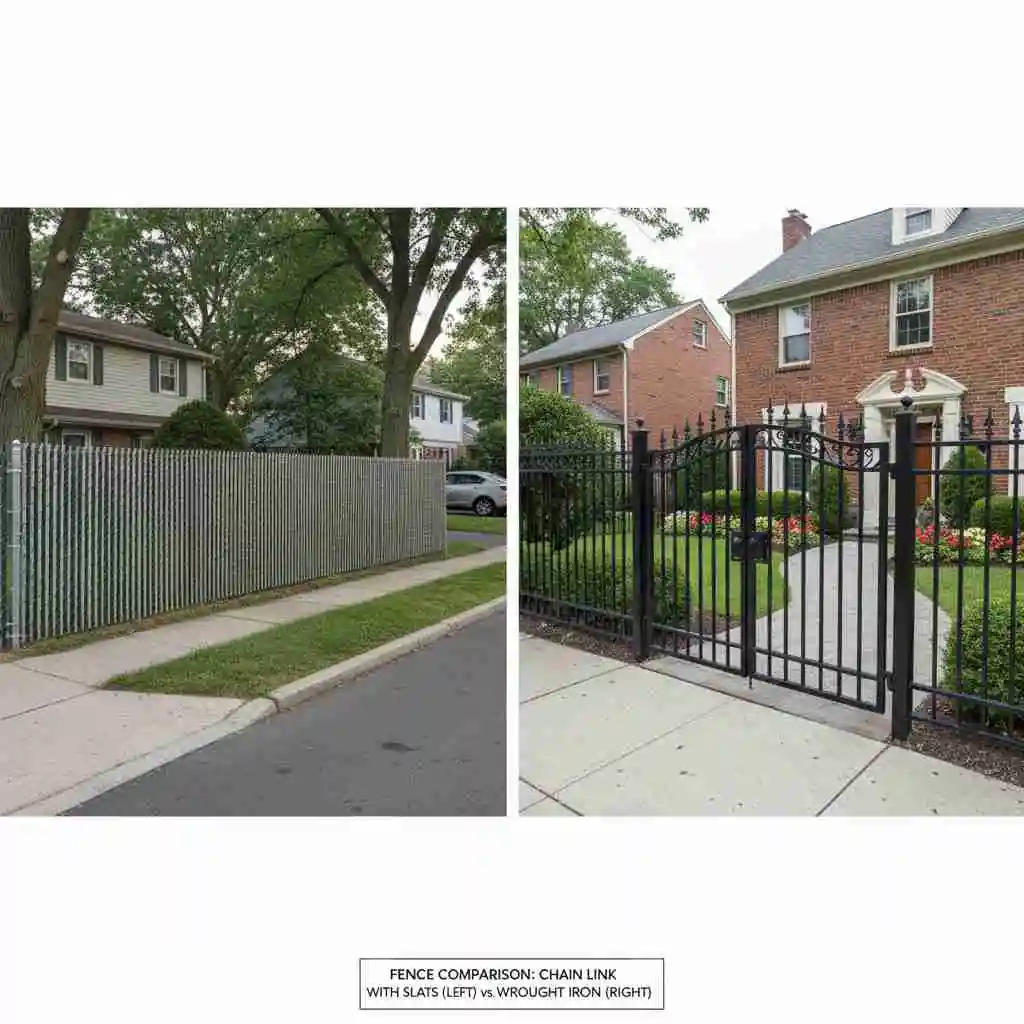
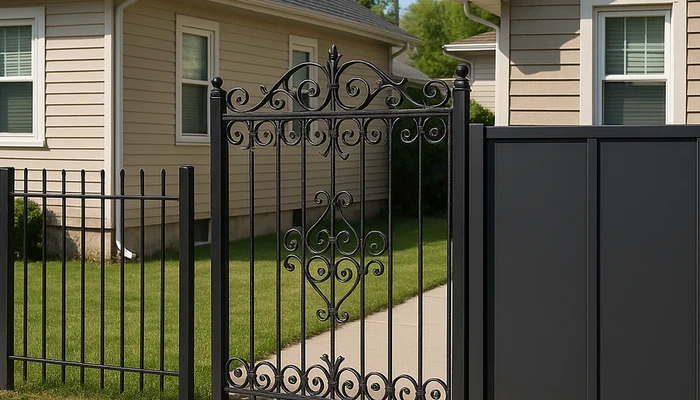
Commercial ornamental iron fence — Picket-style metal fencing specified where visibility and frontage presentation matter as much as physical control. A commercial ornamental iron fence in Hodgkins, IL is often chosen for customer entrances and street-facing edges, while service yards behind the building use heavier systems.
Materials, Finishes, and Planning Terms
Commercial-grade materials — Components rated for daily vehicle traffic, wind load, and long service life instead of occasional use. Heavier posts, thicker coatings, and rated hardware cost more up front and are usually what separates a perimeter that holds its line from one that needs patching every season.
Galvanized and powder-coated finishes — Galvanizing shields steel with a zinc layer; powder coating adds color and a second barrier against moisture. Both are specified by thickness and coverage, so a proposal should name the finish, not just the color.
Code-aware planning — Checking the layout against height and setback limits, corner sight lines, right-of-way boundaries, easement restrictions, and utility locate requirements before installation. In Cook County, Illinois, excavation starts with a locate request through JULIE/Illinois 811, and the markings can shift post locations.
Permit review — Confirmation of whether a building permit is required, which zoning district applies, and how the fence interacts with easements, drainage, and the right-of-way. That check happens with the Village of Hodgkins before material is ordered, since posted requirements can change.
When a proposal uses these terms without a measurement, a material callout, or a code reference behind them, ask for the detail in writing before comparing prices. A commercial fence company in Hodgkins, IL should be able to explain every line of its own bid in plain language.