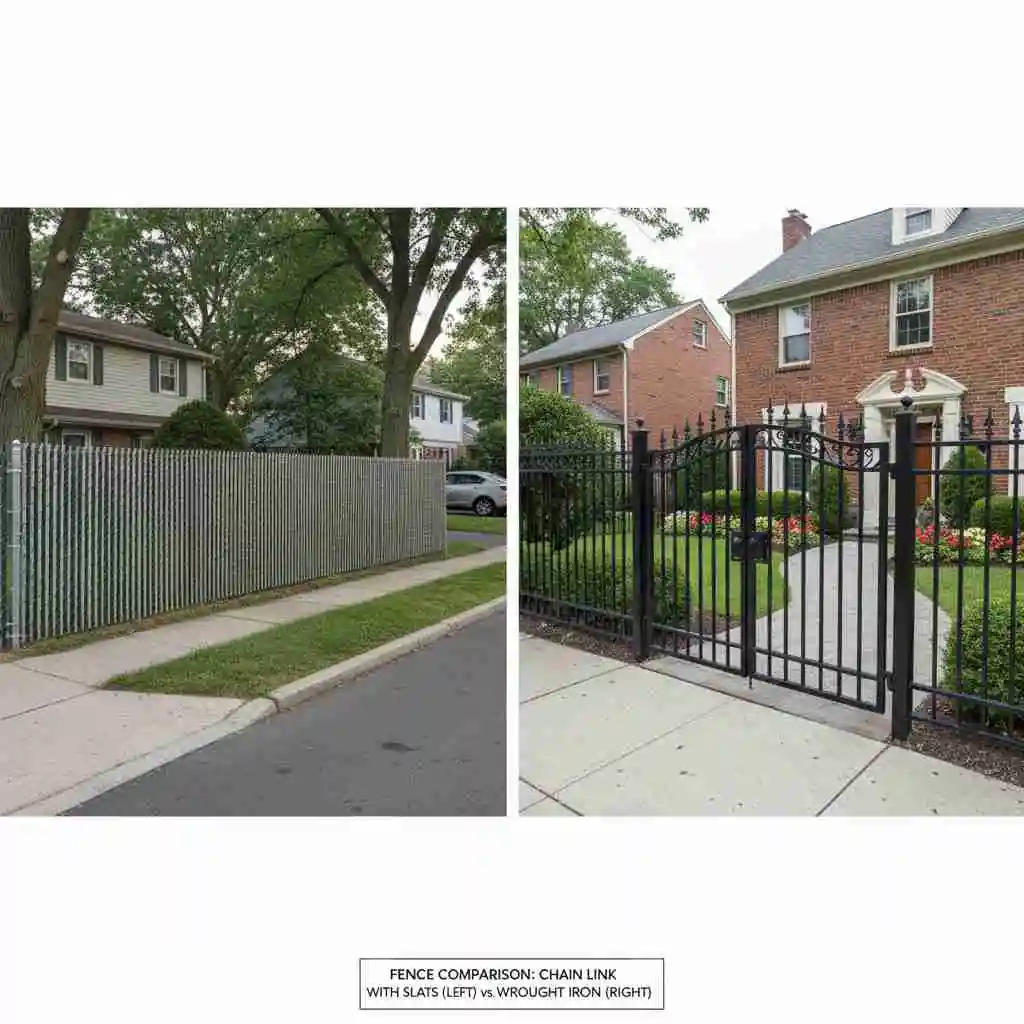
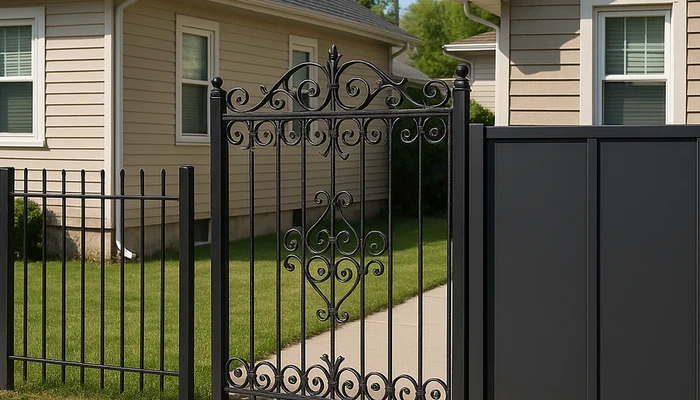
For most warehouse and industrial yards in Huntley, chain link is the practical default: it closes off a large perimeter at the lowest installed cost and keeps the fence line readable from the building and the guard shack. Steel fencing becomes the stronger answer when the property concentrates value in one place — a loading area, an equipment row, a trailer pad — or when frontage appearance matters as much as containment. The decision usually turns on four variables: gauge, height, coating and the level of security the site actually needs. That is the comparison below, written for a facility manager building a bid package for commercial fencing in Huntley, IL.
Gauge, Fabric And What Each Material Signals
A commercial chain link fence in Huntley, IL, is specified by gauge and mesh size. Standard 11.5-gauge fabric handled reasonably well for light commercial use, but long, exposed runs on a storage yard or truck court are usually better served by 9-gauge or heavier fabric, which resists cutting, sagging and deformation. Steel systems are measured differently: picket gauge plus rail and post wall thickness. Two steel bids can look identical on a drawing and differ by a full gauge in the pickets, which changes both rigidity and price. Ask for the number in writing on both materials.
Height, Yard Layout And Huntley Code Limits
Height does more for perimeter control than most owners expect, because it changes how easily the fence is climbed and how much of the yard is screened from outside view. Fence height in Huntley is tied to the zoning district, and the village also limits fence height inside vision-clearance triangles so sight lines at driveways and intersections stay open. On the Route 47 corridor, where a fence line often runs close to drives and parking entrances, that detail shapes the layout more than the material choice does. Eight feet is a common practical target for a warehouse perimeter; the permitted maximum still has to be confirmed for the specific district before posts are set.
Coating And Finish Through Illinois Winters
Galvanized chain link holds up against moisture but dulls to a grey finish over time. Vinyl-coated chain link in black, green or brown resists road salt and looks tidier against a building or a screened parking area, which matters when the fence is visible from I-90 access roads or from a customer entrance. Steel typically arrives galvanized and then powder coated, so the finish is part of the specification rather than an add-on. Coating quality is what determines how the perimeter looks in year five, not in month one.
Security Level: Where Steel Starts To Pay For Itself
Chain link defines a boundary. Steel raises the effort required to cross it. Narrow picket spacing on a steel system is harder to climb and harder to cut through than mesh, and the tighter visual mass of steel tends to read as a deliberate barrier. Security toppings such as barbed wire and sharpened materials are restricted under Huntley code across zoning districts, so sites that need a harder perimeter generally get it through height, heavier gauge, tighter picket spacing and controlled gate points rather than wire. That combination also keeps the fence easier to defend in a code review or a site inspection.
Cost Logic Over The Life Of The Perimeter
Chain link wins on installed cost per linear foot, and it wins again on repair: a damaged section is typically replaced without reworking the whole run of fence. Steel costs more upfront, and its gate hardware costs more as well, because heavier panels need heavier hinges and closer tolerances. On a property where the fence is part of the plan for protecting equipment, trailers or stored inventory, that premium is often measured against a single avoided loss. On an open storage lot with low traffic and nothing of concentrated value, the extra spend is harder to justify.
Choosing Between The Two Materials
- Choose chain link when the priority is enclosing a large open yard, keeping the perimeter visible, holding budget, and adding gates or access control in a later phase.
- Choose steel when the fence protects a loading area, equipment lot or storage row, or when the frontage faces customers, tenants or a public street.
- Consider a mixed perimeter — steel at the public face and main entrances, chain link along rear and side yards — when the site has both an appearance requirement and a fixed budget.
Planning The Installation Before Committing
Neither material performs well on a layout that has not been checked against the actual site. For commercial fence installation in Huntley, IL, that means confirming property lines and easements, verifying that the fence line does not obstruct drainage across the yard, locating buried utilities before any post is excavated, and matching gate placement to the way trucks really move in and out. A commercial fence contractor in Huntley, IL, should be able to walk that list with you, note the zoning district, and flag anything that will need a permit revision before a number is finalized.
When you compare bids for a Huntley warehouse or industrial perimeter, ask every bidder for the same three items: the gauge or picket specification in writing, the coating system, and the gate hardware. That makes the chain link and steel proposals genuinely comparable — and it keeps a low bid from being a lighter fence. Request a perimeter assessment to have the height, material and gate plan priced against your site instead of an average.
 Skip to content