 Skip to content
Turnstiles and Pedestrian Control: When a Gate Is the Wrong Tool
Deciding how to control foot traffic in and out of your property often comes down to choosing between gates and turnstiles. While both serve as barriers, many property managers and homeowners in the Chicago, Illinois area soon realize there’s more to access control than picking a simple swinging gate. The wrong access solution can compromise security, create liability risks, or lead to poor pedestrian flow. This long-form guide clarifies when to use turnstiles instead of gates, explores how pedestrian control works in real-world situations, and addresses code compliance, safety, and cost considerations. By the end, you’ll have the clarity to select or recommend the right option for your specific site—whether it’s an apartment building, business campus, industrial site, or public space. Throughout, we’ll share insights from Chicago Commercial Fencing, a trusted provider of perimeter security solutions in the Midwest.
Understanding Pedestrian Access Control
Access control means managing who can enter and leave a property, and how. For vehicles, traditional swinging or sliding gates usually suffice. For pedestrians, the solution isn’t always clear. Some property owners default to standard gates—yet these may create bottlenecks, allow tailgating (multiple people following through on one entry), or require constant monitoring. Turnstiles, on the other hand, are made to keep pedestrian movement orderly, controlled, and secure—especially in higher-traffic environments.
- Gates: Simple swinging or sliding barriers that restrict or allow entry. Easy to bypass if left open, can be locked or automated.
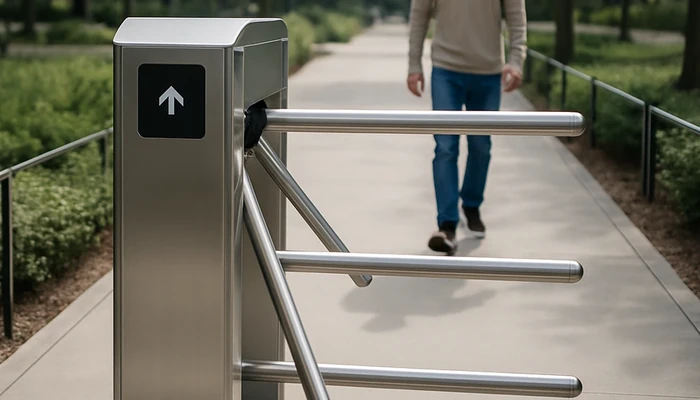
- Turnstiles: Mechanical or electronic devices that permit one person at a time, often requiring credentials or supervision, commonly seen at stadiums, factories, and transit hubs.
Choosing incorrectly can frustrate users or undermine security. For instance, simple gates at a busy campus might fail at managing surges of students or employees, while turnstiles at a residential driveway could be impractical.
Key Differences: Turnstiles vs. Gates
Let’s compare the two solutions across core criteria:
| Criteria | Gates | Turnstiles |
|---|---|---|
| Primary Use | General entry/exit for people and vehicles | Single-file pedestrian entry; crowd control |
| Control Level | Low–Medium (can be held open or allow tailgating) | High (one at a time, credential required) |
| Automation | Manual, keycard, or automated open/close | Usually electronic, integrates with access systems |
| Security | Moderate – depends on supervision | High – reduces unauthorized passage |
| Cost | Lower upfront, but possible staff/loss risks | Higher upfront, but saves on supervision costs |
| ADA/Accessibility | Must be specially designed/adjacent door | Requires an alternative accessible lane |
| Maintenance | Low (occasional hinge/latch care) | Moderate (electronics, moving parts) |
While gates provide basic barriers, they do not manage individual pedestrian flow or track access nearly as effectively as turnstiles. For business facilities, stadiums, government buildings, public pool entrances, or anywhere large groups enter, turnstiles offer clear advantages.
When Is a Gate the Wrong Tool?
Certain site needs and operational requirements call for more than a simple gate. Here are common situations where gates fall short:
- Crowd Management: High-traffic times (shifts, event starts, school arrival/dismissal) can overwhelm a gate, leading to chaos or unsafe crowding.
- Security: If tracking each entrant matters—such as in secured workplaces or ticketed events—gates allow two or more people in per opening, often without identification.
- Liability: Open or propped gates may violate building codes and create liability during emergencies or incidents.
- Accuracy: Need for attendance logs, time tracking, or audit trails.
- Staff Limits: Properties where constant supervision of gates isn’t feasible benefit from turnstiles with integrated access control.
In Chicago, Illinois, commercial and multi-family sites increasingly require improved pedestrian control to comply with safety, occupancy, and zoning regulations (reference). Always check local ordinances when making decisions.
Types of Turnstiles and Their Uses
Turnstiles vary by security level, site type, and user experience. Major categories include:
- Waist-High Turnstiles: The most common, allowing one person per entry. Ideal for offices, transit, gyms, and event venues. Often equipped with card readers or QR scanners.
- Full-Height Turnstiles: Resemble revolving doors and provide stricter security, preventing jumping or crawling. Used at stadiums, factories, and critical infrastructure.
- Optical Turnstiles: Barrier-free; use sensors and alarms. Sleek look for lobbies or modern campuses but require supervision to prevent tailgating.
- Accessible Gates: Adjacent to turnstile banks, these gates permit wheelchair, stroller, or cart access, ensuring ADA compliance.
Integration with Existing Fencing
Turnstiles are not standalone solutions—they must tie into the broader perimeter. Most are installed within a fenced area, integrated with access controls and monitored visually or via security systems. Chicago Commercial Fencing can consult on blending turnstiles with vinyl, steel, chain-link, and other commercial fencing types to support both aesthetics and operational needs (learn about perimeter security integration).
Advantages and Limitations of Turnstiles
Turnstiles provide unique benefits but are not suitable for every setting. Let’s examine both sides:
- Advantages:
- Enforce single-person entry, reducing tailgating and unauthorized access
- Integrate with badges, biometrics, or tickets for audit trails
- Automate attendance/time tracking for employees or guests
- Lower staffing needs at entrances/exits
- Provide physical and psychological deterrence
- Limitations:
- Higher upfront cost (product and installation)
- May impact accessibility if alternatives are not provided
- Maintenance requirements (mechanical and electronic parts)
- Not ideal for sites requiring wide or emergency access paths
For properties where access needs vary (e.g., emergency egress, deliveries, or occasional events), turnstiles can be coupled with strategic gates as recommended by a professional installer.
Codes, Compliance, and Safety Considerations
Safety and legal compliance should never be an afterthought. Building and fire codes frequently dictate requirements for gates and turnstiles, including:
- Minimum path width for egress or ADA accessibility
- Number and placement of exits for crowd safety
- Emergency override or breakaway features for turnstiles
- Proper signage and lighting for visibility
Consult local codes or resources such as the International Code Council (ICCSafe.org) to ensure all solutions comply before installation—and never remove or bypass safety features for convenience. Professional installers like Chicago Commercial Fencing incorporate these requirements into their planning process to protect clients from costly violations and liability issues.
Cost Factors: Gates vs. Turnstiles
Budget is often a decisive factor. Here’s what to consider:
- Gates: Lower initial cost; may need more frequent staff supervision, can lead to losses from unauthorized access if not monitored.
- Turnstiles: Require greater investment upfront but can reduce long-term operating costs (less staffing, lower loss risk). Maintenance and technology integration (card readers, sensors) influence total cost.
Always request a detailed site assessment and transparent quote from a trusted company. Contact Chicago Commercial Fencing if you’d like an expert site review or need help budgeting fence and access control options for your property.
Real-World Scenarios: Chicago Case Studies
Every property is different, but these sample scenarios highlight when turnstiles excel and when a gate is sufficient:
- Event Center, Downtown Chicago: High-volume foot traffic, need clear audit trail—implemented full-height turnstiles and ADA swing gates.
- Commercial Warehouse: Mix of staff, deliveries, and visitors—main staff entrance uses waist-high turnstiles linked to timeclock system; delivery gate separate, manually controlled.
- Multi-Family Residential Building: Residents prefer privacy but need guest access—hybrid system using keycard gates for residents, supervised access for visitors.
For more on site-specific considerations, see Understanding Perimeter Security Basics and Perimeter Security: A Comprehensive Overview.
Pedestrian Control Best Practices
- Clearly define who needs access and when (employees, residents, guests, vendors).
- Balance security with convenience—overly strict measures may frustrate users.
- Ensure compliance with codes and accessibility laws for all access points.
- Plan for emergencies: integrate override systems and proper egress routes.
- Monitor, review, and adapt as needs evolve—security is a living process.
Coordinating with Site Design and Technology
Modern access control often means connecting turnstiles or gates with electronic systems—badges, mobile credentials, video, or alarms. When blending with fencing, collaborate early with your contractor or security consultant so aesthetics and functionality both succeed. For practical tips on design integration, review Chicago Commercial Fencing’s perimeter security overview and best practices on ASCE engineering standards.
Turnstile and Gate Maintenance
Proper care extends the lifespan of any access control system. Maintenance tips include:
- Regular cleaning and inspection of moving parts
- Checking electrical components and software updates for electronic turnstiles
- Testing emergency features monthly
- Maintaining adjacent fence structures for stability and security
For site-specific recommendations and to ensure your system remains code-compliant, consult professionals with local experience in Chicago’s climate and regulatory environment.
FAQs: Turnstiles, Gates, and Pedestrian Control
- Q: Are turnstiles always more secure than gates?
A: In most pedestrian applications, yes—turnstiles limit passage to one person at a time and can require credentials or IDs. However, the best solution depends on your unique site needs.
- Q: Can turnstiles be ADA compliant?
A: Turnstiles themselves are not accessible, but every bank of turnstiles should include at least one adjacent ADA-compliant gate or door. Always check local accessibility requirements in Chicago, Illinois.
- Q: What upkeep do turnstiles need?
A: Periodic mechanical inspection, cleaning, electronic testing, and prompt attention to malfunctions. A local fencing expert can set up a maintenance schedule.
- Q: Are gates sufficient for small businesses or homes?
A: For lower traffic and where high security is not a concern, gates are often sufficient. In high-traffic or security-focused sites, consider turnstiles.
- Q: How much do turnstile systems cost?
A: Cost depends on type, technology, installation complexity, and integration with other systems. Request a site-specific estimate from an experienced installer in your area.
- Q: Can I integrate turnstiles with my current security system?
A: Most modern turnstiles support integration with access cards, biometrics, and video systems. Work with a contractor familiar with such integrations.
- Q: Are turnstiles suitable for outdoor use in the Chicago climate?
A: Yes, with proper material selection and weatherproofing. Discuss options designed for Midwest weather with your installer.
- Q: What are common mistakes when choosing turnstiles or gates?
A: Failing to plan for peak traffic, ADA accessibility, proper egress, or code compliance. Always work with an experienced, locally knowledgeable team.
Conclusion: Choosing the Right Pedestrian Control Solution
Choosing between gates and turnstiles is about more than cost or aesthetics—it impacts safety, compliance, and security long-term. For high-traffic or high-security areas, turnstiles excel at managing flows and access. For homes or low-traffic sites, gates may be enough. Always evaluate your goals, consult local building codes in the Chicago area, and seek professional advice when planning your perimeter. For help selecting the right solution or a detailed assessment, contact Chicago Commercial Fencing or read our full perimeter security overview for more insights.
Interested in learning how modern fencing options can complement your access control system? Explore vinyl fence solutions or review chain link fence options for durable, cost-effective boundaries.
About Chicago Commercial Fencing
Chicago Commercial Fencing is a professional fence company with over 15 years installing fences in the Chicago, Illinois area. Serving homeowners and businesses across the region, the team delivers durable, code-compliant installations for residential, commercial, and industrial properties. Their expertise covers wood, vinyl, steel, and aluminum fencing, as well as advanced pedestrian control and perimeter security solutions. Chicago Commercial Fencing prioritizes honest guidance, clear communication, and full compliance with local codes and accessibility requirements, giving property owners peace of mind from planning to final inspection.
fence contractor in chicago, fence options chicago, fence near chicago il, fence in Forest Park, fence services Burr Ridge IL, fence North Halsted IL, fence near Pilsen, Schiller Park fence, fence replacement Cook County IL, fence The Loop
