 Skip to content
Perimeter Intrusion Detection on Fences: Where Sensors Earn Their Keep
If you’re exploring fence options for your property, you’ve likely come across the concept of “perimeter intrusion detection”—but what exactly does it mean for your home or business fence? With security threats evolving, basic barriers alone are often not enough to keep unwanted visitors out. Many Chicago homeowners and property managers ask: How effective are fence-mounted sensors, and where do these systems offer real value?
This comprehensive guide will demystify perimeter intrusion detection on fences, explain the core technologies behind smart security barriers, and help you understand practical trade-offs—including cost, maintenance, and realistic expectations for the Chicago, Illinois area. By the end, you’ll know if advanced fence sensors are right for your situation and how to approach a project step by step. Chicago Commercial Fencing brings local expertise and clear advice to this fast-changing field, so you can make confident security upgrades.
Understanding Perimeter Intrusion Detection Systems (PIDS)
Perimeter intrusion detection systems (PIDS) are electronic or electromechanical solutions designed to detect and alert you to unauthorized attempts to cross your property’s boundary. When deployed on fences, these systems turn a physical barrier into a “smart” security line that actively reports threats instead of passively deterring them.
PIDS can be used for homes, multifamily residential settings, businesses, schools, storage yards, infrastructure and more. Their adoption has grown as property owners and managers aim to move from “reactive” to “proactive” security—especially in busy urban areas like Chicago, Illinois where layered defense is key.
Key Benefits of PIDS on Fencing
- Early Warning: Instant alerts can let you react before intruders gain access to the property.
- Integration: Sensors can trigger cameras, alarms, or even alert security companies automatically.
- Deterrence: Just knowing a fence is equipped with electronic detection may discourage intruders.
- Documentation: Modern systems can log events, producing reports for security reviews or insurance.
Main Types of Fence-Mounted Intrusion Sensors
There are several categories of perimeter sensors for fences. Each type detects unique patterns and disturbances—weighing strengths, weaknesses, and suitability for Chicago’s climate and property types is essential.
1. Vibration and Motion Sensors
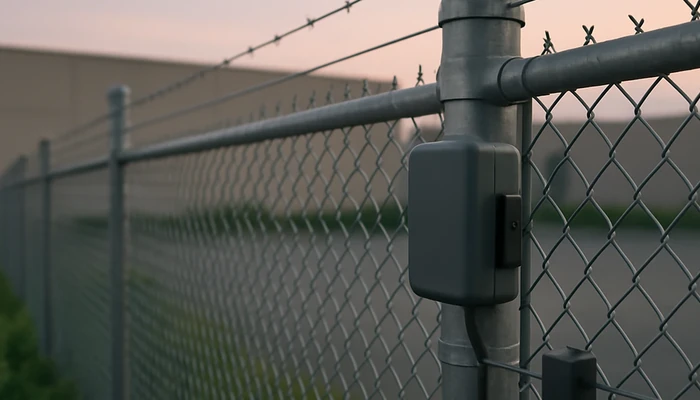
These devices sense vibrations, impacts, or movements on the fence. When someone tries to cut, climb, or shake the fence, the sensor trips an alert. Often found on chain link or mesh fences, these systems use:
- Microphonic cables (detects flex/vibration over long runs)
- Accelerometers (detect precise motion — smart, but may need calibration)
- MEMS sensors (miniature, reliable for short to medium spans)
Advantages: They’re cost-effective, scalable, and proven. Chicago’s seasonal wind and ice can create false alarms unless properly tuned. Not suitable for loose or moving fence sections.
2. Taut Wire Sensor Systems
Physical wires, tensioned tightly along the top or body of the fence, act as both barrier and sensor. Any deformation (trying to spread wires, climb over, or cut through) results in an alarm.
- Reliability: High accuracy, low false alarm rate if installed correctly.
- Cons: More expensive up front. Requires routine maintenance to maintain proper tension, especially after windstorms. Most practical for high-security applications in the Chicago area.
3. Fiber Optic Cable Detection
Fiber optic cables, woven through the fence or installed along its base, pick up vibrations and acoustic signatures. They’re extremely sensitive and immune to electrical interference or lightning (a plus for Chicago’s stormy seasons).
- Pros: Flexible deployment, minimal maintenance after install.
- Cons: Higher cost, needs professional installation and calibration. Overkill for most residential uses, but a solid fit for utility, data center and large business fencing.
4. Capacitive or Electric Field Sensors
These systems establish an invisible electric or magnetic field along the fence. If the field is disrupted (by approach or touch), an alarm is triggered.
- Excellent at detecting attempts before actual contact.
- Can be sensitive to weather and stray animals; humidity and snow (common in Chicago) can affect reliability. Rare in residential settings.
5. Combined Sensor Approaches
Some high-end solutions blend two or more sensor technologies and integrate with cameras or lighting for reduced false positives. These are more complex but provide strong coverage on large or mission-critical properties.
Smart Fence Integration: Cameras, Alarms, and Automation
The real strength of modern intrusion detection lies in integration. Today’s sensors are usually just one part of a broader security system:
- CCTV Cameras: Can automatically pan/zoom or record when the fence is disturbed.
- Audio/Visual Alerts: Sirens, strobe lights, or even PA systems may be triggered on breach.
- Cloud Platforms: Remote monitoring and incident history accessible by property managers.
- Smartphone Integration: Instant mobile alerts allow rapid responses from anywhere.
Integration is where value grows—especially for facilities and businesses—but even many private homeowners now use sensors connected to cameras and smart home systems.
Choosing the Right Fence for Sensor Integration
The base fence structure matters: not every fence is equally suited for sensor mounting. Here’s a quick look at the most common options:
| Fence Type | Sensor Compatibility | Chicago Use Case |
|---|---|---|
| Chain Link | Excellent (vibration, fiber optic, microphonic) | Commercial, schools, storage lots |
| Wrought Iron | Good (needs sturdy mounting, best for accelerometers) | Historic, high-end residential, institutions |
| Steel or Aluminum | Good (less flex to trigger sensors, but supports many types) | Modern businesses, government properties |
| Wood | Possible but tricky (moisture/swelling affects sensor reliability) | Private homes, where deterrence is top goal |
| Vinyl | Less common (limited by panel flex and temperature variance) | Residential, where tech trade-off is acceptable |
For more on fence material trade-offs, see Choosing Your Perfect Fence Panels or Understanding Perimeter Security Basics.
Factors That Affect Sensor Performance
In cities like Chicago, environmental and installation factors matter just as much as the technology:
- Extreme Weather: High winds, ice, and snow can cause false alarms in untuned systems. Rigid mounting and weatherproofing are key.
- Electrical Interference: High-traffic industrial areas may create “noise” for some sensor types; fiber optic options resist this best.
- Maintenance: Sensors and wires need regular checks for animal damage, lightning strikes, or storm debris.
- Fence Condition: Loose posts, worn foundations, and rust can reduce accuracy. A solid, well-installed fence is step one.
Tip:
If your property is in a dense Chicago neighborhood, talk to neighbors before installation and check for HOA or city code restrictions. Integrate only after the physical fence is in top condition.
Costs—Upfront and Ongoing
Sensor-enhanced fences range in price. Here’s what affects the total investment:
- Sensor Type: Vibrational and microphonic sensors are affordable; fiber optic and taut wire systems are higher-end.
- Fence Material and Size: Complex layouts and larger footprints cost more to cover.
- Integration: Adding cameras, alarms, and smart controls increases cost but also long-term value.
- Maintenance: All sensors require periodic inspection; some (like taut wires) need tension checks after major storms.
Always get multiple estimates and ask exactly what is included—installation, wiring, integration, and future support. Chicago Commercial Fencing recommends using only code-compliant, certified fencing and sensor installers for maximum reliability and warranty protection.
Maintenance and Realistic Expectations
Even the most advanced sensor is only as good as the fence supporting it—and ongoing attention. Here’s how to ensure performance:
- Inspect sensor connections and wires every season, especially after storms or freezing weather.
- Record and investigate every false alarm to fine-tune settings and check for physical issues.
- Recalibrate sensors when new landscaping, nearby construction, or other environmental changes occur.
- Replace damaged components promptly—small issues can cascade into security gaps.
For traditional fence care tips, see Preventive Maintenance For Iron Fences or Ways to Avoid Vinyl Fence Damage.
Compliance, Codes, and Best Practices
Chicago, Illinois has strict local codes covering fence heights, allowed materials, power sources, and alarm noise levels. Before starting a perimeter intrusion detection project:
- Confirm all plans with city zoning and building departments.
- Document your system for insurance and first responders—clear signage can help avoid accidental triggers.
- Follow all manufacturer protocols for sensor placement and calibration.
- Ask installers for proof of insurance and experience in local weather conditions.
For regulatory context, see The Impact of Local Regulations on Commercial Fence Installation.
Where Sensors Truly Make a Difference
Is investing in perimeter intrusion detection worthwhile for every property? Not always. Here are situations where sensors provide maximum value:
- Properties with Expensive Equipment: Storage yards, vehicle fleets, utility infrastructure.
- Large Unsupervised Perimeters: Schools, business campuses, community facilities.
- Remote or Unattended Locations: Areas with limited foot traffic at night or weekends.
- Where Early Warning is Critical: Data centers, government buildings, or any site requiring rapid response protocols.
- Layered Security Required: Locations already using cameras or guards—sensors add a detection “layer”.
For private homes, a basic fence plus landscape lighting and occasional camera integration is often enough for most situations. Sensors make sense where threat levels are elevated or property value is high.
Case Example: Integrating Sensors on an Urban Chicago Commercial Site
A major warehouse facility in Chicago wanted early alerts for attempts to breach their chain link perimeter, which was already 8 feet high with barbed wire. They opted for a microphonic cable system connected to a monitored alarm panel. Integration with on-site cameras provided immediate video confirmation of each incident. Over the first year, several false alarms led to sensor recalibration—after which the system functioned seamlessly, preventing after-hours break-ins. This project highlighted the ongoing tuning required for Chicago’s weather swings, and the need to reinforce existing fence posts to ensure reliable sensor mounting.
Innovations & Future Trends in Perimeter Detection
Fence sensor technology is advancing rapidly. Recent industry news, such as from the American Society of Civil Engineers, spotlight how artificial intelligence (AI) and integrated sensor networks are transforming urban security and infrastructure resilience.
Expect future fence systems to:
- Self-learn normal vs. suspicious activity, reducing false positives
- Communicate with citywide safety networks or law enforcement directly
- Blend seamlessly with lighting, signage, and monitoring devices for safer streets
Staying informed about best practices and technologies enables property owners to plan for scalable upgrades in the years ahead. For a further look at resilient construction trends, see this ASCE overview on resilience and sustainability.
Further Reading on Fence Security and Design Improvement
- Perimeter Security: A Comprehensive Overview
- Business Fence: A Strategic Necessity
- Key Questions to Ask Before Hiring a Commercial Fence Company
- Latest Technologies In Industrial Iron Fencing
Frequently Asked Questions
What is a perimeter intrusion detection system (PIDS) for fences?
PIDS are technology-based solutions that alert you to unauthorized physical attempts to cross a fence—using sensors that detect motion, vibrations, or field disruptions. They can automatically trigger alarms or camera recordings to speed up response and documentation.
Are intrusion sensors necessary for all fences?
No. They’re best for sites with high-value assets, large perimeters, or elevated risk. Many homes and small businesses may not require advanced sensors—basic fencing and lighting provide sufficient deterrence in most residential neighborhoods.
How often should fence sensors be maintained?
Regular maintenance is vital. Sensors should be visually inspected at least seasonally—especially after storms, heavy winds, or drastic temperature changes. Annual professional checkups keep your system reliable.
Do sensor-equipped fences need special installation?
Yes. Proper mounting, weatherproofing, and fence integrity are essential for reliable operation. Always use certified, experienced installers familiar with your local code requirements and climate challenges.
Can I integrate these sensors with my existing camera or alarm system?
Often yes—most modern sensors can be connected to central alarm panels, video monitoring, and even smartphone apps. Discuss options with your installer and bring details about your current systems for assessment.
How much does it cost to add sensors to a fence?
Costs vary widely with technology choice, fence type, property size, and integration needs. Vibration sensors may run from a few thousand dollars for small lots, while fiber optic or taut wire systems can be significantly higher. Get detailed quotes for your specific property.
Are wired or wireless sensors better for perimeter fences?
Wired sensors offer reliability and resistance to tampering, while some wireless options are easier to install and maintain—especially for temporary setups. Your choice should reflect the level of security required and site constraints.
Will Chicago weather affect performance?
Yes—snow, ice, and freezing/thawing cycles can impact both sensors and fence condition. Professional installation, proper calibration, and regular inspections compensate for climate-related wear.
Can these systems reduce my insurance premiums?
Some insurers offer discounts for monitored security systems, including fence-based intrusion detection, especially for commercial properties. Ask your agent for qualifying requirements and recommended documentation.
What’s the first step if I’m interested in adding fence sensors?
Assess your actual security needs and the condition of your existing fence. Consult a local expert to get specific options and a detailed plan, including code compliance in the Chicago area.
Conclusion: Making Fence Sensors Work For You
Perimeter intrusion detection on fences transforms a static property line into an active security asset. From basic vibration sensors to advanced fiber optic systems, there’s now a fit for nearly every property—when chosen thoughtfully. Consider your goals, threat level, and budget before investing. For homes and small businesses in Chicago, reliability and maintenance may matter more than high-tech features. For larger, complex sites, layered detection can be the key to peace of mind.
Want a fence security assessment or have questions? Contact Chicago Commercial Fencing for transparent advice and code-compliant installations, or request an estimate for a chain link fence upgrade and explore sensor-ready options.
About Chicago Commercial Fencing
Chicago Commercial Fencing has over 15 years of experience installing secure, durable fences for homeowners and businesses in Chicago, Illinois and surrounding areas. The team specializes in wood, vinyl, aluminum, steel, and wrought iron fences, providing code-compliant, insured, and transparent service for both residential and commercial projects. With a focus on clear education and honest expectations, Chicago Commercial Fencing helps you choose the best solution for protection, privacy, and curb appeal.
Fence, fencing chicago, fence repair chicago, security fence Old Norwood, fence Mount Prospect IL, Prospect Heights fence, perimeter fence North Halsted, fence replacement Barrington, fence Arlington Heights, fence services Logan Square
