 Skip to content
Anti-Climb Without the Prison Look: Security That Still Looks Professional
For homeowners and property managers, achieving genuine security means more than just setting up a barrier — it’s about keeping people safe, respecting privacy, protecting assets, and maintaining the character of your property. But what if you want excellent perimeter security without turning your space into a fortress? The demand for anti-climb fences that don’t look like a prison is greater than ever, especially as crime concerns, liability risks, and aesthetic expectations all rise together.
Whether you oversee a residential yard in Chicago, Illinois or a business with strict access needs, your ideal fence should strike a careful balance: strong and hard to breach, yet visually inviting and professionally designed. This guide unpacks how property owners can reinforce their boundaries with anti-climb design, practical materials, compliant installs, and important trade-offs for long-term value. Drawing on years of experience with Chicago Commercial Fencing, you’ll get clear options, real-life examples, and the confidence to plan a fence solution you can trust.
Understanding Anti-Climb Fence Principles
Before comparing specific styles, it’s vital to grasp how anti-climb design works — and the science behind deterring intruders effectively.
- Anti-climb fencing describes features or construction that make it extremely difficult for people to climb, scale, or otherwise bypass the barrier. This can involve the fence’s physical shape, top profile, material, spacing, or special deterrents.
- The key goal is to buy time: making unauthorized access take long enough that it increases the risk of detection or intervention.
- Excellent anti-climb fences never signal “high risk” by looking hostile — instead, they blend with surroundings, following local codes and professional design cues.
Main Types of Anti-Climb Fences
Modern anti-climb fencing comes in multiple forms. Here are the leading fence categories suited for properties aiming for strong security with a polished look:
1. Welded Wire Mesh Panels
- Extremely popular for commercial and institutional settings.
- Welded mesh panels feature tight wire spacing (usually 2″ x 0.5″ grids), making toe- and finger-holds nearly impossible.
- Panels are powder-coated for a clean, professional appearance — no chain-link “prison” visuals.
- Excellent performance in Chicago’s freeze-thaw cycles.
2. Ornamental Steel or Aluminum Fences
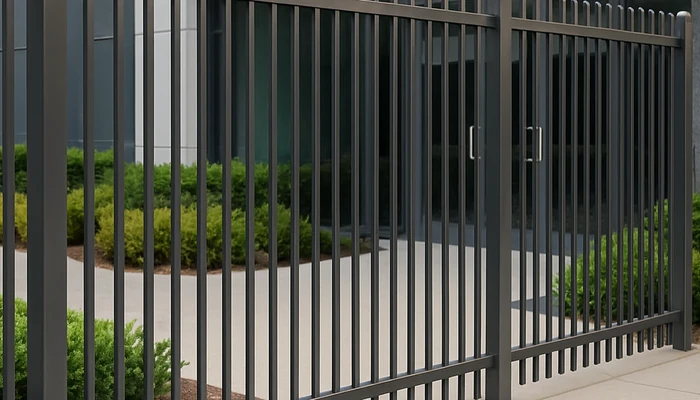
- Vertical pickets with spear tops block climbing while enhancing curb appeal.
- Aluminum versions resist rust, are low maintenance, and come in multiple contemporary and classic designs.
- Steel offers greater strength and customization for unique security requirements.
3. Composite and Privacy Panel Fences
- Boards or panels installed tightly together, often 6ft+ in height, block both views and climbing attempts.
- Options for wood, vinyl, or capped composite provide privacy without sacrificing visual style.
- When combined with flat or rounded tops (no rails on the attack side) these stand up well to climbing attempts yet look residential.
4. Chain Link (with Specialized Anti-Climb Add-ons)
- Standard chain link is easy to climb — but alternatives exist:
- Small mesh size (under 2″) resists toe/hand placement.
- Fence heights of 8’+ and tension wire make for a much harder climb.
- Vinyl or powder coating helps soften the utilitarian look.
- For businesses, mesh panels or decorative privacy slats are preferred for aesthetics.
Anti-Climb Features That Don’t Sacrifice Visual Appeal
Not every security fence has to advertise its purpose. Here’s how to make your anti-climb solution work beautifully for homes or professional settings:
- Vertical Pickets, Not Horizontal Rails: Choose fence types with vertical rather than ladder-style horizontal support on the outside. This removes easy climbing assistance.
- Flush or Spear Tops: Fences with smooth, continuous top lines or spear points are harder to grip, and double as a design feature (especially in ornamental steel and aluminum).
- Panel Height: Go for 6 feet minimum for privacy settings, 7–8 feet or more for commercial or high-risk zones. Higher panels, code-permitting, improve security without extra visual bulk at street level.
- Dense Mesh or Board Spacing: The closer the picket/board or mesh spacing, the less chance for someone to gain purchase with hands or feet.
- Powder-Coated or Colored Finishes: Color choices allow fences to blend with architecture or landscaping, making them feel less imposing.
Side-by-Side Comparison Table: Fence Types for Discreet Security
| Fence Type | Main Material | Anti-Climb Features | Aesthetic Profile | Best For | Drawbacks |
|---|---|---|---|---|---|
| Welded Wire Mesh | Steel, powder-coated | Tight mesh, no handholds | Modern, minimalist | Commercial, high-security | Can appear “institutional” if color/design not considered |
| Ornamental Steel/Aluminum | Metal, powder-coated | Vertical spear pickets | Decorative, classic or modern | Residences, business fronts | Costlier than chain link |
| Privacy Panel (Vinyl/Wood/Composite) | Vinyl, wood, composite | Solid, no gaps, height | Warm, home-friendly | Homes, schools, professional offices | Requires careful code review for height/setback |
| Chain Link (Enhanced) | Galvanized steel or coated | Small mesh size, tension wire | Simple, blends in | Industrial, back-of-house | Default look is utilitarian |
Chicago Area Codes & Professional Standards
In the Chicago, Illinois area, local fence regulations are serious business. To maintain security and appearances, you must:
- Check maximum fence height and materials allowed by district or neighborhood.
- Respect corner visibility, setbacks, and property line rules; many residential areas cap fence height at 6 feet, while certain business zones allow higher installs for security purposes.
- Consult with experts who understand how the International Code Council guidelines and local ordinances affect fence choices.
Access control systems (card readers, secure gates) are also subject to electrical and building codes. For a full legal overview, visit ICCSafe.org.
Tip: For unique high-value sites or multi-family properties, schedules can get complex. Let a pro handle the details and approvals.
Trade-Offs: What Every Owner Should Expect
Even the best security fences are a series of practical compromises. Here’s what to weigh as you design your solution:
- Appearance vs. Security: The more visible deterrents (razor wire, heavy spikes), the less friendly the site seems. Subtle security is achieved with quality materials and smart design — not intimidation.
- Cost vs. Long-Term Value: Highly durable ornamental metal or custom mesh costs more upfront but offers decades of protection with minimal maintenance.
- Privacy vs. Visibility: Solid panels block views but also reduce passive surveillance from neighbors or employees. Choose by balancing your site’s natural sight lines.
- Neighborhood & Insurance Requirements: Many Chicago communities, insurers, and HOAs limit fence types and features. Check rules before purchasing materials.
Material Spotlight: What Makes an Effective, Attractive Anti-Climb Fence?
Steel and Aluminum
Metal fences with vertical pickets — especially spear-top or pressed point styles — are ideal for both commercial and upscale residential use. Powder-coated finishes prevent corrosion and allow for custom color matching.
Pro Insight: Maintenance for these fences is relatively low, but regular inspections for chips, scratches or loose hardware prevent long-term problems. If you want to explore more about modern iron fencing technologies, see our guide on industrial iron fencing technologies.
Welded Wire and Mesh Panels
These fences are robust and almost impossible to climb. Thanks to tightly spaced wires and tamper-resistant hardware, they work well for schools, offices, and secure businesses. Unlike older chain link, colored mesh panels blend into landscaping and can meet high design standards when paired with a proper gate system.
For tips on selecting mesh sizes and security grades, our post explains mesh options for chain link fences in detail.
Composite and Vinyl Panels
Composite, vinyl and high-quality wood alternatives can create a formidable physical and visual barrier. Capped composite and advanced vinyl resist fading and cracking — but always opt for reinforced posts and strong hardware, especially in wind-prone Chicago.
To learn more about the advantages and downsides of different vinyl fence types, browse our resource on vinyl fence pros and cons.
Gate Security and Access Points
Gates are your fence’s weak point. No matter how anti-climb the rest of your perimeter is, a poorly designed gate invites trouble.
- Use heavy-duty frames with secured capping and tamper-proof hinges.
- Electronic keypad or card-access gates often integrate best with modern anti-climb systems — but must be code-compliant.
- Automatic closing hardware and regular testing keep gates secure over time.
Maintenance Expectations: Keeping Security (and Looks) High
Every fence material needs upkeep:
- Metal Fences: Wash occasionally, touch up paint, inspect for rust/corrosion — especially at welds and joints.
- Vinyl and Composite: Rinse with water yearly; periodically check for cracks or loose boards.
- Wood: Stain/seal at least every 1-2 years; repair warps, cracks immediately; be alert for rot in ground-contact posts.
Neglected maintenance isn’t just a cosmetic issue; small weaknesses drastically reduce security.
Integrating Anti-Climb Security With Your Overall Site Plan
Think of your fence as part of a broader security strategy. Here’s how to layer security for best results:
- Lighting: Illuminated perimeters reduce shadow cover and discourage attempts after dark.
- Landscaping: Dense shrubbery near fences can help or hinder climbing, depending on placement. Prune trees for clear sight lines.
- Signage: Clear, professionally made security signs act as both a deterrent and a legal notice. Find out more at our post on fence signage for businesses.
- Technology: Surveillance cameras (properly placed) further discourage intrusions and help with liability.
For more comprehensive planning, read our overview of perimeter security strategies.
Realistic Expectations: What Anti-Climb Fences Can and Can’t Do
No fence is infallible. Here’s what property managers and homeowners in the Chicago area need to keep in mind:
- Delay vs. Total Prevention: Fences buy time, not guaranteed prevention. Determined intruders may still attempt breach — but high-difficulty fences deter most crimes of opportunity.
- Legal Considerations: Some deterrents (like barbed or razor wire) are prohibited in residential or commercial areas of Chicago, and may invalidate insurance policies. Always double-check codes and insurance.
- Layered Security Works Best: It’s the combination of design, materials, lighting, and sensible monitoring that delivers true security.
Design Myths: Common Misconceptions About Anti-Climb Security
- Myth: Only ugly or “harsh” fences deliver true security.
Fact: Quality design, modern materials, and color-matching can provide high-end looks with anti-climb performance. - Myth: The tallest fence is the safest.
Fact: Codes often restrict heights. It’s usually more effective to design for density, spacing, and strategic layout. - Myth: Chain link always looks industrial.
Fact: With smaller mesh, color coatings, and well-designed posts, chain link can be discreet and professional. - Myth: You must choose between privacy and security.
Fact: Technologies allow both to be achieved if planned from the start. - Myth: Any contractor can build an anti-climb fence.
Fact: Expertise in security design and code compliance makes a real difference, especially in the Chicago, Illinois area.
Expert Tips: Getting the Best Results From Your Security Fence
- Start by identifying the specific risks to your property — don’t over-engineer if you’re not in a high-threat area, but don’t settle for decorative-only fencing for essential assets.
- Check local codes (including insurance and HOA policies) before selecting material or height.
- Choose a trusted, Chicago-experienced fence professional who understands both climate stresses and local regulatory requirements.
If you’re developing a fence for a business, get prepared with smart questions for your fence contractor.
FAQ: Anti-Climb Fence Choices for Security & Curb Appeal
What features make a fence truly anti-climb?
Look for narrow vertical pickets or tight mesh with no horizontal rails on the attack side, spear/pressed tops, strong secure posts, and sufficient height (6–8+ feet). The fewer toe/handholds, the better.
Are anti-climb fences allowed everywhere in Chicago, Illinois?
Most neighborhoods permit anti-climb features if they don’t conflict with maximum height limits, material restrictions, or regulations banning certain top treatments (like barbed wire) in residential and most commercial zones. Always check local ordinances.
Can I make an existing fence more secure without replacing it?
Yes. Add-on toppers, tighter mesh over existing chain link, anti-climb paint (where code allows), and removing “ladder” rails can help. An expert can assess what’s safe and allowed in your area.
Do anti-climb additions make a fence look unattractive?
Modern anti-climb fences are available in many stylish designs and colors. Subtle changes like spear tops, continuous rails, or decorative mesh upgrades boost security without unattractive visuals. Consult with a local pro for design guidance.
How do maintenance needs compare for anti-climb fences?
Powder-coated metal fences require very little maintenance beyond touch-ups and cleaning. Wood/composite needs occasional sealing and inspection. Always clear debris from posts, rails, and gates to avoid long-term problems.
Can I add privacy to an anti-climb fence?
Absolutely. Many panel and mesh-based fences are compatible with privacy inserts, slats, or screens. Just make sure additions follow code (some HOAs and city rules limit opacity or color choices).
What should I know about insurance and anti-climb fences?
Some insurers offer reduced rates for professionally installed, code-compliant security fences. However, features like barbed wire or electric systems may void coverage. Get advice before installing.
Is welded mesh or ornamental metal better for my business?
Welded mesh panels offer robust security and utility for back-of-house or critical assets. Ornamental steel/aluminum better suit high-traffic, public-facing locations where aesthetics matter. Site needs and code drive the decision.
What’s the impact of snow or ice in Chicago on anti-climb fences?
Chicago winters are tough on all fences. Choose frost-rated posts, advanced coatings, and pick drought- and frost-hardy materials. Experts like Chicago Commercial Fencing can recommend local upgrades for wind/snow loads.
Who should I contact for fence planning in the Chicago, Illinois area?
Start with an expert fence contractor with proven Chicago experience. Explore our service pages or contact Chicago Commercial Fencing today for honest, code-compliant answers.
Conclusion: Security and Professionalism Can Go Hand in Hand
Investing in anti-climb fencing doesn’t mean you have to settle for “prison” looks or sacrifice the value of your property. By understanding modern materials, key design details, and local Chicago requirements, you can secure your home or business effectively — without losing curb appeal. The right approach balances durable security, neighbor acceptance, and a stress-free process from concept to completion.
If you’re evaluating your options and want extra clarity, explore our guides above or request advice from Chicago Commercial Fencing. Our team brings local insight, clear quotes, and honest material comparisons so you can make an informed decision for your property.
About Chicago Commercial Fencing
Chicago Commercial Fencing is a professional fence company with over 15 years installing fences in the Chicago, Illinois area. We serve homeowners and businesses in Chicago, Illinois and surrounding communities, specializing in wood, vinyl, aluminum, and steel fences for both residential and commercial needs. Our team focuses on transparent advice, code-compliant work, and clear communication from the first quote to final inspection. We are fully licensed, insured, and committed to helping clients achieve security and style with every fence project.
fence in chicago, security fence chicago, privacy fence chicago, security fence Crystal Lake IL, fence solutions North Edgebrook, best fence Highland Park, fence Andersonville IL, fence Burr Ridge IL, Countryside fence, perimeter fence Evanston IL
