
What a Commercial Fence Quote Should Include (Line Items That Change Price Fast)
Requesting a commercial fence quote can feel overwhelming, especially if you’re new to managing property upgrades. The line items often seem cryptic, and understanding what really increases the cost is crucial for making an informed decision. In the Chicago, Illinois area, variables like code compliance, winter durability, and material choice can make a big difference in the bottom line. This guide will break down exactly what a detailed commercial fence quote should include, explain how each option affects the price, and help you set realistic expectations about your investment. By the end, you’ll have clarity on materials, labor, compliance, and hidden factors—so you can confidently compare proposals, spot missing details, and choose the right contractor for your property. Chicago Commercial Fencing is here to help you make sense of the process with experience-backed advice you can trust.
Understanding Commercial Fence Quotes: The Basics
A commercial fence quote is more than a number at the bottom of a page. It should outline every cost-driving factor of your project, so you know exactly what you’re paying for and can avoid unwelcome surprises later. Whether you are a homeowner, property manager, or business owner, getting an accurate fence estimate means asking for a transparent breakdown of all expenses.
- Materials: Type, brand, gauge, finish, and warranty.
- Labor: Installation, site prep, removal of old fence, and disposal.
- Permits and Code Compliance: Includes city, county, or HOA fees and plan review.
- Site-Specific Costs: Grading, clearing, obstructions (trees, rocks), and access issues.
- Gate and Accessory Options: Type, automation, security features, and hardware.
- Safety and Perimeter Security Enhancements: Specialized panels, anti-climb features, and warning signage.
- Warranty and Maintenance: Coverage terms, maintenance plans, or first-year service.
Clear and itemized quotes allow you to compare bids, request changes, and verify that every step is accounted for before work begins. If a quote is simply “lump sum” or vague, ask your contractor for a detailed line-item proposal.
Line Items That Change Price Fast in Fence Quotes
Some quote items may seem minor but can change your overall project cost quickly. Here are the most common:
- Fence Height: Taller fences require more material, longer posts, and deeper footings, increasing both material and labor costs.
- Material Grade and Finish: Commercial-grade steel or custom powder-coating can add substantial amounts; similarly, premium woods or ornamental iron drive up pricing quickly compared to standard chain link or basic aluminum.
- Length of Fencing: Since pricing is often quoted per linear foot, small increases in perimeter can have a big impact, especially around complex shapes or corners.
- Gate Complexity: Adding double-drive gates, vehicle access, or automated entry multiplies both labor and parts costs.
- Site Preparation: Removing brush, leveling, or addressing utility lines are hidden costs that can change quickly if a site is more complicated than it appears.
- Code, Permits, and Inspections: Each municipality in the Chicago area has different requirements for commercial fencing. Extra inspections or engineered drawings can add fees.
- Security Features: Extras like anti-cut mesh, security topping, or integrated alarms increase both material and installation expenses.
It’s wise to ask your contractor to specify each of these in your quote. For additional advice on fencing for security, you can learn more in this comprehensive perimeter security guide.
Comparing Fencing Materials and Their Budget Impacts
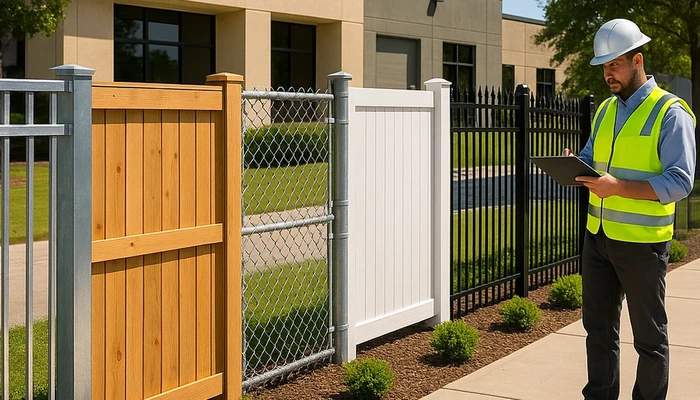
When reviewing a commercial fence quote, the material you choose will shape both the upfront and long-term costs. Below is a comparison table showing popular options in the Chicago market, their main pros and cons, and how they affect your quote line items.
| Material | Initial Cost | Durability | Maintenance | Aesthetic |
|---|---|---|---|---|
| Chain Link | Low | High | Low | Utility/Minimal |
| Wood | Medium | Medium | High (annual) | Classic/Natural |
| Aluminum | Medium-High | High | Low | Modern/Sleek |
| Steel | High | Very High | Low | Robust/Secure |
| Vinyl | Medium | High | Low | Clean/Versatile |
| Wrought Iron | Very High | Very High | Medium | Ornate/Prestige |
Some materials, like vinyl, may seem costlier upfront but require less maintenance. Others, such as steel or wrought iron, provide unmatched security at a premium price. Read more about selecting fence panels and materials here.
Understanding Site-Specific Factors
No two sites are identical, especially in Chicago, where weather, lot layout, and underground utilities may present unique challenges. Site factors that add to your quote include:
- Terrain: Slopes or uneven ground complicate installation and increase labor.
- Accessibility: Difficult entry points, restricted work hours, or limited staging areas add to labor and time.
- Existing Structures: Old fencing, retaining walls, or landscaping may require removal or special attention.
Always confirm that your quote includes any necessary site preparation—otherwise, “surprise” charges may appear later. See more details in what to ask before hiring a contractor.
Permits, Codes, and Compliance
Permitting and code adherence are critical in commercial fencing across the Chicago area. Missing a required inspection or failing an initial plan review can delay your project and hike costs. Look for these items in your quote:
- Permit Fees: Each city and township has its own rates and requirements.
- Plan Review and Engineering: Some jobs demand drawings stamped by a licensed engineer or architect.
- Inspection Scheduling: City inspectors may require multiple visits for footings, fence height, or safety checks.
- Compliance with Codes: Everything from fence height to snow load needs to be reviewed, as outlined in resources like the WBDG Design Guides.
For more on how regulations in Chicago impact your project, consult this local regulation guide.
The Role of Gates, Security, and Accessories
Gates and accessories aren’t just functional—they’re often the most expensive line items in a quote. Common variables include:
- Type (swing, slide, cantilever, pedestrian, vehicle)
- Size and weight
- Automation (keypads, card readers, remote access)
- Enhanced hardware or security controls
- Integrated signage or branding options
Including detailed drawings or model numbers will help you compare apples to apples. For ideas, see this hub on gates and accessories.
Maintenance, Warranty, and Long-Term Value
Don’t overlook how ongoing care impacts your true cost of ownership. Ask each contractor to include:
- Material and installation warranties: Terms should be listed clearly (covering defects, labor, and finish).
- Maintenance Plans: Optional add-ons for long-term durability, such as annual inspections or touch-up services for harsh Chicago winters.
- Expected Lifespan: Longevity varies by material and exposure—see material lifespan guidance.
For national guidance on maintenance and building standards, refer to these resources provided by NIH.
What’s Usually Not Included: Watch for Exclusions
Some crucial project expenses may be missing from your quote, either by accident or standard practice. Commonly excluded items include:
- Unforeseen underground utility work
- Damage repair to landscaping/irrigation
- Permit resubmissions or redesigns
- Future fence removals or old material haul-away
- Unspecified electrical connections for powered gates
Request a list of exclusions from each contractor and review these closely before signing. Transparent companies should itemize what isn’t covered and estimate the cost range.
Comparing Quotes: Apples to Apples
With all these line items in mind, comparing proposals is easiest with a side-by-side table. Before choosing, check that every company:
- Duplicates the same length, height, and material across all quotes
- Lists gates and accessories identically (width, automation, controls)
- Includes or clearly excludes prep work, permits, and warranty
- Discloses payment schedules and terms
- Offers proof of licensing and insurance
For an in-depth look at the questions to ask vendors, read our key questions checklist.
Examples: How Project Scope Changes Affect Your Price
- Example 1: Increasing fence height by 2 feet and adding a privacy slat to a 500-foot chain link project increased material and labor by $2,000 compared to the base quote.
- Example 2: Changing from standard galvanized steel to powder-coated aluminum for a 200-foot perimeter raised the quote by 20%, mainly due to material costs and additional installation steps.
- Example 3: Adding two automated vehicle gates and a keypad system to a basic commercial fence doubled the gate-related line items, even though the overall fence length was unchanged.
Every major change—material, height, gate type, or site prep—should show up as a clear cost shift in your quote.
Best Practices When Requesting a Commercial Fence Quote
- Provide a Site Plan: Drawings (even hand-sketched) help ensure accuracy.
- Share Required Specs: List your required fence height, material, security features, and any must-have accessories.
- Discuss Permitting: Ask who will handle permits, inspections, and plan submittals.
- Request Itemized Proposals: Line-by-line breakdowns make it easier to compare contractors and avoid hidden costs.
From our experience as a fence company in Chicago, Illinois, companies who receive clear project information can give more accurate, faster quotes—saving you time and hassle during installation.
FAQ: What Homeowners and Property Managers Ask Most
- How do I know if my commercial fence quote is complete?
It should detail every cost: materials, labor, equipment, permits, site prep, gates, and warranty. Any exclusions or “optional” items should be clearly listed as well.
- Why do similar projects have different prices across contractors?
Contractors may use higher-grade materials, include more prep/labor, or bundle in code/permitting costs. Always compare scope, material specs, warranty, and site work for true apples-to-apples evaluation.
- Can site conditions really change my fence quote?
Yes—uneven terrain, debris, hidden utilities, or access issues can all increase both labor and equipment needs, quickly adding to your total cost.
- Are permits always required for commercial fences in Chicago?
Almost always. Requirements differ by city and even by type of property. Professional contractors like Chicago Commercial Fencing handle these for you or will advise on local regulations.
- What’s the difference between warranty and maintenance in a fence quote?
Warranty covers defects or installation errors within a set timeframe. Maintenance may be a separate, optional contract (annual inspection, repairs) and often involves additional costs.
- Should I expect to pay a deposit when signing a fence contract?
Most reputable contractors require a deposit—often 10–30%—to secure materials and schedule installation. Make sure payment terms are laid out clearly in the quote.
- Is it common for quotes to exclude electrical work for automated gates?
Yes; electrical connections are typically performed by licensed electricians and quoted separately.
- What should I do if my quote isn’t itemized?
Request a line-item breakdown. If the company hesitates, consider working with another firm that provides transparent proposals.
- How important is contractor insurance and licensing?
Critical. Contractors should provide proof of insurance and valid licensing, protecting both the property owner and workers.
- Where can I find official guidance on fence code and security?
National building standards are available from resources like the Whole Building Design Guide. For local rules, the contractor managing your project can advise.
Summary and Next Steps
Understanding what a commercial fence quote should include is the key to avoiding surprises and ensuring your investment is sound. By breaking down each line item and learning what changes the price fast, you’ll be able to compare options confidently, ask the right questions, and choose the best value for your property. If you’re ready to start planning or want a second opinion, you can contact Chicago Commercial Fencing for straightforward, detail-oriented advice. For specific needs or specialized security features, see our comprehensive commercial fence services.
About Chicago Commercial Fencing
Chicago Commercial Fencing is a professional fence company with over 15 years installing fences in the Chicago, Illinois area. Serving homeowners and businesses, we specialize in wood, vinyl, aluminum, steel, and wrought iron for residential and commercial projects. Our team is fully insured, experienced in code-compliant installations, and committed to educating clients with clear, transparent advice every step of the way.
fence contractor near chicago, fence solutions chicago, fence near chicago, custom fence Barrington, fence solutions Ranch Triangle, fence repair North Edgebrook, fence options North Riverside IL, fence Hanover Park IL, fence replacement Wicker Park, fence St Bens