
Repair or Replace a Storm-Damaged Commercial Fence: The Insurance-Ready Decision
Storms can strike hard and fast, leaving commercial property owners and managers with the urgent question: should you repair or replace a storm-damaged commercial fence? When security, safety, and aesthetics are at stake—as well as insurance processes—making the right decision isn’t always obvious. Especially in areas such as Chicago, Illinois, known for challenging weather, understanding your options is critical for business continuity and peace of mind.
This in-depth guide will walk homeowners, property managers, and business leaders through every important step: assessing fence damage after a storm, weighing repair versus replacement, understanding insurance requirements, and aligning your solution with local codes and long-term property goals. Drawing on the experience of Chicago Commercial Fencing—which has handled storm restorations across the Chicago area—you’ll gain clarity, context, and practical advice to move forward with confidence.
Understanding Storm Damage: Common Fence Issues After Severe Weather
Storms affect fences in multiple ways depending on wind speeds, precipitation, debris impact, and fence type. Recognizing the full scope of storm damage is essential for insurance documentation and structural safety.
- Visible physical damage: Bent or broken posts, leaning or collapsed sections, and downed panels are the most common signs.
- Hidden structural issues: Compromised footings, internal rot (in wood), rust (on metal fences), and loosening hardware may not be obvious at a glance.
- Security and safety concerns: Gaps, missing panels, and sharp edges pose risks for unauthorized access and liability.
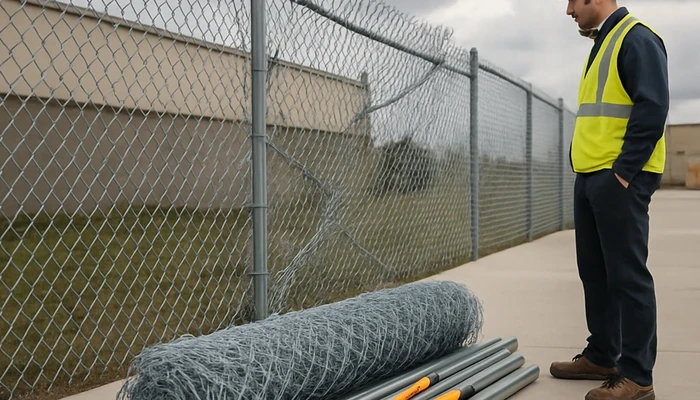
From our experience as a fence company in Chicago, Illinois, wood fences tend to suffer from water logging and rotting posts, while steel and chain link may bend but hold better against high winds. Vinyl panels can snap or crack in extreme cold-plus-wind scenarios.
Step-by-Step Damage Assessment: Building an Insurance-Ready File
Thorough inspection and detailed recordkeeping are essential for both your property’s safety and insurance claim success.
- Survey the perimeter—Walk the fence line, noting all visible damage, tilting, warping, or missing components.
- Take clear photos and videos—Document each damaged area from multiple angles. Include wide shots for context and close-ups for detail.
- List all affected sections—Map a diagram if possible to clarify which sections need attention (helpful for estimates and adjusters).
- Collect maintenance records—Records of prior repairs, upgrades, or maintenance help establish pre-storm condition.
- Review policy details—Cross-reference your business property or homeowner policy for coverage limits, exclusions, and claim procedures.
Tip: Always put safety first. Avoid walking near unstable or leaning fence sections immediately after a storm.
Repair vs Replacement: How to Decide What’s Right for Your Fence
After documentation, the next question is whether repair or complete replacement is the best use of resources. Consider these guiding factors:
- Extent of damage—Are only a few panels/posts affected (repair), or is there widespread collapse or foundational shift (replacement)?
- Material age and condition—Is the fence near end-of-life or did it previously show signs of wear?
- Compliance and function—Will repairs fully restore security, privacy, and code compliance? Or are upgrades necessary?
- Insurance requirements—Some insurers expect “like-kind” replacement, but offer flexibility for upgrades if justified.
- Budget and business impact—Evaluate downtime, temporary loss of security, and long-term value.
When Repair Makes Sense
- Damage is limited and can be structurally restored.
- Fence material is still in good condition overall.
- The design isn’t outdated or noncompliant.
- Budget is a primary concern.
- Time constraints demand a faster fix.
When Replacement is the Better Choice
- Multiple sections or the structural frame are compromised.
- The fence is aged or out of compliance with local codes.
- Material rot, rust, or cracking threatens ongoing safety.
- Upgrading for security, appearance, or value is desired.
Fence Types and Material Considerations After Storm Damage
Your choice to repair or replace often intersects with fence material. Each has its pros and weaknesses during storm recovery in the Midwest:
| Material | Storm Weaknesses | Repairability | Notes |
|---|---|---|---|
| Wood | Saturation, rot, snapped posts | Moderate—individual boards/posts often replaced | Treat promptly to prevent spread |
| Chain link | Bending, stretching, pole loosening | High—sections can be re-tensioned, posts reset | Galvanized models best in wet climates |
| Vinyl | Cracking, panel breaks, post heaving | Moderate—requires matching replacement panels | Check for hidden post shift |
| Steel/Aluminum | Denting, base corrosion, panel failure | Low to moderate—sometimes costlier to repair than replace | High weather resistance if powder coated |
| Wrought Iron | Rust, bending, broken welds | Variable—welds can be re-done for minor issues | Professional assessment recommended |
Learn more about specific materials and customization at Choosing Your Perfect Fence Panels.
Insurance Basics for Fence Claims: Getting Your Documentation Right
Insurance can be the difference between a fast recovery and costly delays. Understanding your policy and coordinating with your fencing partner and adjuster is key:
- Act quickly—Most policies require notification within a short window.
- Know your coverage—Some policies limit payouts to “like kind and quality” or cap outdoor fixtures. Check for wind/storm exclusions.
- Document meticulously—Photos, repair estimates, and maintenance records speed up claims.
- Get a professional assessment—Enlist a trusted local contractor to provide a written report on damage, cause, and options.
- Coordinate upgrades—If code changes require a different fence, provide documentation that triggers “ordinance or law” coverage if included.
For more on the value of professional expertise in securing your property, see Business Fence: A Strategic Necessity.
Code Compliance and Local Ordinance Considerations Post-Storm
Chicago, Illinois has specific codes for commercial and residential fences, including height limits, materials, and setback requirements. After a storm, repair or replacement work must comply with the latest regulations. Failure to do so can jeopardize insurance claims or result in costly fines.
- Check city and county code requirements—see International Code Council resources for background on evolving building standards.
- Ordinances may require you to upgrade nonconforming fences during repairs.
- Contact your local building department or a licensed professional to verify permit requirements before starting work.
For a detailed look at regulation impacts, read The Impact of Local Regulations on Commercial Fence Installation.
Maintenance Best Practices to Prevent Future Storm Damage
Whether you opt for repair or replacement, prioritizing maintenance is one of the best ways to minimize storm-related damage in the future:
- Regularly inspect for signs of rot, corrosion, or loosened hardware.
- Trim trees and shrubbery that could fall on the fence during storms.
- Keep soil around posts stable and well-drained to prevent frost heave.
- Reapply protective coatings on wood and metal fences as recommended.
- Ensure correct post depth and foundation in new installations.
Find more tips on preventing future issues at Ways to Avoid Vinyl Fence Damage or Preventive Maintenance for Iron Fences.
Upgrading Perimeter Security: Turning Setbacks into Opportunities
Storm damage, while disruptive, is an opportunity to strengthen your property’s security and curb appeal. Modern fence designs offer:
- Better resistance to wind, corrosion, and impact.
- Enhanced privacy and access control options.
- Compliant, future-proof materials.
- New visual aesthetics to support branding or property value.
Explore perimeter security design at Understanding Perimeter Security Basics, and see the latest resilience concepts in action at ASCE: Engineering Resilience for the Built Environment.
FAQs: Storm-Damaged Commercial Fences in Chicago
What are the most common types of storm damage to commercial fences?
Common storm-related damage includes bent or broken posts, collapsed panels, uprooted footings, loose hardware, missing sections, and material cracks or corrosion. The specific damage depends on fence type and weather severity—wood often suffers rot and breakage, while steel or chain link may bend or detach at anchor points.
How soon after a storm should I assess my fence for damage?
You should assess your fence as soon as it’s safe to do so. Early evaluation allows for timely insurance claims, reduces liability risks, and prevents further deterioration or security concerns on your property.
What information will my insurance provider need for a storm-damaged fence claim?
You will need clear photos and videos of damage, a map or diagram of affected areas, maintenance records, a copy of your fence’s original specs (if available), and a professional estimate for repair or replacement. Prompt action and organized records streamline the claims process.
Can I upgrade my fence when using insurance money for repairs or replacement?
In most cases, insurance covers “like kind and quality,” but some policies provide upgrade funds when required by local ordinances. Document code changes and discuss any upgrades with your adjuster and fence contractor before starting work.
Is it more cost-effective to repair or fully replace a damaged fence?
This depends on how extensive the damage is, the fence’s age, ongoing maintenance needs, and future compliance. Minor, isolated damage often makes repairs sensible. However, if damage is widespread or older materials are involved, replacement may save money long-term by reducing maintenance and increasing durability.
Are there building codes in Chicago, Illinois that apply to storm-damaged fence repairs?
Yes. Fence height, material, placement, and safety features are governed by local building codes. If your repair or replacement alters the original fence, you must comply with current standards, including permits and inspections.
What steps can I take to prevent future fence damage from storms?
Regular inspections, trimming nearby vegetation, using corrosion- and rot-resistant materials, reinforcing posts, and maintaining protective coatings will all help strengthen fences against severe weather in the Chicago area.
How do I choose a reputable fence contractor in Chicago, Illinois for storm repairs?
Look for experience with storm recovery, knowledge of local codes, clear estimates, references from local clients, licensing, and insurance. For specific questions to ask, see Key Questions to Ask Before Hiring a Commercial Fence Company.
Will temporary fencing be necessary during repairs?
On commercial properties where security or liability are concerns, temporary fencing is often recommended while permanent solutions are completed. Discuss options and costs with your contractor.
Conclusion: Making an Insurance-Smart, Resilient Choice
Storm-damaged commercial fences demand quick decision-making—but the smartest results come from careful assessment, full insurance documentation, honest comparison of repair and replacement, and compliance with local standards. A reputable provider like Chicago Commercial Fencing brings not only installation skills but also real expertise in Midwest climate, code requirements, and the insurance process.
For help with fence options and insurance-ready repairs around storm damage, request a commercial fencing consultation or connect with Chicago Commercial Fencing today.
About Chicago Commercial Fencing
Chicago Commercial Fencing has over 15 years of experience serving homeowners and businesses in Chicago, Illinois and nearby communities. Specializing in a full range of fence types—including wood, vinyl, aluminum, steel, and commercial-grade materials—the team delivers code-compliant, insurance-ready, and durable perimeter security solutions. Every project is handled with transparent guidance, a focus on long-term value, and a strong commitment to local rules and property needs. Contact us to see how Chicago Commercial Fencing can protect and enhance your property.
fences security, fence chicago il, fence in chicago, fence Highland Park, custom fence Burr Ridge IL, Des Plaines fence, fence options Skokie, best fence Glencoe IL, fence Avondale IL, fence Irving Park