
Power + Data Planning for Automated Gates: Conduit, Trenching, Backup Power in One Scope
Automated gates deliver convenience, security, and a modern aesthetic for homes and businesses, but they also demand thoughtful planning well beyond the basics. While it’s easy to focus on the look and function of the gate itself, overlooking power and data needs can lead to costly delays, code violations, or reliability problems down the line. Power + Data Planning for Automated Gates: Conduit, Trenching, Backup Power in One Scope is essential for anyone considering an automated entrance, especially in locations with challenging weather and strict codes—like Chicago, Illinois. In this comprehensive guide, you’ll discover how to seamlessly integrate these vital elements from the ground up. We’ll unpack core concepts like conduit selection, trenching standards, and backup power, break down key trade-offs, and highlight best practices to help you make smart, lasting decisions. Whether you’re a homeowner or property manager exploring automated options for the first time, or working with a fence specialist like Chicago Commercial Fencing, this post will clarify your path from planning to post-installation peace of mind.
Understanding Power and Data Needs for Automated Gates
Automated gates rely on a blend of electric and digital components, all of which require robust and reliable power sources, as well as protected data connections for sensors, intercoms, keypads, or security systems. Skipping early planning for these elements often leads to accessibility challenges and added costs if retrofitting is required later.
- Power: Required for gate motors, safety sensors, lights, and sometimes heating pads (in cold climates).
- Data/Low Voltage: Needed for access controls, video/audio entry systems, or integration with home network security solutions.
- Backup Power: Ensures functionality during outages, critical in regions like Chicago where storms and winter conditions are common.
By integrating these needs into the initial scope, property owners and managers can prevent future headaches, maximize safety, and comply with evolving local codes.
Step-by-Step Guide: Planning Power and Data for Automated Gates
1. Site Assessment and Utility Location
Before any installation, evaluate your property’s layout, main power source location, and any existing barriers—such as driveways, landscaping, or other utilities. In the Chicago, Illinois area, local codes often require calling 811 (the national call-before-you-dig service) to have underground utilities marked before trenching begins.
- Identify main panel and subpanel distances to gate location.
- Map any obstacles (trees, walkways, irrigation) that may impact trenching.
- Plan for clear access to both power and data paths.
Early collaboration with experienced contractors avoids code violations and ensures safe, efficient utility routing.
2. Determining Power and Data Requirements
The type and size of your automated gate (swing, slide, cantilever, bi-fold) directly impact power needs:
- Typical residential gate motors draw 3–10 amps (120V), while larger gates may require 20 amps or more at 240V.
- Accessory loads: lighting, cameras, heater pads (for winter), or anti-tailgating sensors can add demand.
- Data/Low voltage wiring varies by system—some use standard Cat5/6, while others require shielded or proprietary cabling. Consider future upgrades now.
Realistic Scenario: Homeowners in Chicago, Illinois may need to factor in electrically heated safety edges or control wiring to prevent freezing in winter months. Coordinating these requirements at the start makes the installation both future-proof and compliant.
3. Choosing the Right Conduit
Conduit protects wires from weather, physical damage, rodents, and moisture. Selecting the proper material and diameter is crucial for both code compliance and long-term performance:
- PVC (Schedule 40/80): Cost-effective, corrosion-resistant, used for direct burial, but must be UV-protected if exposed.
- EMT (Electrical Metal Tubing): Stronger, suitable for above-ground routes or high-traffic zones.
- Flexible Nonmetallic Conduit: Best for short, complex runs or connections to moving parts.
Size conduit with space for future upgrades. A minimum of 1-inch diameter is recommended for most gate applications, but check city codes and confirm with an installer.
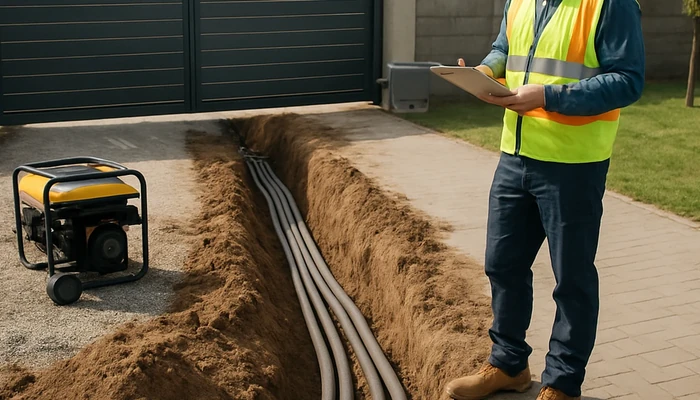
4. Trenching and Burial Depths: Safety & Codes
Trenching is the process of digging a channel to lay conduit for power and data lines. Standards vary, but the International Code Council (ICC) and local jurisdictions set minimum depths for safety:
- Low-voltage/data: Minimum 6–12 inches (confirm with local code).
- Line voltage (120V+): 18–24 inches for direct burial, or as local codes specify.
- Parallel runs: Keep power and data conduits separated by 12 inches or use a divider to prevent interference.
Always reference ICC recommendations and check with your municipality. This proactive step avoids hazards and expensive rework.
5. Backup Power: Planning for Outages
A well-designed gate installation considers power continuity. Options include:
- Battery backups: Integrated with many modern gate controllers, providing short-term operation (4–8 gate cycles).
- Generator hookups: For properties at increased risk of outages.
- Solar options: Suitable for sites far from utility power, but must be sized for Chicago’s winter days and snow loads.
Always discuss backup strategies with your installer—especially if gate access is critical for safety or emergency vehicles.
Material Choices for Conduit and Trenching
Durability and climate resistance are key when choosing materials. In the Midwest, freeze/thaw cycles, road salt, and drainage all shape decisions:
- PVC conduit typically resists soil chemistry, but protect exposed ends from sun and impact.
- Use metallic conduit in vulnerable above-ground sections or where damage risk is higher.
- Lay a warning tape above buried lines to alert future diggers—a simple, code-friendly precaution.
Request clear documentation from your installer indicating line placement, depth, and any critical bends or splices.
Common Mistakes in Power + Data Planning (and How to Avoid Them)
- Under-sizing conduit: Always size for both present needs and potential upgrades or repairs.
- Skipping spare lines: Add an empty conduit for future features (like cameras or sensors).
- Poor labeling: Failing to mark cable runs or as-built drawings complicates troubleshooting and upgrades.
- Not checking codes: Each Chicago suburb may have unique requirements—double-check before any work begins.
- Forgetting drainage: Make sure trenches shed water, especially during winter melt.
Cost Considerations and Budgeting
The investment in proper power and data planning pays dividends over time. Costs depend on several factors:
- Distance from panel to gate
- Number and type of conduits required
- Soil conditions (rocky, wet, paved areas can increase labor)
- Backup power system type and complexity
As a rough guide, residential conduit and trenching typically ranges from $1,200–$3,500, while integrated commercial projects can exceed $10,000 if extensive infrastructure or upgrades are needed. Always request a detailed, itemized quote and factor in contingency for unknowns uncovered during digging. For advice on cost trade-offs and fence material selection, see our guide on choosing quality lumber.
Integrating Automated Gates with Modern Perimeter Security
Automated gates work best as part of a coordinated security system. When planning power and data, consider these integration tips:
- Leave space for networking with keypads, card readers, or mobile device access.
- Pre-wire for security cameras, alarms, or lighting controls—even if you don’t install them today.
- Plan for remote access or smart home system tie-ins by running additional data cable.
For a broad overview of integrating security technology with fences, read our comprehensive perimeter security guide.
Regulatory Compliance: Building Codes and Safety
Automated gate installations must follow both electrical codes and fencing/zoning ordinances. In Chicago, consult city or suburban authorities and reference the latest International Code Council leadership. Expect inspectors to verify:
- Proper conduit burial depths
- Correct separation of voltage types
- Weather-proofing of all exposed junction boxes and connections
- Grounding and GFCI protection
- Gate safety devices (entrapment sensors, signage)
Failure to comply can result in re-inspections and costly retrofits. Always ask to see your contractor’s licensing and insurance, and ensure all permits are pulled before beginning work.
Preparing for Installation: Timeline and Coordination
Proper planning ensures a smooth installation process:
- Timeline: Most residential automated gate installations (with new trenching and conduit) take 2–4 days depending on complexity.
- Coordination: Expect site visits with your installer, electricians, and possibly landscapers to minimize damage and schedule dirt/landscape restoration.
Remember to notify neighbors if the project may affect shared spaces or access, especially in urban Chicago neighborhoods.
Maintenance and Upgrading Over Time
As needs evolve, a well-laid conduit system allows for easy future upgrades (like new sensors or access controls) without further digging. Periodically:
- Inspect visible conduit ends and covers for signs of damage or wear.
- Clean out debris or blockages from trenches if they are not completely filled or settled.
- Keep record of as-built plans for reference with any future work.
If your fence or gate system needs repair or refreshing, explore our resources on maintaining iron fences and integrating gates with wood fencing.
Comparison Table: Automated Gate Power + Data Planning at a Glance
| Aspect | Options | Best Use Case |
|---|---|---|
| Conduit Material | PVC, EMT, Flexible Nonmetallic | PVC for burial; EMT for exposed/high-traffic; Flexible for short runs |
| Trenching Depth | 6–24 inches (code dependent) | Deeper for high voltage; check codes especially in Chicago, Illinois |
| Data Cabling | Cat5/6, Shielded Low Voltage, Proprietary | Match to access control/security needs, plan for future upgrades |
| Backup Power | Battery, Generator, Solar | Battery for short outages; generator for critical access; solar for remote sites |
| Cost Range | $1,200–$3,500+ (residential) | Higher for long runs or commercial projects |
Frequently Asked Questions
- How deep does conduit need to be buried for automated gates?
- Typically, power lines must be buried 18–24 inches below grade, while low-voltage/data can often be 6–12 inches deep. Always check Chicago and local codes for specifics and ask your installer for documentation.
- Can power and data cables be run in the same conduit?
- This is generally not recommended and may violate electrical codes. Use separate conduits or physical dividers to prevent electrical interference and maintain system integrity.
- Is a permit required for automated gate installation in Chicago, Illinois?
- Most automated gate projects require permits for both electrical and fence/zoning components. Consult the city or your municipality’s website prior to starting, and ensure your contractor handles all permitting.
- What kind of backup power is best for my gate?
- Battery backups are common for short-term outages. Generator or solar systems may be better for remote or critical sites. The best choice depends on your reliability needs and power source access.
- How do weather conditions in Chicago affect automated gates?
- Freezing temperatures can affect motorized parts and wiring. Consider heated safety edges and ensure all conduit connections are weather-sealed. Regular maintenance and winterization help maximize reliability.
- Can I upgrade gate automation after installation?
- If your initial power and data planning allowed for spare conduit runs and capacity, later upgrades are usually straightforward. Planning for expansion from the start saves time and money down the line.
- What if I need to cross a driveway with the conduit?
- Conduit running beneath hard surfaces requires extra precautions. Installers may use boring equipment rather than cutting pavement. Proper marking and inspection are critical to avoid future issues.
- Are there specific brands or gate systems recommended for Chicago climate?
- Gate system recommendations vary. Choose equipment rated for cold weather if in Chicago, and always review compatibility with your site’s power and access needs. Ask your installer for local case studies and reliability reports.
- Who is responsible for maintaining the buried conduit?
- After installation, property owners should periodically inspect any accessible parts and retain installation records. If issues arise below grade, consult your original installer or a licensed professional.
- Where can I learn more about Chicago-area fence codes and practices?
- The International Code Council and your local building department are excellent resources. Chicago Commercial Fencing also maintains guidance on codes and current practices.
Conclusion: Take the Stress Out of Automated Gate Planning
Investing time to fully plan power + data conduit, trenching, and backup power ensures your automated gate is reliable, safe, and future-ready. In the Chicago, Illinois area, these steps are essential for code compliance and peace of mind given frequent weather extremes. Consider working with experienced professionals like Chicago Commercial Fencing for honest advice, detailed planning, and smooth project delivery. For those ready to explore modern fencing or automation, request a project consultation or get a custom quote to start on the right path.
For more information on material selection, modern fence designs, and perimeter security, see our latest posts on selecting fencing lumber, perimeter security, and gate and accessory integration.
About Chicago Commercial Fencing
Chicago Commercial Fencing has over 15 years of experience installing residential and commercial fences and automated gates in Chicago, Illinois and surrounding communities. The team specializes in wood, vinyl, aluminum, steel, and modern security fencing, always delivering code-compliant and customized solutions for your property’s unique needs. Fully licensed and insured, Chicago Commercial Fencing prioritizes safety, education, and a transparent process from start to finish.
fence near chicago il, best fence chicago, custom fence chicago, fence Northbrook IL, fencing Schiller Park, fence services Bedford Park, fence near Forest Park, security fence Addison, fence near St Bens, best fence South Loop