...

Commercial & Industrial Perimeter Fencing · DuPage County, IL

Commercial Fence Company in Itasca IL: Commercial and Industrial Fence Installation Specialists

Commercial Fence Company in Itasca IL: Chicago Commercial Fencing provides commercial fence installation in Itasca, IL for warehouses, industrial yards, office parks and municipal properties in ZIP 60143 and DuPage County. Commercial Fencing Team, Commercial And Industrial Fence Installation Specialists, brings 35 years of experience to perimeter work with chain link and steel fencing. Work begins with an on-site assessment covering access, loading, and gate control.

Projects are planned under the Industrial Fence Compliance Standard™: site assessment, code-aware layout, and a final walkthrough.

Request a scope review for commercial fence installation Itasca IL — include property type, approximate linear footage, and gate or access-control needs.

Monday–Saturday, 7 AM – 6 PM. Quotes follow an on-site assessment of the property, not a phone estimate.

Credentials

Commercial fencing credential badge
Business accreditation badge for a commercial fencing contractor
Commercial fence contractor credential mark

Perimeter Fencing for Commercial Security in Itasca, IL

Perimeter fencing for commercial security in Itasca, IL starts with an on-site assessment that maps linear footage, gate and access-control points, sightlines, and daily traffic from tenant parking, loading zones, and delivery routes in ZIP 60143. The layout is planned around business hours, so security fence installation in Itasca, IL can be phased without shutting down access. Warehouses, light-industrial yards, business parks, and multi-tenant offices across DuPage County gain a defined perimeter that supports operations.

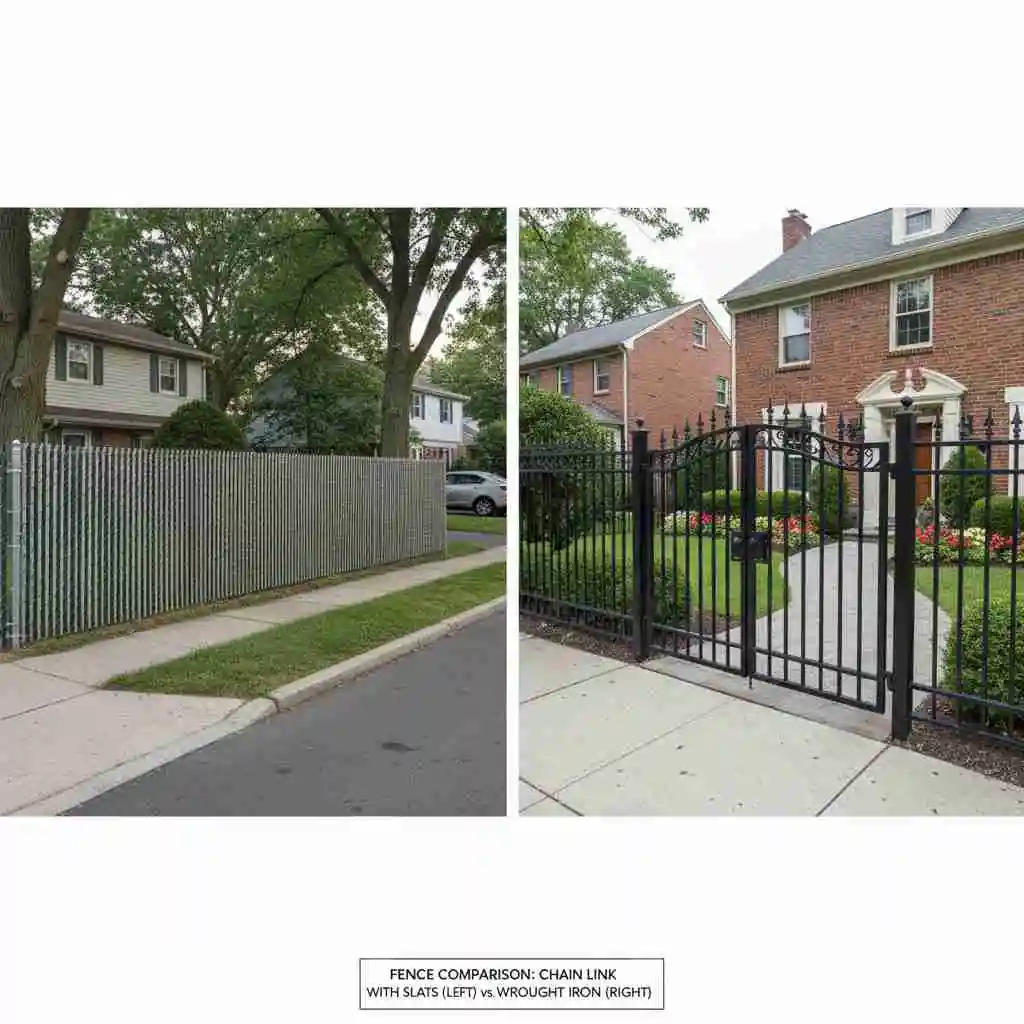
  • Chain Link Fence and Steel Fence for long industrial perimeters; a commercial chain link fence in Itasca, IL can use heavier framework.
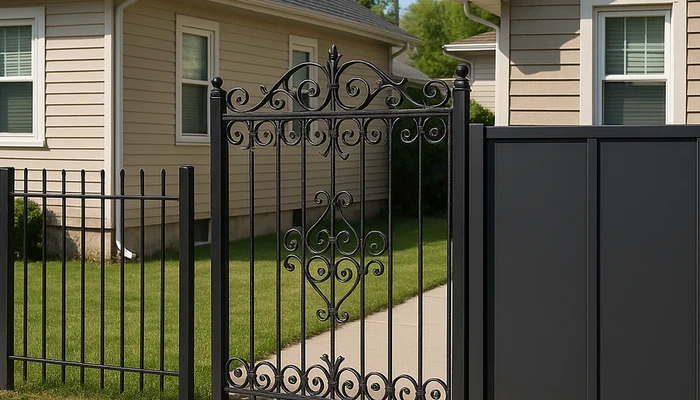
  • Aluminum Fence Installation and Wrought Iron Fence for visible entrances where curb appeal and access control both matter.
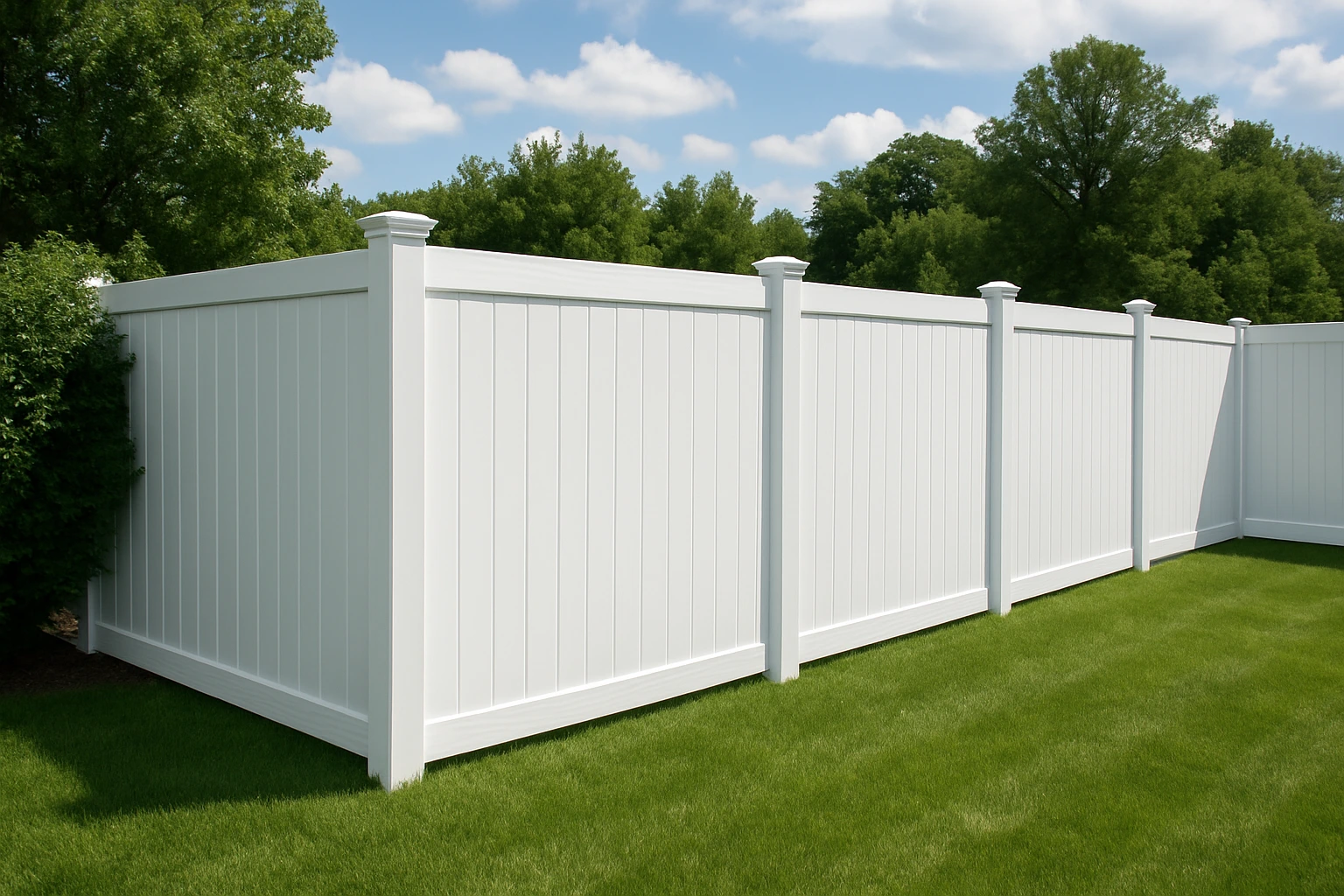
  • Vinyl Fence and Wood Fence for screening trash enclosures, storage yards, and service areas.
  • Illinois winter exposure—road salt, plow contact, freeze-thaw—and planning around occupied operations.

Share property type, linear footage, gate count, access-control needs, and security concerns via the embedded form or contact page. Cost factors for commercial fence installation in Itasca, IL follow those details.

REQUEST A QUOTE

Facility-Ready Fencing Services for Property Requirements

Fence Layout and Material Selection for Commercial Sites in Itasca, IL

Layout Decisions Come Before Material Choices

Commercial fence layout and material selection in Itasca, IL is decided by how a property actually operates, not by how a fence looks from the street. Gate and access-point positions, delivery routes and truck turning radii usually settle the layout before anyone chooses a material, and holding that order is what lets a working facility stay open through installation.

Reading an Occupied Site Gate by Gate

On an occupied office park, light industrial building or industrial yard in ZIP 60143, the sequence runs gate by gate. Service and after-hours access points come first, because they determine where the perimeter can close without blocking a fire lane or a dock door. Delivery flow and truck turning come next, so a trailer can reach a loading bay or compactor pad without clipping a post. Yard-side details follow: dumpster enclosures, parking-lot edges shared with tenants, and the sightlines a driver needs at an exit. A run-by-run material breakdown only makes sense after those first decisions are fixed.

Material Chosen by Exposure and Purpose

Material follows exposure and purpose, not one house standard. Chain Link Fence and Steel Fence carry industrial perimeters and long fencelines where durability and controlled access matter most, which is why chain link fence installation in Itasca, IL shows up so often on storage yards and service courts. A commercial chain link fence in Itasca, IL also fits back-of-house screening where visibility still helps. Frontages and visitor entries usually point toward Aluminum Fence Installation or Wrought Iron Fence, while Vinyl Fence and Wood Fence serve best as screens for trash, mechanical or tenant-privacy areas. Matching the barrier to the zone instead of treating the whole perimeter as a single run is the core of security fence installation in Itasca, IL.

Illinois winter exposure is a specification factor, not an afterthought. Road salt, plow contact and repeated freeze-thaw cycles work on posts, coatings and gate hardware, so the buried portion of a post, the fastener finish and the clearance at a sliding gate get reviewed before the material is confirmed. A site review in Itasca is what turns those observations into a usable scope: linear footage, gate count, visibility lines, slopes, drainage and access points. A project is best scoped with industrial fencing contractors in Itasca, IL who can use the property type, approximate footage and gate count to build a plan that reflects the site rather than a generic per-foot assumption.

Commercial-Grade Fence Specifications for Itasca, IL Properties

Commercial-grade fence specifications in Itasca, IL should be measurable on paper before any post is set. A real specification states fabric gauge, coating class, post schedule, footing type, gate frame size and hardware grade — line items a facility manager can compare across bids. When those details are replaced by the phrase ‘commercial-grade materials,’ two quotes can look similar and perform nothing alike.

That difference matters on a ZIP 60143 perimeter, where wind load, vehicle traffic and Illinois winter exposure on posts, coatings and gate hardware all work against the assembly year after year. A written specification is how those site conditions get answered before installation.

What Commercial-Grade Means in a Written Specification

Commercial-grade describes a documented performance level, not a color or a brand. For a typical chain link perimeter, the spec sheet should answer four questions:

  • Fabric gauge: The wire gauge controls resistance to cutting, bending and wind load. Commercial perimeters usually call out a heavier gauge than light residential fabric; the number belongs in the spec, not in conversation.
  • Coating class: Zinc-coated fabric is defined by coating weight, and vinyl-bonded fabric adds an extruded jacket over the galvanized core. Coating class, not color, drives corrosion life.
  • Post schedule: Line, terminal, corner, brace and gate posts are sized by pipe schedule and wall thickness. Terminal and gate posts carry the load and are normally specified heavier than line posts.
  • Grade and hardware: Gate frames, hinges, latches, rollers, drop rods and operator interfaces are graded separately from fence fabric and should appear as their own line items.

For ornamental and steel systems, the equivalent specification names picket size, rail size, spacing, weld type and finish system. The point is the same: numbers, not adjectives.

Posts, Gates and Hardware: Where Perimeter Gaps Show Up First

Most commercial perimeter failures trace back to a post or gate hardware detail that was never written into scope. A gate leaf sized for daily truck traffic needs a heavier frame, commercial-grade hinges and a latch that can take misalignment without failing. If access control is part of the project, the operator, keypad, card reader and loop detector should be specified by model and cold-weather rating — not added later as an afterthought.

Gate hardware and access-control specification should match the fence grade. A heavy gate frame on light hinges, or an operator sized for a lighter leaf, produces recurring repairs that erase the savings from a lower bid.

How Illinois Winter Exposure Reshapes the Specification

Freeze-thaw movement in DuPage County soils pushes under-set posts out of plumb, and road salt accelerates coating breakdown at the base of posts and gate frames. Winter wear is the durability test that separates a commercial assembly from a residential one.

Specifying a heavier coating class, capped or sealed post tops, footing depth matched to soil and frost conditions, and hardware rated for cold operation keeps a perimeter serviceable through repeated winters instead of generating early repair calls. Drainage and grade at the fence line matter just as much — standing water at the base is a common cause of premature corrosion.

Writing the Spec Before Installation

Before commercial fence installation in Itasca, IL begins, the specification should be written against the actual site: property line, easements, drainage, gate openings, vehicle turning radius and the documentation the Village permit review process expects.

A commercial fence contractor in Itasca, IL should be able to hand over that line-item spec — gauge, coating class, post schedule, hardware grade and operator model — before a deposit is discussed. A commercial fence company in Itasca IL that cannot produce those numbers is quoting a price, not a system.

For properties that need more than a boundary line — loading areas, equipment yards or controlled entry points — the same document becomes the foundation for high security fencing in Itasca, IL, with gate operators, access readers and anti-climb details added as separate line items rather than implied.

Across commercial fencing in Itasca, IL, the gap between a low bid and a durable perimeter is almost always in the written spec. Compare gauge, coating class, post schedule, footing detail, gate hardware grade and operator model line by line, and the stronger quote becomes easier to identify.

The commercial fencing team reviewing your site should tie each specification line back to the property’s actual conditions — soil, drainage, gate traffic and permit scope — so the document reflects the site rather than a template.

Industries We Serve

Warehouse and distribution yards, light manufacturing plants, municipal and public facilities, office and campus properties, and sports and entertainment venues each get a different perimeter and access-control plan — which is why a Commercial Fence Company in Itasca IL plans by property type rather than by fence style.

Commercial chain link fencing and a slide gate at a distribution warehouse truck court

Commercial Fencing by Industry for Itasca Warehouses, Yards and Facilities

The real exposure on these properties is rarely the property line. It is the truck court, the trailer storage row and the dock doors that stay active long after the office closes — a staged trailer sitting outside the fence or an open yard corner is where losses usually start.

Commercial fencing for warehouses and industrial yards Itasca planning typically starts with heavy-gauge chain link set in steel posts, reinforced corners and a cantilever slide gate wide enough for a tractor-trailer to clear the frame. Dock-door control, after-hours yard access and equipment screening are settled before the first post goes in.

Manufacturing plant yard secured with commercial steel and chain link fencing

Light Manufacturing and Equipment Yards

Manufacturers run employee traffic, delivery traffic and outdoor storage on the same footprint: steel racks, waste containers, propane cages and finished goods that need to stay inside the line and out of street view.

A practical split is a steel or chain link perimeter around the working yard with ornamental iron or aluminum along the street frontage, so screening stays functional without turning the entrance into a blank wall. Where an older line is failing in sections, the scope often starts with commercial fence repair in Itasca, IL — damaged posts, gates and fabric replaced before anyone commits to a full rebuild.

High security fencing and controlled entry at a municipal and public facility

Municipal and Public Facilities

Public properties carry constraints a private yard does not: pedestrian routes that have to stay separated from vehicle traffic, service entrances that need control without blocking emergency access, and frontage that must remain open and readable from the street.

Aluminum or ornamental iron usually fits public-facing entrances and walkways, while steel or chain link handles utility yards, storage compounds and maintenance areas. Card readers, keypad entry and coordinated gate hardware move staff, contractors and visitors through defined points instead of open driveways.

Commercial aluminum fencing and an automated gate at a sports and entertainment venue

Office Campuses and Sports or Entertainment Venues

Campus and venue sites live on parking control and crowd flow. Multiple driveways, shared lots and event-day surges make an unmanaged perimeter easy to enter and hard to watch.

Automated gate systems with keypad or card-reader entry handle tenant and staff parking, while commercial aluminum or vinyl fencing defines frontage, dumpster enclosures and equipment pads without cutting sightlines. Venues generally need gate sequencing that opens wide for event traffic and still locks the rest of the property down.

Scope for a property in Itasca, IL — business-park and light-industrial sites in 60143 included — is set by linear footage, gate count, access-control points and site constraints, which is why industrial perimeter fencing Itasca IL work is quoted after an on-site assessment of the actual property. Loading zones, truck court depth, dock spacing, easements, drainage and the winter plow route all shape the layout, and Illinois winter exposure is planned into post spacing, gate hardware and operator placement rather than treated as an afterthought.

Access control scales with the property: a single swing gate covers a small service yard, a slide gate handles a truck court, and keypad or card-reader entry separates staff, visitor and delivery traffic on larger sites.

Send the property type, the approximate linear footage and your gate or access-control needs, and we will build a scoped estimate around how the site actually operates. Request a site assessment or call (872) 588-8007, Monday–Saturday, 7 AM – 6 PM.

What Property Owners Say About Our Fencing

Feedback from commercial and industrial clients in the Itasca service area. Every project on this list was quoted the same way: a site assessment first, then scope, material and gate hardware specified before any pricing.

★★★★★ Itasca, IL
The Commercial Fencing Team replaced a failing chain link perimeter around our warehouse in Itasca on a phased schedule so loading and delivery traffic kept moving. Panels, posts and fabric matched the spec, and the yard stayed secure each night.
Chain Link Fence Itasca, IL
Kevin R. Warehouse operator — scope set by site assessment, work phased around loading traffic with Chicago Commercial Fencing.
★★★★★ Itasca Service Area
We needed a steel fence with a matching sliding gate at our industrial yard, and the quote spelled out linear footage, post spacing and access control before any pricing. Installation was coordinated around our shifts, and the drive entrance now closes on schedule.
Steel Fence Itasca Service Area Gate & Access Control
Melissa E. Industrial yard manager — gate hardware and access control discussed with Chicago Commercial Fencing before install.
★★★★★ ZIP 60143 Area
Our business park frontage along the main entry was re-fenced in aluminum, and it changed how the property reads from the street. The crew surveyed the site first, confirmed setbacks with the office park layout, and installed the specified panels without blocking tenant parking.
Aluminum Fence Installation ZIP 60143 Area
Daniel H. Office park property contact — frontage layout and tenant parking reviewed with Chicago Commercial Fencing.
★★★★★ DuPage County Coverage
At our retail center, wrought iron fencing now defines the sidewalk edge and the trash enclosure without looking industrial. What I valued most was the site assessment: dimensions, gate swing and hardware were agreed in writing before the crew arrived, so nothing changed mid-install.
Wrought Iron Fence DuPage County Coverage
Samantha J. Retail center manager — dimensions and gate swing confirmed with Chicago Commercial Fencing before work started.
★★★★★ Itasca, IL
On a multi-tenant property in the Itasca service area, we used vinyl fencing for a screening run between tenant parking and the service alley. The crew kept a defined walkway open the whole time and cleaned up each day, which the tenants noticed.
Vinyl Fence Itasca, IL
George Z. Multi-tenant property contact — screening run planned around tenant walkway access with Chicago Commercial Fencing.
★★★★★ DuPage County Coverage
We manage an office property near the DuPage County line and wanted wood fencing to screen a utility area from the parking lot. Communication was steady from the first call: scope, material and gate hardware were confirmed before work started, and the crew left the perimeter defined.
Wood Fence DuPage County Coverage
Anthony D. Office property manager — screening scope and gate hardware confirmed with Chicago Commercial Fencing.

For your own Itasca-area property, the next step is simple and low pressure: request an on-site assessment through the contact page and share your property type, approximate linear footage, and any gate or access-control needs. Scope and material get specified before pricing is discussed.

Commercial Fence Installation Timelines on Occupied Itasca, IL Properties

Commercial fence installation timelines in Itasca, IL are not set by a single calendar. On an occupied property, the timeline question is really two questions: how long crews are working along the perimeter, and how that work is sequenced so tenants, deliveries and dock traffic keep moving. A fence line can be measured in a morning; the schedule around it has to be built around a building that never stops operating.

That is why a schedule is only set after a walk-through. Gate positions, access points, tenant constraints and utility locates all shape the sequence, and confirming them in the field instead of on paper is what keeps small conflicts from turning into lost days.

What Actually Drives the Schedule

Duration comes from scope details rather than a generic per-foot estimate:

  • Perimeter length and fence type. A long chain link run is not paced the same way as ornamental steel or wrought iron. Heavier posts, welded panels and decorative sections take longer to set, level and align.
  • Gates and access control. Automated gates, operators and entry hardware add wiring, alignment and testing steps that run alongside the fence work.
  • Ground and site conditions. Existing concrete, paved dock aprons, buried obstructions, easements and drainage structures change how a segment is excavated and set.
  • Utility locates. Markings have to be completed and respected before any post hole is dug.
  • Weather and discoveries. Frost, saturated ground or an unmarked line encountered mid-run can pause a segment until it is resolved.

Phasing Around Loading Docks, Deliveries and Tenant Access

Phased work around loading docks, deliveries and tenant access is the normal approach on occupied commercial and industrial properties in Itasca, IL, ZIP 60143. Instead of opening the entire perimeter at once, the property is divided into segments so a defined number of entries, drive lanes and dock positions stay usable from start to finish.

  • The line is built one stretch at a time, starting where operations allow rather than where it is most convenient for the crew.
  • Excavation and concrete work is scheduled around receiving hours so trucks are not blocked at the apron.
  • Fire lanes and required egress paths stay clear and are rechecked each time a segment closes.
  • Tenants and staff receive advance notice of which entry or parking area is affected and when it reopens.

Because conditions move — a late trailer, a shift change, a revised tenant schedule — the sequence is reviewed as work progresses rather than locked on day one. A commercial fence company in Itasca, IL will normally confirm the next segment with the property contact before the previous one closes.

Keeping the Site Secure While the Fence Is Open

An open fence line is the biggest operational risk during installation. Temporary construction fencing panels, working gates and end-of-day close-out procedures keep the perimeter defined while permanent sections go in, so the property is never left with an unsecured gap overnight.

Existing damage is often folded into the same visit. A gate struck by a truck or a bent run along a drive lane does not have to wait for a full installation to be addressed; commercial fence repair in Itasca, IL can be sequenced with the new work or handled on its own. Working with commercial fencing contractors in Itasca, IL who handle both new construction and repairs also means the phasing plan accounts for operators, access control and gate hardware, not only the fence panels.

Details That Keep the Timeline Realistic

Owners and facility managers can shorten the schedule before work starts by providing a current site plan, marking known utilities and irrigation lines, listing delivery windows that cannot move, and identifying which gates must stay operational at all times. Lease clauses that restrict work hours are worth flagging early as well.

With that information in hand, commercial fence installation in Itasca, IL can be sequenced to fit the property instead of the property being fitted to the work. A written phasing outline — segment order, access changes and daily close-out expectations — gives tenants and security staff a clear picture of what each day looks like.

To review sequencing for a specific site, request a site walk-through and a phasing outline for the property.

Schedule a Commercial Fencing Consultation in Itasca, IL

Start With an On-Site Assessment in Itasca, IL

For commercial properties in ZIP 60143, a commercial fence quote request in Itasca, IL starts with an on-site assessment at your site. The Commercial Fencing Team acts as your commercial fence contractor in Itasca, IL and reviews perimeter layout, access points, security goals and site conditions before recommending a system.

What to Include in Your Request

  • Property type: warehouse, industrial yard, office park, retail, municipal facility or multi-tenant property
  • Approximate linear footage and known property lines
  • Gate and access-control needs, including automated gate systems in Itasca, IL
  • Material interest (select one or more): wood, aluminum, wrought iron, vinyl, chain link or steel fencing
  • Project timeline, plus temporary construction fencing in Itasca, IL if the site needs staged security

What Happens Next

After your request is submitted, the on-site assessment is scheduled during Monday–Saturday, 7 AM – 6 PM. The team reviews scope and material specifications, then prepares a written commercial fence quote. Request a Commercial Fence Quote in Itasca, IL or call (872) 588-8007.

Details you submit are used only to prepare and follow up on your fencing estimate.

Recent Commercial Fence Projects Around Itasca, IL

Village of Itasca Requirements

Itasca Fence Permit and Screening Rules for Commercial Sites

Itasca is a DuPage County village of roughly 9,500 residents (U.S. Census ACS 2023), about 25 miles northwest of downtown Chicago and close to O'Hare and the area's major expressways. Its business and manufacturing parcels sit near residential blocks, and that proximity is written directly into the village fence code. For any Commercial Fence Company in Itasca IL, the verified rules below are the ones that most often shape commercial perimeter, screening and gate work.

  • 6–8 ft Solid screening fence where a business or manufacturing lot abuts a residence
  • 7–8 ft Solid enclosure required around non-residential trash receptacles
  • 8 ft Maximum solid privacy fence height in the M-1 Limited Manufacturing District
  • 12 ft Maximum open fence height in the M-1 Limited Manufacturing District

Permits, Registration and Submittals

  • A building permit is required for the construction of all fences in Itasca (Zoning Code § 4.20.1.a).
  • The Village fence checklist asks for a plat of survey, complete plans, the proposed work drawn to scale on the survey and a completed permit application.
  • Contractors must register with the Village before permitted work, and a permit is not issued until all contractors are registered and bonded. Fence is a listed registration category.
  • All non-residential permits — commercial, industrial, office and site work — require electronic copies of applications, plans and specification sheets.
Verified Itasca fence standards by district and situation
District or situation Verified standard Code
Business or manufacturing lot abutting a Residence District, where the residential use predates the business Solid fence along the lot line, minimum 6 ft and maximum 8 ft high § 4.20.2.a
Non-residential trash and garbage receptacles Solid fence enclosure, minimum 7 ft and maximum 8 ft high § 4.20.2.c
Limited Manufacturing District (M-1) Solid privacy fence up to 8 ft; open fence up to 12 ft § 4.20.6.e
All fences Finished side must face out § 4.20.1.e

These standards are summarized from the Village of Itasca's own sources as a planning reference, not legal advice. Whether the scope is perimeter security or industrial fencing in Itasca, IL, confirm parcel zoning and current Community Development Department requirements before installation.

Because height, screening and submittal rules change by zoning district, the practical first step is a site assessment. As commercial fencing contractors in Itasca, IL, we apply the same Industrial Fence Compliance Standard™ to every project — confirming zoning, screening and height requirements before work begins. Tell us the property type, approximate linear footage and any gate or access-control needs, and we will map the requirements that apply to your parcel.

Request an on-site assessment in Itasca

Sources: Village of Itasca Code § 4.20 — Fences and Itasca contractor registration requirements.

Coverage Area

Commercial Fence Coverage in Itasca, IL and Nearby DuPage Communities

Commercial fence coverage Itasca IL facility managers ask about starts with a visit to the property itself: our crews travel to your address in Itasca, IL 60143, walk the perimeter and quote from what is actually there. Chicago Commercial Fencing operates as a commercial fence company in Itasca IL under that on-site model, so scopes are built from real grades, easements, dock openings and existing gate hardware instead of a phone description.

Areas With Their Own Coverage Pages

Each page below covers the same commercial and industrial perimeter work for that location, with its own local notes.

Also Served Across the Western DuPage Corridor

Addison, Wood Dale, Elk Grove Village, Roselle, Bloomingdale and Bensenville sit inside the same coverage footprint, where business parks, distribution warehouses, light-industrial yards and multi-tenant properties cluster along the Itasca village line and the surrounding tollway corridor.

Work in those communities follows the same routine as an Itasca job: one point of contact, a written scope tied to the property's access points and perimeter layout, and installation sequenced around dock traffic, shift changes and tenant hours.

If the property sits in Itasca or anywhere along that corridor, share the address, the approximate linear footage and any gate or access-control details, and we will schedule a walk of the perimeter before any number is quoted. Request an on-site assessment.

Commercial Fence Installation FAQs for Itasca, IL Properties

Does a Commercial Fence Project in Itasca Require a Permit?

These answers cover the permit path, screening standards and scope factors that shape a commercial fence project on an Itasca business, office or industrial property.

The Village fence permit checklist asks for a plat of survey, complete plans and the proposed work drawn to scale on that survey, plus a completed permit application. Contractors must also be registered with the Village, and a permit will not be issued until all contractors on the project are registered and bonded. Gathering those items early keeps fabrication and scheduling from stalling.

For non-residential uses, Itasca requires trash and garbage receptacles to be screened by a solid fence enclosure built at a minimum of seven feet and a maximum of eight feet high. That applies to dumpster pads at warehouses, retail centers and office properties. Because enclosure height and gate placement affect truck access, confirm the layout with the Village during plan review before anything is fabricated.

Where a business or manufacturing lot abuts a Residence District lot, and the residential use predates the business or manufacturing use, Itasca requires a solid fence along the lot line at a minimum of six feet and a maximum of eight feet high. This is a commercial-scope requirement, not a general height limit. Verify parcel zoning and the abutting use before designing that screening run.

In the Limited Manufacturing District M-1, solid privacy fences may be up to eight feet high and open fences up to twelve feet high. That distinction matters for industrial fencing, because an open chain link or steel perimeter can run taller than a solid screen while separate screening obligations still apply to trash enclosures. Confirm the zoning district of the parcel before finalizing dimensions.

Itasca requires all fences to be installed so the finished side faces out, which on a business property usually means the cleaner face points toward the street, an adjacent parcel or public view. This affects post placement, panel orientation and gate hardware, so it should be settled at design stage rather than adjusted after installation. Confirm the requirement during plan review with the Village.

Itasca prohibits barbed wire, electrically charged wire, rope, cable and similar fence materials, with an exception only for fences enclosing property owned by a tax levying body. A standard commercial or industrial perimeter therefore cannot rely on those materials for security. Access control, gate hardware, lighting and clear sightlines become the practical alternatives, so confirm current code language before specifying anything unusual.

Pricing follows linear footage, fence height, material and gauge, coating, terrain, corner and end conditions, site access, gate count and access-control hardware. A flat, open industrial yard with one drive gate prices very differently from a dense retail parcel with several control points. Because scope varies that much, an on-site assessment and a measured linear-footage takeoff produce the most reliable number.

Is Chain Link or Steel Better for a Warehouse or Industrial Perimeter?

Both can work, but they solve different problems. Chain link suits long runs where visibility and cost efficiency matter, while steel fencing adds rigidity and a heavier presence at gates, loading zones and higher-exposure corners. Gauge, coating and post spacing often matter as much as the material name. Matching each run to its exposure usually beats using one material everywhere.

Gates are usually the busiest part of a commercial perimeter, so they should be planned with the fence rather than after it. Commercial gate installation may involve swing or slide gates, automated operators, keypads, card readers or intercoms, depending on how employees, visitors and deliveries move through the site. Vehicular turning radius, grade and power access all shape what is practical.

Aluminum and wrought iron usually read as more finished than chain link on visible frontage, with aluminum favoring lower maintenance and wrought iron offering a heavier, traditional profile. Vinyl can deliver a consistent look with minimal upkeep where a solid screen is acceptable. The choice depends on whether that line of the property needs curb presence, screening or tighter security.

Wood and vinyl are typically used where screening, not visibility, is the priority: service yards, tenant parking edges and equipment areas seen from a street or adjacent business. Wood offers a natural appearance but needs more upkeep, while vinyl holds its finish with less maintenance. Both depend on proper post anchoring and must still respect height and orientation rules for that parcel.

Timelines depend on total linear footage, site conditions, gate and access-control scope, material lead times, permit review and weather. A short screening run can move quickly once materials arrive, while a phased perimeter on an occupied property needs staging so tenants, deliveries and parking keep working. The schedule is set after the site assessment and permit submittal, not before.

Work covers commercial properties in Itasca and ZIP 60143, plus surrounding DuPage County business and industrial sites. Coordination starts at a distance, so the first step is a short conversation or online review of the property, photos and goals, followed by an on-site assessment once the project moves forward. That keeps the first exchange fast regardless of where the property sits.

Property type, approximate linear footage, fencing material preference, gate count, access-control needs, site photos and any known zoning details help a commercial fence company in Itasca, IL return a usable estimate faster. If the parcel abuts a residence, sits in a business or manufacturing district, or has a dumpster pad, say so, because those details can change height, screening and permit requirements.

COMMERCIAL PROJECT SUPPORT

Review Scope Before Install with Fence Project Specialists In Itasca

A commercial perimeter is planned before it is built. The scope review measures fence runs, maps gates and access points, checks grade, drainage and utility locate needs, and records how the property actually operates across a normal workday. Everything written into that scope states what the fence has to accomplish before anyone sets a post.

Serving Itasca, IL & Surrounding Commercial Districts
Seraphinite AcceleratorOptimized by Seraphinite Accelerator
Turns on site high speed to be attractive for people and search engines.