 Skip to content
Emergency Vehicle Access and Automated Gates: Avoiding Fire-Lane Rework Late in the Project
When constructing perimeter fences or installing automated gates, one often-overlooked issue can have costly, disruptive consequences: failure to consider emergency vehicle access and fire-lane compliance from the start. Property managers and homeowners in Chicago, Illinois seeking enhanced security or privacy often assume gated entries will automatically improve their property, but overlooking emergency access can lead to failed inspections or even forced rework late in the project. This comprehensive guide covers the essentials of emergency vehicle access, how automated gates factor into fire-lane requirements, and what steps you can take to prevent setbacks and ensure your new fence or gate system delivers both protection and peace of mind. By the end, you’ll understand key terms, code fundamentals, design strategies, and how to work confidently with contractors like Chicago Commercial Fencing to achieve a secure, code-compliant outcome.
Understanding Emergency Vehicle Access: Why It Matters
Emergency vehicle access refers to the unobstructed paths that allow fire trucks, ambulances, and police vehicles to reach all critical locations on a property. For homeowners and property managers, it’s not simply a matter of convenience—it’s a legal and life-safety necessity. Local building codes in the Chicago area require designated fire lanes and access corridors for emergencies. Ignoring these requirements can result in denied permits, delayed projects, or forced modifications after construction.
- Fire lanes often must be a minimum width with enforced clearance from obstacles, fences, and landscaping.
- Automated gates installed across fire lanes must be configured to fail open and allow quick firefighter entry.
- Failing to plan for these can mean tearing out completed work—at significant expense.
From our experience as a fence company in Chicago, Illinois, proper planning avoids frustrations, costly rework, and safety hazards for occupants and first responders alike.
Key Terms and Code Concepts Explained
Understanding a few core terms used by building code officials helps demystify requirements and ensures your project is on solid ground:
- Fire Lane: The designated roadway or pathway reserved for fire department vehicles; typically required to remain clear at all times.
- Clear Width: The unobstructed width of the access lane, measured from curb to curb or fence to fence (often 20 feet minimum).
- Turning Radius: The minimum space a firetruck needs to navigate corners or driveways.
- Knox Box/Gate Override: Special key-activated devices that allow firefighters to open automated gates instantly during emergencies.
Both the Department of Energy (DOE) guidelines and local fire codes emphasize the critical role of accessible fire lanes in emergency planning. Always check relevant codes before finalizing your fence design. The American Society of Civil Engineers also highlights how resilient infrastructure planning, including access control points, is key to public safety.
How Automated Gates Affect Fire-Lane Design
Automated gates bring convenience and security—but if not planned right, they can become serious obstacles for emergency crews. Consider these core trade-offs:
- Security vs. Access: Heavier gates and advanced locking mechanisms boost protection, but must release instantly during a fire or medical emergency.
- Power Failure Risks: Gates should default to an open state or unlock when power fails.
- Override Devices: Most fire departments require a universal override (such as a Knox Box) to ensure rapid entry, no matter the hour or circumstance.
Failure to coordinate gate selection and fire-lane design leads to late-stage problems and added costs. Whether you’re installing new perimeter security or retrofitting an older property, integrate these requirements at the outset.
Step-by-Step: Planning for Emergency Access in Fencing Projects
- Research Local Codes and Requirements
- Start with city building codes or HOA rules for minimum fire-lane widths and gate standards in Chicago, Illinois.
- Verify with your local fire department the specific override devices they require.
- Map the Site and Identify Fire Lanes
- Mark required access corridors, minimum widths, and clearances on your plans.
- Consult with an experienced contractor who has navigated local codes—like Chicago Commercial Fencing.
- Select Gate Type and Automation Features
- Choose swing, slide, or bi-fold gates based on available space and turning radii.
- Specify fail-safe operation and required override systems.
- Coordinate with Fire Officials Before Construction
- Review your site plan and product selections for approval before building.
- Address concerns early—this can prevent costly rework after a failed inspection.
- Install and Test for Compliance
- After installation, invite fire department representatives to test gate operations and vehicle access.
- Make adjustments before finalizing the project.
This process helps you stay in compliance—and protects your investment in your new fence or gate.
Gate Types for Emergency-Compatible Designs
The choice of gate can affect both your perimeter security and emergency access. Here’s how common styles compare:
| Gate Type | Typical Use | Emergency Access Feature | Common Challenges |
|---|---|---|---|
| Single/Double Swing Gates | Residential or small commercial | Can be fitted with auto-release/override | Space needed for full arc, snow/ice buildup |
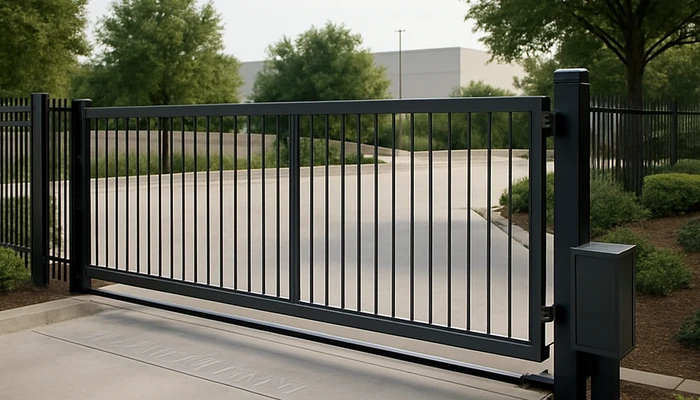
| Sliding Gates | Commercial, industrial, multifamily | Can integrate electric/manual overrides, operate in narrow spaces | Track maintenance, freezing risk |
| Bi-Fold Gates | High-security urban lots | Fast open/close, can integrate fail-safe controls | Complex mechanics, higher cost |
| Chain Link Rollers | Industrial storage or utilities | Manual or powered, simple to override | Lower visual appeal, security tradeoffs |
Discuss your specific needs with a professional. For in-depth tips on how to select chain link options, see our article on chain link mesh selection.
Critical Features for Emergency Gate Systems
- Override Devices: Install a Knox Box or equivalent system approved by your fire department at every automated fire-lane gate.
- Distinct Signage: Mark all fire lanes and emergency access gates with highly visible, code-compliant signage. See our resource on effective fence signage.
- Fail-Safe Operation: Gates should open automatically during power outages or if a fire alarm is triggered.
- Code-Approved Materials: Use hardware and materials rated for emergency use and extreme weather, as required in Chicago’s climate.
- Routine Testing and Maintenance: Regularly check gates for mechanical or electrical problems. Maintenance keeps all components reliable when seconds count.
Common Mistakes That Lead to Costly Fire-Lane Rework
- Installing Gates Before Approvals: Skipping the permit process or failing to coordinate with the fire department invites expensive removals or modifications later.
- Wrong Gate Placement: Placing gates or fence lines too close to required fire lanes blocks emergency vehicles or equipment—never guess where fire lanes should go.
- Ignoring Automation Requirements: Not providing a fail-open feature or appropriate override hardware can result in failed inspections and rework.
- Poor Signage and Visibility: Gates that emergency responders cannot easily identify in smoke or bad weather can cause dangerous delays.
- Neglecting Maintenance: Allowing snow, ice, or mechanical failure to block a gate can create life-safety risks and liability issues.
Learn more about maintenance for gates and fencing in tough conditions with our preventive maintenance guide.
Integrating Security, Design, and Compliance
While designing for emergency access is essential, you don’t have to sacrifice security or aesthetics. Some proven strategies include:
- Integrating fire-lane access gates with visually coordinated materials, such as matching iron or aluminum styles. See how the latest technologies keep security strong while meeting code.
- Using complementary materials for high-traffic entries and more decorative fencing elsewhere. Explore your style options further with our guide on fence panels.
- Implementing smart technology for remote gate release, monitoring, and emergency override when permitted by code.
In the Chicago, Illinois area, weather-resistant materials and secure automation are especially important. Professional contractors can recommend durable solutions that meet all requirements.
Cost Considerations and Budgeting for Emergency Access Features
Factoring in emergency access early is far more cost-effective than correcting mistakes late in the project.
- Permits and Approvals: Application fees and plan review are minor compared to the expense of rework.
- Additional Hardware: Budget for override systems, signage, and safety-rated gate motors (typically a few hundred to several thousand dollars extra, depending on system complexity).
- Maintenance: Allow for ongoing inspection and repairs, especially in climates like Chicago’s with snow, ice, and heavy use.
For a detailed estimate tailored to your property and the latest in code-compliant materials, request a fence estimate.
Maintenance and Inspection: Keeping Emergency Gates Ready
Automated gates require regular inspection. Key tasks for property managers and homeowners include:
- Check override mechanisms quarterly to ensure they function as designed.
- Clear snow, ice, and debris from gate tracks and access points during Chicago winters.
- Replace worn signage or faded visibility markers promptly.
- Schedule annual professional maintenance to align with the manufacturer’s warranty and code requirements.
For advanced monitoring options, emerging technologies discussed by the American Society of Civil Engineers explore how AI and resilience planning are shaping the future of remote monitoring for security gates and access points.
Realistic Expectations: What Automated Gates Can (and Can’t) Do
- Automated gates boost security and convenience, but must never compromise emergency vehicle access.
- Gate automation systems require ongoing upkeep and sometimes periodic upgrades—no technology is maintenance-free.
- Local codes override individual preferences. Even high-end, custom gates must comply with safety and fire-lane rules.
- Delays are possible if local inspectors request changes—plan extra time during the design and permitting phase.
FAQs: Emergency Access, Gates, and Fire-Lane Compliance
- What is required for fire-lane access with automated gates?
- Fire lanes must remain unobstructed, with minimum widths (often 20 feet). Automated gates across fire lanes must include a fire department-approved override device (such as a Knox Box) and allow immediate emergency entry.
- Does every automated gate require a Knox Box?
- Most city and suburban Chicago fire departments require a universal override device at any automated gate controlling fire-lane or first-responder access. Always check local regulations before installation.
- Can I install a locking gate across my driveway?
- You can—but if your driveway is designated as a fire lane or emergency access point, you must equip it with required overrides and keep it clear at all times.
- Will power failures lock my gate shut?
- Properly configured automated gates default to a “fail open” position during power loss. This is essential in emergencies. Always verify this feature during installation and regular maintenance.
- How do I know where fire lanes go on my property?
- Fire lane placement is controlled by local building codes and confirmed during the site plan review. Coordinating with your local fire safety officials early in your project prevents mistakes.
- How often should emergency override systems be tested?
- At least quarterly, and after any electrical or mechanical repairs. Annual professional inspections help ensure ongoing code compliance.
- What materials work best for automated gates in Chicago?
- Weather-resistant metals like galvanized steel or aluminum hold up well in Chicago’s winter conditions. For aesthetic and functional choices, review current aluminum trends and industrial iron options.
- Can existing fences be retrofitted for emergency vehicle access?
- Yes, but it requires analysis of gate placement, hardware, and fire-lane clearances. Consult professionals before making changes—sometimes major adjustments are needed for compliance.
- Are there alternatives to automated gates for fire-lane security?
- Manual gates with coded padlocks or monitored access may be permitted in some cases, but automated gates with approved overrides offer the fastest emergency response. Confirm with your fire department.
Conclusion: Plan Now for Safe, Compliant, and Secure Gates
Integrating emergency vehicle access and automated gate planning from the earliest stages is essential for legal compliance, occupant safety, and long-term value. By understanding local requirements, choosing the right materials, and regularly maintaining your system, you’ll avoid costly fire-lane rework and achieve a safer, smarter property perimeter.
If you’d like personalized recommendations on code-compliant gate systems or need a clear estimate for your next fencing project in Chicago, get in touch with Chicago Commercial Fencing. For specific materials, visit our sections on steel fences, aluminum fences, or chain link fencing options.
About Chicago Commercial Fencing
Chicago Commercial Fencing has over 15 years of experience installing fences and automated gate systems for homeowners and businesses throughout Chicago, Illinois and nearby communities. Known for deep expertise in residential and commercial security, Chicago Commercial Fencing specializes in wood, steel, aluminum, chain link, and vinyl fences. Every installation is code-compliant, fully insured, and focused on both safety and long-term performance. Trust the team to handle your perimeter security project with clarity and care—no guesswork, no shortcuts, just honest advice and durable results.
fence company in chicago, perimeter fence chicago, fence replacement chicago, fence near Hinsdale IL, perimeter fence Elmhurst, fence services Highland Park, fence maintenance Glen Ellyn IL, fence solutions Pilsen, Orland Park fence, fence replacement Montgomery
