 Skip to content
Vehicle Impact Protection at Loading Areas: Bollards vs Guardrail vs Barrier Cable
Protecting loading docks, warehouse bays, and commercial perimeters from accidental vehicle impacts is critical for safety, property value, and insurance compliance. Many Chicago property owners—whether first-time homeowners or experienced facility managers—feel overwhelmed by the array of vehicle impact protection methods available today. Should you install bollards, invest in guardrail, or consider barrier cable? Each solution offers strong benefits, unique trade-offs, maintenance demands, and cost considerations. Understanding what fits your needs, property layout, and Chicago-area codes is the first step. In this comprehensive guide, Chicago Commercial Fencing draws from over 15 years of experience to help you compare and choose the best vehicle impact protection for your loading area. By the end, you’ll be equipped to assess options confidently, understand maintenance, and know when to consult a professional fencing contractor.
Why Vehicle Impact Protection Matters at Loading Areas
Vehicle impact protection isn’t just about fences—it’s about safeguarding people, property, and operations. In busy loading zones, delivery vehicles, forklifts, and trucks regularly maneuver in tight spaces. Accidents can happen quickly, resulting in costly building damage, inventory loss, or even injuries. A robust physical barrier often separates a brief scare from a major financial liability. In Chicago, Illinois, where weather, freeze-thaw cycles, and local ordinances influence every project, a tailored vehicle impact solution is essential.
- Preventing damage: Stops trucks or cars from hitting walls, doors, or loading docks.
- Protecting people: Enhances worker and pedestrian safety.
- Code compliance: Meets insurance and municipal requirements (refer to resources like ICC Safe for more).
- Reducing liability: Minimizes legal risks and claim payouts after incidents.
Overview: What Are Bollards, Guardrail, and Barrier Cable?
Before diving deeper, let’s clarify each system:
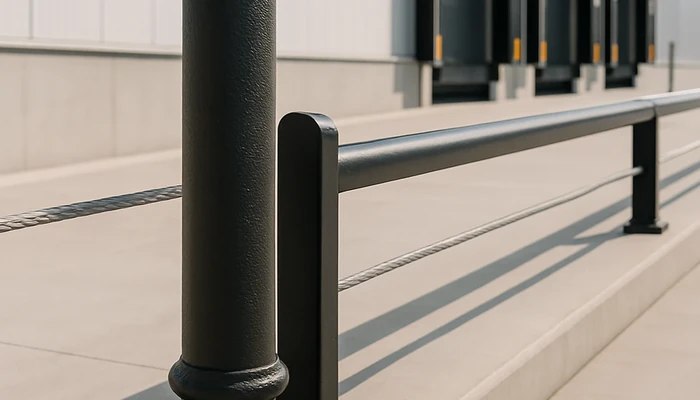
- Bollards: Short, sturdy posts anchored into concrete. Often steel, they offer targeted protection and can be spaced as needed. Used to block direct vehicle access to doors, equipment, or vulnerable corners.
- Guardrail: Protective rail systems (typically steel or heavy-duty polymer), installed along the perimeter to redirect vehicles, absorb impact, and prevent runoffs. Common along edges of loading zones and parking lots.
- Barrier cable: Tensioned steel cable systems stretching between posts. Originally designed for parking structures, they now find use at dock perimeters and elevated loading areas (often with high drop-offs) to halt or slow vehicles.
Each solution can be standalone or part of a broader perimeter protection design. Selecting the right mix depends on traffic volume, risk level, space constraints, and budget.
Comparing Bollards, Guardrail, and Barrier Cable: A Practical Guide
| Feature | Bollards | Guardrail | Barrier Cable |
|---|---|---|---|
| Impact Resistance | High (localized) | High (distributed) | Medium-High (depends on design) |
| Best Use | Entrances, doors, specific assets | Perimeter runs, walkways | Elevated edges, wide spans |
| Visual Impact | Low | Moderate | Low-moderate (open look) |
| Maintenance | Minimal, mainly painting or rust checks | Periodic tightening, repainting, damage check | Requires periodic tension/anchor inspections |
| Cost Estimate* | $200–$500 per unit (installed) | $80–$200 per linear foot | $40–$120 per linear foot |
| Typical Life Span | 10–30 years | 10–25 years | 10–20 years |
| Chicago Area Code Considerations | Depth/anchoring vital in freeze-thaw soils | Height, strength must meet local specs | Structural engineer sign-off common |
*All costs are rough estimates for Chicago, Illinois circa 2024; actual costs vary by site and specification. Always request a site-specific quote.
In-Depth: Bollards at Loading Docks and Perimeters
Bollards are highly regarded for their durability and low profile. Installed at the right intervals, they stop incoming vehicles dead in their tracks, preventing direct collisions with doors, utility meters, building corners, or vulnerable dock equipment.
Types of Bollards
- Steel Pipe Bollards: Standard, filled with concrete and painted. Provide exceptional stopping power.
- Removable Bollards: Can be taken out to allow authorized access for large deliveries.
- Decorative Bollards: Combine protection with appearance—powder-coated or covered with decorative sleeves for aesthetics.
Bollard Pros and Cons
- Very high impact stopping force (for targeted protection).
- No interruption of sight lines or airflow in busy yards.
- Minimal ongoing maintenance in most cases.
- Only protects a specific zone—requires multiple units for broad coverage.
Bollard Installation Tips
- Proper depth and anchoring are essential in Chicago for freeze-thaw stability.
- Spacing should meet code and practical needs—usually every 3–5 feet.
- Check if local rules (or insurance) require reflective stripes or covers.
If you’re considering a full loading dock renovation, learn more about modern security fencing in our guide to the latest technologies in industrial iron fencing.
Understanding Guardrails for Vehicle Impact
Guardrail systems, familiar from highway medians, also provide outstanding site protection at loading zones and parking perimeters. Most commercial options use tough galvanized or powder-coated steel rails attached to sturdy posts, forming a continuous physical barrier.
Guardrail Applications
- Edge protection at loading docks.
- Separating pedestrian walkways from heavy vehicle traffic.
- Defining property boundaries and parking area edges.
Guardrail Strengths and Limitations
- Distributes impact force across multiple posts for effective energy absorption.
- Visually signals “do not cross” zones for all drivers.
- Long, continuous runs require professional installation—anchors must resist deep frost and snow loads in Chicago.
- May be susceptible to corrosion if not maintained (especially where de-icing salts are used).
Code and Safety Factors
- Many municipalities specify guardrail height, strength, and visibility.
- Consult code resources such as ICC Safe for updates on installation requirements.
Barrier Cable Solutions: Flexible, Strong and Low-Profile
Barrier cable systems, long trusted in parking garages, provide high-strength, flexible vehicle control with minimal visual interruption. Tensioned steel cables are anchored between robust end posts and sometimes in multiple horizontal rows. Barrier cable is ideal along the outer edge of raised loading areas or anywhere open sightlines are vital.
Advantages of Barrier Cable
- Allows light and air flow—visually lighter than guardrail.
- Handles heavy impact loads if properly tensioned and anchored.
- Less intrusive for historic or design-sensitive sites in Chicago.
Considerations and Drawbacks
- Needs professional tensioning and regular inspection to stay code-compliant.
- Cables or anchors may require replacement after major impacts or 10+ years of Chicago weather exposure.
- Most systems demand a structural engineer’s input for specification and anchoring.
If you’re interested in combining visual appeal with robust security, check out our overview of wrought iron fence styles, which may complement modern barrier cables for designer projects.
How to Choose: Key Factors for Chicago, Illinois Properties
1. Site Conditions and Use Case
- High-traffic areas with frequent truck movement (e.g., grocery loading docks) may demand the robust, distributed protection of guardrail.
- Narrow walkways, entryways, or utility protection work well with spaced bollards.
- Elevated or open perimeters (including parking ramps) may benefit from a barrier cable or mixed system.
2. Local Codes and Insurance
- Check Chicago, Illinois regulations for required heights, clearances, and tested load ratings.
- Some insurers offer policy premium discounts for properties with up-to-date vehicle impact protection.
- For current code clarifications and updates, consult authoritative sources like ICC Safe.
3. Durability and Maintenance
- Steel systems last longer but must be properly coated, especially with Chicago winter road salts in play.
- Inspect regularly for rust, bolt loosening, and impact damage—see our preventive maintenance guide for iron fences for general care tips.
- Barrier cables may need planned re-tensioning every few years for optimal effectiveness.
4. Aesthetics and Community Guidelines
- Some historic districts or HOA-managed sites restrict heavy guardrail or bold yellow posts. Barrier cable or decorative bollards may be required.
- Always confirm with local ordinances and design review boards before making changes.
5. Budget and Value
- Factor in installation (labor/equipment), ongoing repairs, insurance, and potential loss reduction.
- Bollards offer targeted protection for budget-conscious sites, while guardrail and cable systems can protect longer runs at scale.
Maintaining Your Vehicle Impact Barriers: Best Practices
Even the toughest impact protection systems require care, especially in regions with harsh freeze-thaw cycles and road salt exposure, like Chicago, Illinois. Set up a regular inspection and maintenance routine to extend the life of your investment.
- Quarterly inspections: Look for visible damage (bent rails, missing bollard caps, frayed cables).
- Check anchor and footer stability: Movement signals early failure—address quickly.
- Repaint and seal: Protect steel from rust, especially at weld points and post bases.
- Document impacts: Even “minor” collisions can cause hidden structural weakness.
For deeper maintenance workflows and seasonal tips, explore our preventive maintenance guide (many principles overlap with bollard and guardrail care).
Installing Vehicle Impact Protection: DIY or Hire a Pro?
While some systems appear straightforward, most code-compliant vehicle barriers demand experience—especially with Chicago-area soils, frost depth, and local inspection requirements. Errors in installation (improper anchor depth, incorrect post spacing, or sub-grade materials) can lead to system failure during a critical impact.
- DIY: Small bollard projects are sometimes manageable for skilled homeowners, but always confirm code and utility marking first.
- Professional Install: Large systems, mixed-material perimeters, or sites with challenging soil conditions benefit from experienced contractors who guarantee compliance and reliability.
Ready to take the next step? Contact Chicago Commercial Fencing to discuss your property and get guidance from a local expert team familiar with Chicago, Illinois building codes and weather demands.
Cost Comparison: Sample Scenarios in Chicago, Illinois
What are realistic cost expectations? Here are ballpark ranges for new installations—always request a site-specific quote from a fence contractor:
| Scenario | Estimated Cost | Notes |
|---|---|---|
| Five heavy-duty steel bollards | $1,250–$2,500 installed | Includes excavation, concrete footers, city inspection |
| 80 ft of steel guardrail with end returns | $8,000–$16,000 installed | For a large dock edge, includes post setting, painting |
| 100 ft of barrier cable system (2-3 rows of cable) | $6,000–$12,500 installed | Includes tensioning and anchors, specialty labor |
Note: Prices can fluctuate by season, material costs, and site complexity.
For a broader sense of commercial fence options, explore our commercial fence installation page.
Examples: Vehicle Impact Incidents and Solutions
- Warehouse chain reaction: A delivery truck skids on ice, slamming into a poorly anchored guardrail. Because the installation didn’t account for frost line anchoring, the rail shears, damaging both truck and property. Solution: deep-set, city-inspected posts and higher gauge steel.
- Parking ramp barrier cable: A large SUV lose control but is stopped by a properly tensioned barrier cable system, preventing a drop to the next level. Annual inspections found worn anchor bolts, which were replaced before any failure occurred.
- Front office bollard protection: After a nighttime accident with a misdirected car, decorative (but steel-cored) bollards prevented damage to the glass entrance and kept the site operational.
Curious about combining barrier types or integrating modern automation? Our latest technologies overview offers information about fence and security system integration for Chicago-area businesses.
Common Myths About Vehicle Impact Barriers
- “Any fence will stop a vehicle.” (Not true—most traditional fences are not rated for impact. Only systems engineered for vehicle forces will reliably stop or redirect trucks and cars.)
- “Bollards are overkill for small sites.” (Even compact service doors or small docks can benefit, especially in places with tight turning radii or winter slip risk.)
- “Barrier cable is unsafe or out of code.” (Not if designed, tensioned, and maintained correctly; code-compliant systems perform well in demanding applications.)
- “Maintenance doesn’t matter.” (Neglect leads to failure—set a schedule and stick to it, especially in Chicago’s tough climate.)
FAQ: Vehicle Impact Protection for Loading Areas
- What is the main purpose of vehicle impact protection at loading areas?
- Vehicle impact protection prevents accidental or intentional vehicle strikes that could damage property, injure people, or disrupt business operations. A properly designed barrier system helps absorb, deflect, or stop vehicles before they reach sensitive areas.
- Do I need a permit in Chicago, Illinois to install bollards or guardrail?
- Yes, many installations require city permits—especially when anchoring into sidewalks, driveways, or public right-of-way. Always check with Chicago’s Department of Buildings or consult a professional familiar with local codes.
- How do I know which barrier solution is best for my site?
- Consider your site’s traffic patterns, exposure to risk, code requirements, and budget. In many cases, a combination approach (e.g., guardrail plus strategic bollards) offers the best blend of safety and value. A professional site assessment is recommended.
- What should I look for in a contractor for vehicle impact protection?
- Choose professionals with proven experience with impact-rated systems, knowledge of Chicago-area codes, and a focus on safe, code-compliant installation. Look for clear quoting, transparency, and strong warranty/service support.
- How long do these systems typically last?
- With proper care, quality bollards, guardrail, and barrier cable systems last 10–30 years, depending on materials and exposure. Regular inspection and quick repairs extend their service life considerably.
- Can these barriers be combined with automated gates or cameras?
- Yes. Many sites use a mix of physical barriers and smart technologies. Explore more about integrating monitoring and access control in our technology overview.
- Are decorative options available for urban or retail sites?
- Absolutely. Decorative sleeves or custom finishes help match surrounding architecture, especially in visible locations like storefronts and office plazas.
- How often should I maintain or inspect my barriers?
- Check systems quarterly, especially after any impact or extreme winter. Promptly address rust, loose bolts, or damaged sections.
- Where can I find more details about Chicago-specific code requirements?
- Start with code resources at ICC Safe and verify with city officials or experienced contractors.
- When should I contact a professional for help?
- If you’re unsure about code, installation depth, or structural needs—or your site has unusual requirements—contact a local fence expert for advice and a written estimate.
Conclusion: Make Informed Choices for Safer Loading Areas
Choosing the best vehicle impact protection for your loading area requires a careful balance of safety, code compliance, durability, and cost. Whether you opt for bollards, guardrail, barrier cable, or a combination—the right system helps safeguard your property, keeps workers safe, and satisfies Chicago, Illinois regulations. Unsure where to start or which solution will work best for your site? Reach out to Chicago Commercial Fencing for honest, experience-based guidance and a tailored estimate. Protect your property with confidence.
About Chicago Commercial Fencing
Chicago Commercial Fencing has over 15 years of experience installing and maintaining high-quality fences, barriers, and vehicle impact protection systems for homes and businesses in Chicago, Illinois, and neighboring communities. Specializing in wood, vinyl, aluminum, steel, and ornamental iron, our team emphasizes honest assessments, transparent processes, and strict code-compliance. As a fully licensed and insured company, we help clients navigate local rules and choose the right security and privacy solutions for every property. Contact Chicago Commercial Fencing for peace of mind and professional perimeter security.
fence builder chicago il, wrought iron fences Fence Chicago, ornamental iron fence Fence Chicago, iron perimeter fence Palatine, Iron Fence Arlington Heights IL, iron fence Ranch Triangle IL, iron fence in the city of Bolingbrook, iron fence companies in Libertyville, ornamental iron fence Westchester, custom iron fence South Loop
