
Temporary Construction Fencing: Rental vs Purchase for Projects That Run Long
Choosing the right temporary construction fencing for your long-term project is a pivotal decision—one that can shape your budget, timeline, and site security from day one. For homeowners, property managers, and businesses in the Chicago area, questions about whether to rent or buy temporary fencing come up on nearly every sizable project. Budget pressures, unpredictable timelines, and strict city codes add to the uncertainty. Temporary fencing is a basic requirement for safety, privacy, and compliance on job sites, but the decision to rent or purchase is far from simple.
This guide provides a clear, honest comparison of renting versus buying temporary construction fence panels and systems for site projects that may stretch far beyond their original schedule. We’ll examine the true costs, practical trade-offs, material options, and the steps involved in both approaches—so you can confidently select the most sensible, code-compliant solution. As fence specialists with deep experience in the Chicago, Illinois climate, Chicago Commercial Fencing is here to help property owners and managers set realistic expectations and avoid common mistakes.
Understanding Temporary Construction Fencing: Purpose and Essentials
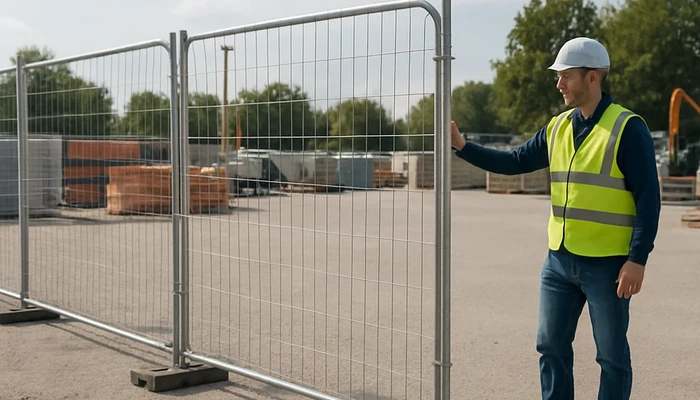
Temporary construction fencing serves as a safety barrier, security perimeter, and privacy solution for active worksites. Whether installed around residential renovations or major commercial builds, these modular panels and gates:
- Prevent unauthorized site entry and reduce liability
- Contain debris and material on-site
- Protect workers and the public from hazards
- Fulfill city and OSHA compliance requirements
Most temporary fences are freestanding, using weighted bases or driven posts. They can include wind screens, signage, gates, and anti-climb features. While the core purpose—site security and safety—remains constant, the way you acquire these fences (rental vs purchase) can change project outcomes dramatically if a project runs long.
When Projects Run Long: Why the Rental vs Purchase Decision Matters
Construction in Chicago is notorious for unexpected delays—weather, permits, change orders, and workforce shortages can all push timelines out by months. This uncertainty makes it crucial to assess your fencing needs beyond just the original schedule. Choosing the wrong approach can lead to ballooning costs, compliance headaches, or security lapses as months go by.
Typical scenarios where the decision is especially important:
- Large-scale builds or renovations (6+ months)
- Developments with phased construction/windows
- Major repairs impacted by seasonal weather
- Sites subject to shifting regulations or inspections
Let’s break down when to consider renting vs buying—then provide a head-to-head cost and features comparison.
Rental vs Purchase: Key Differences for Temporary Construction Fencing
| Factor | Renting | Purchasing |
|---|---|---|
| Upfront Cost | Low initial payment; charged monthly/weekly | Higher one-time investment |
| Maintenance/Repairs | Usually included in rental | Owner’s responsibility |
| Flexibility | Easy to adjust for schedule changes | Long-term use/ownership only |
| Compliance/Quality | Supplier handles code checks | Must verify materials and compliance |
| Storage After Project | Supplier removes panels | You must store or resell/repurpose |
| Total Cost Over Time | May exceed purchase for very long projects | Potential savings on extended timelines |
| Customization/Branding | Limited choices | Any specification or branding is possible |
| Insurance Coverage | Generally covered by rental agreement | Must be factored into your policies |
Renting Temporary Construction Fencing: Pros, Cons, and How It Works
How Rental Fencing Typically Works
Fence rental companies deliver, set up, and eventually remove the fence panels. Most in the Chicago area offer:
- Quick dispatch and on-site assembly
- Flexible terms: weekly, monthly, or as needed
- Compliance with local construction ordinances
- Optional add-ons: wind screens, gates, signage
Advantages of Renting
- Low upfront costs help preserve project cash flow
- Maintenance and repairs included—no extra charges if panels are damaged through normal use
- No storage headaches when the project ends—everything is removed for you
- Adaptable: easily extend or reduce the rental period if delays occur
- Simple compliance—most city code changes are handled by the rental company in real-time
Potential Drawbacks
- Costs may accumulate far beyond initial estimate if the timeline doubles or more
- Limited choice of panel style, color, or finish
- No long-term asset value—rental fees do not build ownership
- May incur fees for lost/damaged panels beyond normal wear
Typical Rental Process in Chicago
- Request a quote with accurate site measurements and anticipated duration
- Schedule delivery and installation—often within 48–72 hours
- Periodic inspections and repairs (if supplied by the rental company)
- Arrange takedown/removal when construction wraps up
Rental can be the smartest—and simplest—route for projects where duration and design requirements are hard to predict. Want more information on best materials or maintenance? View our Selecting High Quality Lumber For Fencing post.
Purchasing Temporary Construction Fencing: Pros, Cons, and Best Scenarios
How Buying Temporary Fencing Works
Purchasing panels means you (or your contractor) source, ship, and install fencing. It becomes your asset for as long as you need it. After the project, you can store, reuse, sell, or donate panels for future uses.
Advantages of Buying
- Lower total cost over very long projects (typically past 10–18 months)
- Customize the type, style, or color to fit branding or property appearance
- Potential for re-use on phased projects or future builds
- Asset ownership—may be depreciated or written off for businesses
- More choice in gates, locks, and accessory features
Drawbacks and Considerations
- High upfront cost—may not be justified for one-off or short-duration jobs
- Owner is responsible for all future repairs, replacements, and inspections
- Post-project storage, transportation, and security
- Must ensure all materials and installation meet local codes and site conditions
- Requires planning for future re-use to maximize ROI
When Does It Make Sense to Buy?
Buying is most often the smart call for developers, builders, or organizations that:
- Run continuous or phased projects with high temporary fencing usage
- Operate in areas with recurring construction activity
- Have secure storage and transportation for panels between jobs
- Want custom-branded fencing (e.g., for commercial branding visibility)
Is your project phased or ongoing? Learn more about security and perimeter solutions in this perimeter security overview.
Material Options for Temporary Construction Fencing
Temporary fence panels come in several materials, each with unique qualities:
- Chain Link Panels: Most common, offer visibility and strength; available with privacy screens
- Welded Wire: Enhanced security and rigidity, ideal for high-risk areas
- Panel Fences: Lightweight options for crowd control or low-threat sites
- Composite/Plastic: Lightweight, corrosion-resistant, faster to install, but less robust
In the Chicago climate, choosing weather-resistant, code-compliant materials is crucial. Severe winters, high winds, and snow load can quickly degrade low-quality panels. Consult our chain link fences for storage facilities article for more insight on chain link durability.
Cost Considerations: Renting vs Buying Over Time
The tipping point between rental and purchase often comes down to duration and frequency of use. Here’s a simplified example (estimates only—actual pricing can vary):
| Project Length | Renting (Chicago, per 100 linear ft) | Buying (Chicago, per 100 linear ft) |
|---|---|---|
| 1 month | $250–$500 | $1,200–$1,800 |
| 6 months | $1,500–$3,000 | $1,200–$1,800 |
| 12 months | $3,000–$6,000 | $1,200–$1,800 |
| 24+ months | $6,000–$12,000+ | $1,200–$1,800 (plus storage/maintenance) |
Important: Always confirm local pricing and compare comprehensive quotes for both rental and purchase. The cost of labor, delivery, pickup, and damage waivers can swing the equation. Remember that city and suburban building codes in Chicago may require higher-grade panels or extra stabilization, adding costs or complexity for persistent winter winds and snow loads (see this resource on resilience and sustainability).
Compliance, Permits, and Safety: Essentials for Temporary Fences
Compliance isn’t optional on any active construction site in Chicago, Illinois. Regulations may specify:
- Fence height (usually 6–8 feet minimum)
- Panel stability requirements (weights, cross-bracing, post depth)
- Screening for dust/debris control
- Signage and emergency access points
- Material grades for security or public jobs
If renting, reputable providers handle these requirements and stay informed of changes. If buying, ensure the supplier understands and certifies compliance. Review your HOA and municipal rules before any installation. For more on compliance and local variations, see our article: The Impact of Local Regulations on Commercial Fence Installation.
Maintenance and Long-Term Durability in the Chicago Climate
Even temporary fences in Chicago need ongoing checks—especially for projects that run through harsh winters and wet springs. Here’s what to keep in mind:
- Routine Inspections: Check for panel integrity, loose attachments, and stability of any weighted bases
- Winterization: Secure against drifting snow and high winds; remove ice accumulation on panels and supports
- Repairs: Promptly address any damage or vandalism to avoid liability and keep permits valid
If renting, these tasks may be included in your agreement. Owners must assign or schedule checks—neglect can lead to safety hazards. For maintenance insights, visit our preventive maintenance guide. For a broader overview on how technology is improving fence safety and monitoring, reference this ASCE article.
Environmental and Sustainability Considerations
Temporary fencing isn’t just a cost—it’s an environmental footprint. Repeated rentals may keep panels in continuous use, while bulk buying makes sense for companies reusing materials across projects. Consider:
- Steel and wire panels are typically recyclable and reusable
- Efficient logistics (single delivery/pickup) = lower carbon impact
- Buying locally sourced panels reduces transport emissions
Providers and buyers alike are exploring “smart” panel technology and more sustainable material choices. To learn about advances in fence sustainability and resilience, visit this resource (ASCE news).
Real-World Scenarios: When Is Renting or Buying Best?
Scenario 1: Homeowner Remodeling (Single Project, 4–6 months)
- Recommended: Rent
- Reason: Upfront cost is lower; handling, setup, and removal are included; no need to store fence materials after work completes.
Scenario 2: Commercial Builder (Multiple Projects Over Years)
- Recommended: Buy
- Reason: Fence panels become an asset used over and over, reducing costs in the second and third cycles of use.
Scenario 3: Uncertain Project Duration with Strict Security Needs
- Recommended: Start with Rental, Evaluate at 6-Month Mark
- Reason: Flexibility is critical if delays or regulatory changes are likely. If the project goes much longer, buying may make sense at renewal.
Still deciding? Here are key questions to ask before hiring a fence company.
Common Mistakes When Choosing Temporary Fencing for Long Projects
- Underestimating project length—leading to unplanned rental extensions
- Forgetting to check for code changes that may affect fence requirements mid-project
- Ignoring post-project storage costs (if purchased)
- Choosing the wrong material for Chicago’s climate (corrosion, wind fatigue)
- Failing to factor in removal, repair, or legal fees related to fence maintenance
For advice on fence types and issues with materials, check out advantages and disadvantages of vinyl fences.
FAQs: Temporary Construction Fencing for Long Projects
What’s the average break-even point between renting and buying?
Typically, the purchase makes sense if the fence will be needed for 12 months or more—though this can vary based on provider rates and local factors. Always ask for a breakdown from both rental and purchase suppliers.
Can temporary fences be moved and reused if I buy them?
Yes—purchased panels are portable and can be moved between sites, provided you have secure transport and storage.
Do I need a permit for temporary fencing in Chicago?
Most construction sites do, especially commercial jobs. Always check local building codes and your general contractor’s requirements. Temporary fences without permits may be subject to fines and removal.
Does rental fencing include installation and removal?
Reputable fence rental providers in Chicago usually include setup and takedown in their fee structure, but request confirmation in writing and look for any hidden labor or overtime charges.
What about damage or theft during the rental period?
Rental contracts often cover standard wear and accident damage, but excessive loss/theft can result in additional fees. Review insurance coverage and contract exclusions closely.
Is there a difference in quality between rental and purchase panels?
Rental panels are usually robust for repeat use, but purchase options offer more variety in weight, finish, and accessories—useful for high-security or aesthetic expectations.
Can temporary fencing withstand Chicago winters?
Most modern panels will, but it’s essential to verify wind/snow load ratings and maintenance requirements. Renting often gives you access to well-maintained, climate-tested equipment.
Are there eco-friendly temporary fencing options?
Yes; steel and welded wire can be reused or recycled. Some companies offer recycled content panels or lower-impact transport. For insights, review this external guide.
What should I look for when comparing rental and purchase quotes?
Review the full scope—installation, removal, damage waivers, code compliance, panel quality, and any surcharges. Transparency in quoting is a key value at Chicago Commercial Fencing.
Where can I ask further questions?
You can contact Chicago Commercial Fencing for honest advice and local experience.
Conclusion: Making the Right Choice for Your Chicago Project
Choosing between renting and buying temporary construction fencing is about balancing upfront costs, long-term needs, security, and site compliance. If your project schedule is firm and short, renting offers flexibility and peace of mind. For projects with extended durations or phased work, purchasing can deliver significant savings and customization potential—if you can manage storage, maintenance, and compliance after the job.
Our best advice: take time to analyze your schedule, site risks, and available resources. Whether you rent or purchase, ensure material quality and code compliance are never compromised—especially in the challenging Chicago climate.
If you need help estimating costs or navigating local regulations, request a fence estimate from Chicago Commercial Fencing or explore our chain link fencing solutions for more details. For comprehensive security and privacy, you can also explore commercial fence options.
About Chicago Commercial Fencing
Chicago Commercial Fencing is a professional fence company with over 15 years of experience helping homeowners and businesses in Chicago, Illinois and nearby communities improve security, privacy, and project compliance. Our specialized team installs, repairs, and maintains fences in all materials—including wood, vinyl, aluminum, and steel—for both residential and commercial sites. We’re committed to honest advice, code-compliant installations, and transparent service from planning through inspection. Our company is licensed, insured, and focused on safety for every project.
fence company chicago il, fence chicago illinois, custom fence chicago, fence Mokena, custom fence Gurnee, fence in Rockford IL, fence solutions La Grange, fence services Union Ridge, fence maintenance Deerfield IL, perimeter fence Bolingbrook IL