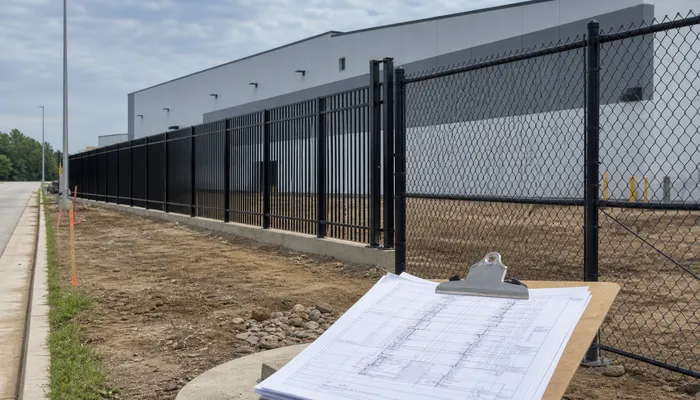
Commercial fence permits in Chicago are part of a larger regional picture for Illinois businesses. A company in Cicero, Berwyn, Melrose Park, Oak Park, or Bedford Park may face different local rules from a property just a few miles away, and those differences shape how a commercial fence project moves forward. Rather than treating one city’s process as the template for every job, it helps to understand the municipal context around your site. Illinois’ own geography is a useful reminder: it is a Midwestern state with many independent municipalities, a capital in Springfield, and its largest commercial center in Chicago.
Searching for “commercial fence permits in Chicago” often points to city-based examples, but a facility in Berwyn or Cicero may need a different set of documents. A new chain link fence can be accepted in one community and require a more detailed review in another. That is why contractors and property owners across the Chicago area rely on code-aware planning before the first post is set.
A Statewide Framework for Commercial Fence Permits
Illinois represents a broad commercial market in the Midwest, but fence approvals are not controlled by a single statewide form. Municipalities may define property line setbacks, fence height, material limits, and gate requirements differently. Neighboring communities can interpret similar rules in different ways. For businesses that operate in more than one municipality, the same perimeter plan may need different documentation depending on the address.
When readers ask what affects a commercial fence approval, the answer usually begins with local zoning and building codes. The Impact of Local Regulations on Commercial Fence Installation walks through how those regulations influence fence design, structural details, and project costs in cold-weather areas like Illinois.
Municipal Permit Context Across Chicago-Area Communities
Commercial fence projects in the Chicago region can move more efficiently when the property team knows which municipality will review the application. Because project scope varies from industrial yards to access-controlled parking lots, it helps to review the local service page that matches your property type. The following Chicago-area pages cover commercial fence installation and code-aware planning:
- commercial fence services in Chicago — a practical starting point for warehouses, parking areas, and automated gate systems inside city limits.
- commercial fence installation in Bedford Park — useful for industrial property perimeters that need clear boundaries and durable materials.
- commercial fence contractor in Berwyn — suited for businesses that need help checking setbacks and parking-area enclosures before installation.
- commercial chain link fence installation in Cicero — a practical reference for clear lot lines, secure yards, and access points.
- commercial steel fence installation in Melrose Park — a good fit for facility perimeters that need high-impact, low-maintenance protection.
- commercial fence company in Oak Park — a resource for village-level fence projects that need a professional review of local requirements.
What a Commercial Fence Permit Application Usually Covers
Every municipality has its own form, but most reviews will ask questions about the physical fence and its location. Preparing the following information helps move the conversation forward:
- Site plan or survey with current property lines
- Proposed fence location, height, and length
- Material and finish specifications
- Gate locations, swing direction, and access-control details
- Distance from sidewalks, alleys, driveways, and public right-of-way
- Description of what the fence encloses: yard, parking, storage, equipment, or loading area
It also helps to compare bids with the same level of detail. What a Commercial Fence Quote Should Include (Line Items That Change Price Fast) shows the line items that separate a complete proposal from a vague estimate.
Material Selection and Permit Planning Go Hand in Hand
The material you choose does more than set the look of the fence; it also gives code reviewers information about height, visibility, and durability expectations. Chain link remains one of the most practical commercial options because it defines a boundary without blocking sightlines. Steel fence systems and wrought iron fence styles offer stronger perimeter presence. Aluminum and vinyl fence installations add corrosion resistance or low upkeep. Wood fence systems provide privacy for yards and utility areas when local rules allow.
None of these materials is automatically easier to permit. What matters is whether the proposed height, placement, and gate plan match the zoning requirements for that specific property.
How Code-Aware Planning Supports Permit Coordination
A commercial fence project usually follows a repeated but flexible sequence: site assessment, local requirement review, drawing preparation, utility verification, material selection, installation, and final inspection. Permit coordination is part of that sequence, not a separate step attached at the end. The contractor carries the commercial-grade material specifications and project schedule, while the local code official makes the final call on approval.
Property managers should ask each contractor how they handle municipal research and drawings before installation begins. They should also ask about realistic scheduling. Commercial Fence Project Timelines: What Actually Determines Start-to-Finish explains what drives completion dates once the project moves into the field.
Commercial Fence Permit Questions for Illinois Property Managers
Do I need a permit for a commercial fence in the Chicago area? Most fence installations that affect property boundaries, height, access, or safety should be checked with the local building or zoning department. Many municipalities require a permit before installation starts.
Do the same permit rules apply in Chicago, Berwyn, Cicero, Bedford Park, Melrose Park, and Oak Park? Not automatically. Permits are granted by each local government. A village may have different standards from a town or city several blocks away. Use the municipal page for your location and call the local office when in doubt.
What details should I prepare before contacting a fence contractor? Start with the property survey and a clear idea of the area to enclose. Also note whether you need vehicle gates, walk gates, automated access control, or security upgrades. Those details help a contractor and a local reviewer understand the full scope.
Should a contractor provide permit help? Yes. Ask whether the quotation includes a site review, local research, drawing preparation, and permit coordination. Contractors who understand code-aware planning can often keep a project organized, even when the municipality has follow-up questions.
Does fence height or material affect the permit review? Usually yes. Height can affect sightlines, privacy, and allowed placement. Material can affect structural requirements and appearance expectations. The exact rules depend on the local zoning district and the type of property being protected.
Does searching for “commercial fence permits in Chicago” cover suburbs too? Search results often center on Chicago because of city size, not because the rules are the same everywhere. Commercial fence permits in Chicago apply only where the City of Chicago has jurisdiction; nearby towns such as Cicero, Oak Park, or Melrose Park have their own reviews. That is why location-specific planning matters.
Check Local Requirements Before You Start Fencing
Commercial fence permits in Chicago and surrounding communities should be treated as part of the project scope, not as an afterthought. Once the property line, fence location, materials, and gate plan are clear, businesses can compare realistic quotes. For help with a specific site, describe your project to a commercial fence contractor through the contact page.
Whether you operate in Chicago itself or in one of the nearby Cook County villages, start with the municipality that has authority over your address. Review local regulations, prepare your site information, and work with a contractor who keeps code-aware planning at the center of the job.