 Skip to content
Access Control at the Gate: Matching Readers and Credentials to Your Traffic Patterns
Choosing the right access control for your property’s gate is a critical step for security, privacy, and seamless daily operations. But with so many technologies—from traditional keypads to contactless cards and mobile credentials—it can be confusing to select the system that truly fits your site’s unique traffic patterns. Whether you’re a homeowner wanting a better sense of control, or a property manager weighing options for tenants and deliveries, understanding what access control offers (and where trade-offs exist) is essential. This guide explains how to evaluate gate access control readers and credentials with real-world examples, local code considerations, and practical advice from the field. By the end, you’ll have a clear grasp of the fundamentals—along with expert tips from Chicago Commercial Fencing on what works best in the Chicago, Illinois climate and legal landscape.
What Is Gate Access Control and Why Does It Matter?
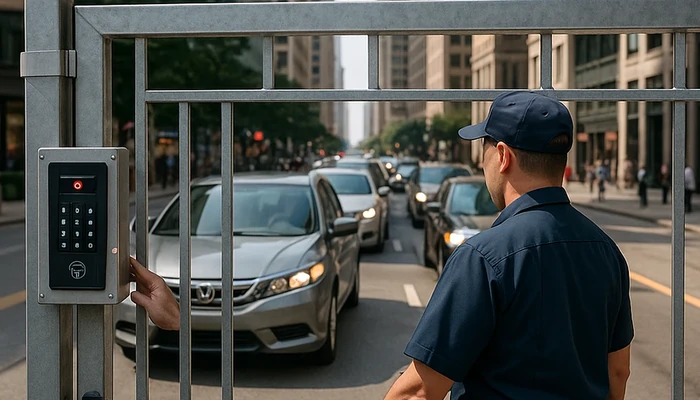
Gate access control refers to the combination of hardware and software systems that regulate entry—deciding who is allowed in, when, and how. At its core, access control is about balancing convenience, security, and accountability on your property’s perimeter. The entry point could be a driveway gate, a commercial parking lot, or a shared community entrance, but the principles remain the same: restrict unauthorized access, streamline entry for trusted users, and document or deter unwanted traffic.
- Security: Prevents unauthorized vehicles or pedestrians from entering the property.
- Accountability: Tracks who enters and when, supporting investigations or audits.
- Convenience: Makes daily entry smoother for residents, employees, or vendors.
In the Chicago, Illinois area, gate access control is increasingly used not just in commercial settings but also suburban communities, luxury homes, and multi-unit residential buildings. Each of these environments has distinct requirements based on usage patterns and risk levels.
Understanding Traffic Patterns: The Key to Choosing Access Control
Before choosing equipment, assess your typical gate usage—or traffic patterns. This means considering:
- How many vehicles or people enter daily or weekly?
- Are there “rush hour” times with heavy flows?
- Is usage mostly residents, employees, guests, vendors, or a mix?
- Do you need 24/7 access or can access be restricted to set hours?
- How often do you expect to grant entry to new or temporary users?
For example, a small apartment has predictable, low-volume traffic; a logistics yard sees fluctuating patterns and frequent visitors; a gated community must manage both residents and deliveries. Matching your readers and credentials to these needs ensures smooth operation—without compromising safety or creating bottlenecks.
Types of Gate Readers: Options and Trade-Offs
There are several major categories of gate access control readers. Each offers unique benefits and is best suited to specific traffic patterns and site requirements.
| Reader Type | How It Works | Best For | Potential Drawbacks |
|---|---|---|---|
| Keypad/Pin Code | User enters code to unlock gate | Low-medium traffic, few users | Codes can be shared; less secure if changed rarely |
| Card/Fob Reader (RFID or Magnetic Stripe) | User swipes or taps credential | Medium/high-traffic, regular authorized users | Cards can be lost or lent; replacement needed |
| Proximity/Long-Range RFID | Driver passes credential within range | High traffic, vehicle entry/exit | Equipment cost; sometimes errant reads |
| Mobile/Smartphone Credentials | User accesses gate via app or Bluetooth/NFC | Mixed or dynamic user base | Dependent on mobile device; user onboarding required |
| Biometric Readers (Fingerprint/Face) | Matches unique physical feature | Very high security | Costly; slower for high-traffic gates |
As technology advances, hybrid readers (supporting multiple credential types) are becoming common, blending convenience and flexibility. However, durability in Chicago’s freezing winters and humid summers is always a factor—choose equipment rated for local extremes.
Credential Choices: Balancing Security and Convenience
Credentials are the “keys” that grant access—physical or digital. Selecting the right credential type is as important as choosing the reader. Major options include:
- Key codes: Simple, no extra hardware, but less secure
- Cards/fobs: Scalable, easy to replace, but can be lost or cloned (some types)
- Mobile credentials: Uniquely assigned, centrally managed, support temporary/guest access
- Biometrics: Nearly impossible to share; maximum control
It’s common to support multiple credential types—especially for larger or more diverse properties. Weigh:
- User Experience: Older users may prefer cards/fobs; tech-savvy users often like mobile options.
- Audit Trail: Mobile and card/fob credentials often support better tracking than pin codes.
- Cost: Factor in initial device prices, replacements, and ongoing administrative labor.
Always review security standards from organizations like WBDG/NIH for guidance on credential management best practices.
Adapting to Chicago, Illinois: Climate, Codes, and Compliance
In Chicago, Illinois, your choice of access control must account for freezing winters, rapid temperature swings, and local zoning rules. Key points:
- Outdoor hardware should be rated for sub-zero temperatures and humidity.
- Enclosures and wiring must handle snow, ice, and de-icing agents.
- Permits may be required for certain automated gates—check city building codes before installation.
- Accessibility laws often mandate certain reader heights and controls, especially in public or shared residential settings.
Chicago Commercial Fencing always recommends confirming local standards before finalizing your system. For in-depth information on how regulations affect fence and gate projects, see our guide on the impact of local regulations on commercial fence installation.
Integrating Gate Access Control with Other Security Measures
No gate system works in isolation. Effective perimeter security layers multiple defenses, combining physical fencing, gates, and electronic controls. Integration helps to:
- Ensure that only authorized users can enter via pedestrian or vehicle gates
- Sync access logs with surveillance cameras for audits/investigations
- Support emergency override (for fire or medical situations)
- Link with broader building management, including alarms and intercoms
Systems powered by the latest advances in technology, such as smart monitoring and artificial intelligence, can increase responsiveness and reduce manual error. For a closer look, explore expert analysis at the American Society of Civil Engineers.
For more on integrating technology with fences and gates, see our post Perimeter Security: A Comprehensive Overview.
Common Gate Access Control Use Cases
Every property’s needs are unique, but some scenarios recur regularly in Chicago, Illinois and beyond:
- Residential driveways: Often benefit from keypad or key fob entry for families, with temporary codes for guests or service technicians.
- Apartment and condo buildings: Mobile credentials and card systems allow scalable, easily managed access and logging of all users.
- Commercial lots and warehouses: Use a mix of proximity readers for trucks, monitored entry cameras, and integrating badge systems with HR or vendor databases.
- HOA and community gates: High usage requires robust, easy-to-update credentials, often with managed guest access and integration to call boxes or intercoms.
Want to understand how fencing choices connect with access control? Read our guide on choosing your perfect fence panels.
Installation, Maintenance, and Long-Term Considerations
Proper installation is the foundation of reliable access control. Issues like poorly protected wiring, misaligned readers, or weather-exposed gear can cause headaches down the road. Best practices include:
- Work with installers familiar with both electrical and physical security
- Opt for systems that include centralized management (cloud or on-site)
- Test backup power options for snowy days or storm outages
- Schedule regular checks for hardware wear and user credential updates
Review our key questions to ask before hiring a commercial fence company if you’re planning a large project or significant upgrade.
Comparing Reader Technologies: Pros, Cons, and Best Uses
| Reader Type | Pros | Cons | Ideal Use Case |
|---|---|---|---|
| Keypad | Affordable; simple; no cards to manage | Codes shareable; less auditability | Small residential, low traffic |
| Card/Fob | Scalable; can track users | Loss/clone risk; admin effort | Residential, offices, multi-user |
| Mobile Credentials | User-friendly; guest access; high auditability | Requires smartphones; more IT support | Modern communities, large condos |
| Biometric | Very secure; non-transferable | Expensive; slower on busy gates | High-security sites, select gates |
Safety, Accessibility, and Compliance Tips
Chicago’s building codes and federal ADA (Americans with Disabilities Act) rules emphasize accessibility and fair entry. Considerations include:
- Mounting reader panels at accessible heights
- Providing alternative entry methods for users with disabilities
- Ensuring clear visibility and instructions near the gate
- Regularly reviewing codes to keep systems up to date
For more on safety and durability, visit Understanding Perimeter Security Basics.
FAQs: Access Control at the Gate in Chicago
1. What is the best type of reader for residential properties?
There’s no universal “best,” but keypads and card/fob readers are popular for single-family homes and small multi-family buildings. For added convenience and auditability, mobile credentials are gaining popularity, especially in newer developments.
2. How can I make my access control system weather-resistant?
Choose hardware rated for low temperatures and moisture, install weatherproof housings, and periodically check for salt/corrosion after snowy months in Chicago, Illinois.
3. Can I mix different credential types on one property?
Yes. Many gate systems now allow mobile, card/fob, and keypad credentials to be used simultaneously, ideal for sites with diverse users or needs.
4. What’s the biggest mistake when choosing a system?
Over- or underestimating your traffic volume. Installations that ignore real usage patterns often end up with bottlenecks or unnecessary extra costs down the line.
5. Are there legal requirements for gate access control systems in Chicago?
Yes. Local ordinances may require specific safety devices, accessibility standards, and permitting. Consult city codes or a reputable installer to ensure compliance.
6. How do I manage temporary access for visitors or deliveries?
Modern systems make it easy to assign temporary codes, cards, or mobile credentials that expire after a set time—an essential feature for properties with frequent guests or service workers.
7. How much does a typical access control system cost?
Costs vary by property size, number of gates, credential type, and degree of integration. Simple residential keypads may be a few hundred dollars, while large commercial setups can range into the thousands. Actual quotes depend on site conditions and needs.
8. Should access control be integrated with video?
Often yes—especially for commercial or multifamily properties. Video helps verify access attempts and provides an audit trail, supporting investigations or compliance reviews.
Conclusion: Setting Realistic Expectations and Next Steps
Matching your gate’s access control readers and credentials to daily traffic patterns isn’t just about technology—it’s about reducing hassle, improving safety, and ensuring compliance, year-round. In the Chicago, Illinois area, local codes, climate, and community needs all shape the right solution. With honest evaluation and a partner like Chicago Commercial Fencing, you’ll get clear advice and durable, code-compliant installations.
Ready to discuss the best options for your site? Contact Chicago Commercial Fencing for a straightforward consultation. Or, if you already know which style of fence you prefer, learn more about maintenance-friendly vinyl fences or secure chain link solutions for Chicago properties.
For more in-depth security insights, browse our guides on perimeter security and business fencing strategies.
About Chicago Commercial Fencing
Chicago Commercial Fencing is a professional fence company with over 15 years installing fences in the Chicago, Illinois area. Our team specializes in residential and commercial solutions, including wood, vinyl, aluminum, and steel fences, with a strong commitment to local code compliance, safety, and long-term reliability. We serve homeowners and businesses across Chicago and nearby communities, providing transparent advice and workmanship you can trust.
fence chicago il, best fence chicago, fence near chicago, fence Brooklyn, fence repair Park Ridge IL, fence Rogers Park IL, fence maintenance Albany Park, fence near River North, fence near Miami, fence services Bartlett IL
