The commercial fence material comparison Waukegan, IL warehouses and yards need most often starts with the property type, not the material. Below, the common perimeter options are grouped by property type so facility managers can weigh security level, visibility, and long-term upkeep before committing to a build.
Chain Link and Steel for Warehouses and Loading Yards
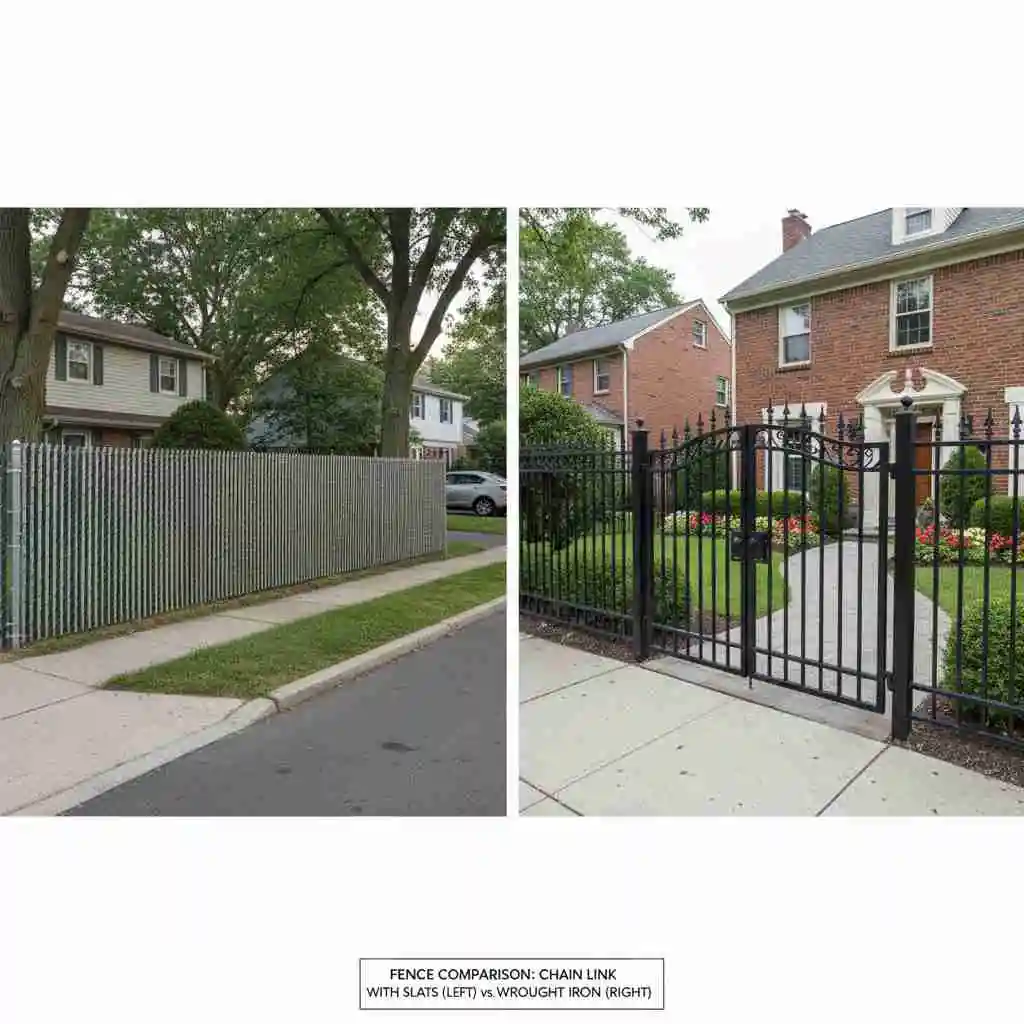
Warehouses and industrial yards trade decoration for throughput, sightlines, and durability. Chain link covers long runs quickly and accepts privacy slats or coated finishes when a site needs to block views without losing airflow. Steel costs more upfront but handles higher impact and tighter security expectations, which matters when a yard stores tools, trailers, or high-value inventory.
- Chain link: fast coverage on large lots, lower entry cost, simple panel replacement after impact damage.
- Steel: heavier posts and pickets, stronger resistance to cutting and forced entry, longer service life in high-traffic yards.
- Typical fit: loading areas, equipment yards, material and scrap storage, lots with long straight runs.
Aluminum, Wrought Iron and Vinyl for Yards That Stay On Display
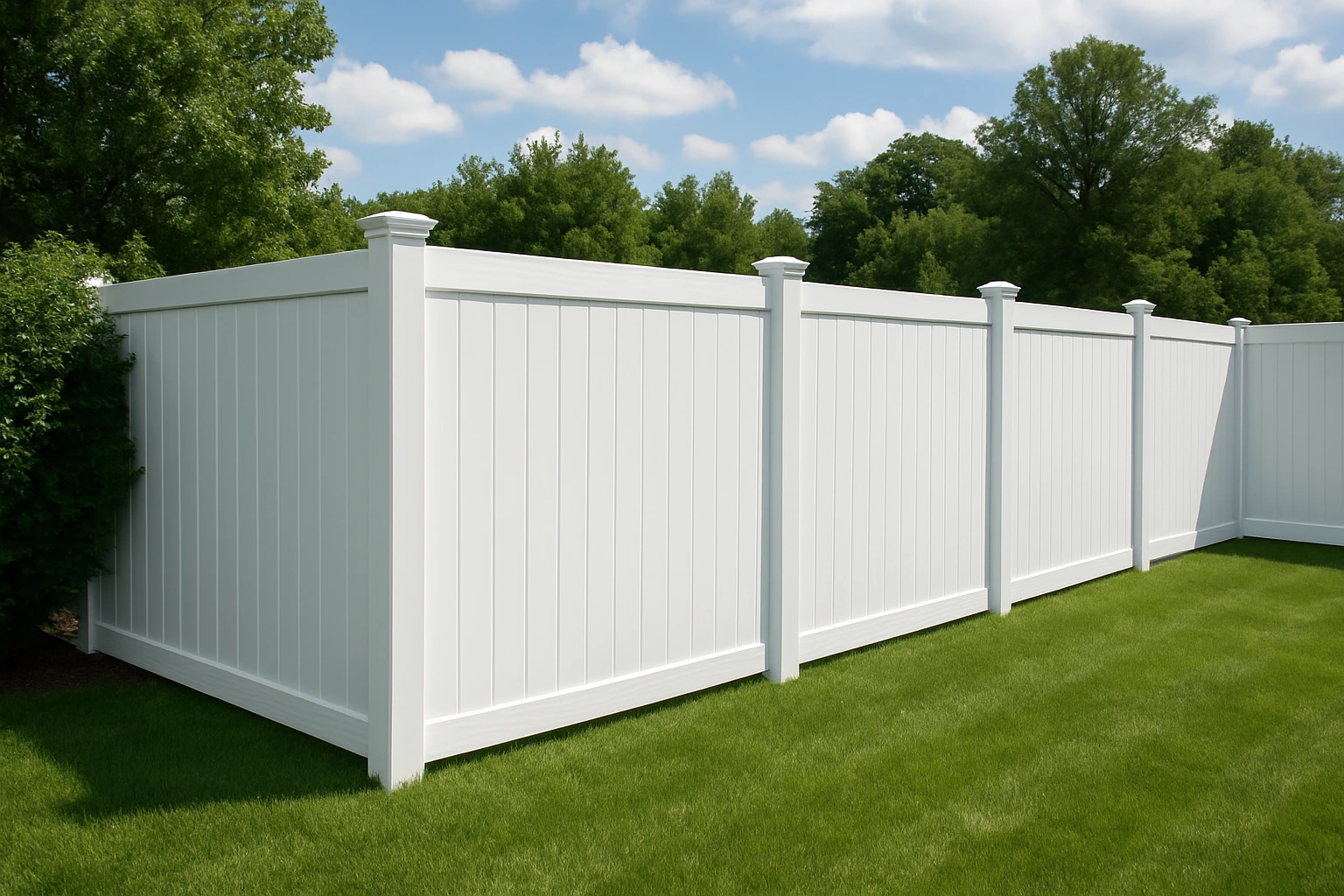
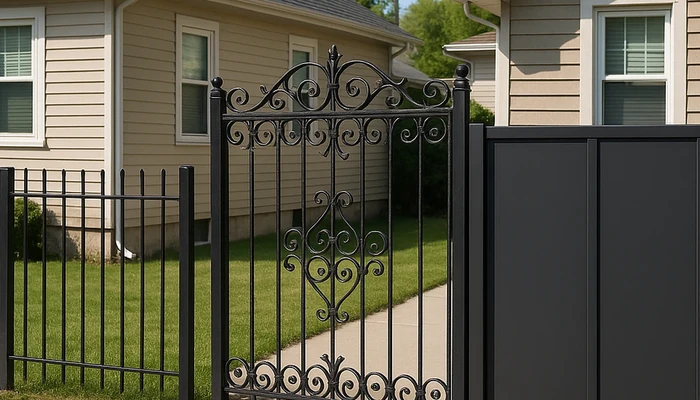
Facilities with customer traffic, street frontage, or tenant-facing entrances usually need a material that still looks maintained years later. Aluminum resists rust without repainting, wrought iron delivers a heavier ornamental profile, and vinyl screens views while shrugging off moisture. All three hold up where appearance affects how a property is judged by clients and tenants.
Wood for Screening and Enclosed Storage
Wood still earns its place on commercial sites as a screen rather than a barrier, hiding dumpster pads, mechanical equipment, or outdoor storage from view. It needs more upkeep than the metal options and should not be the choice where forced-entry resistance is the deciding factor.
Durability, Maintenance and Repair Planning
Maintenance expectations deserve as much weight as purchase cost. Galvanized and coated steel and aluminum systems typically need the least routine attention, while wood demands periodic sealing and board replacement. Knowing which parts are standard, such as posts, rails, fabric, and panels, makes commercial fence repair in Waukegan, IL far simpler when a forklift clip or storm damage takes out a section, because a single panel or rail can be swapped instead of rebuilding the entire run.
What to Compare Before You Request a Quote
Every commercial fence installation in Waukegan, IL starts with the same short list of questions. Run through them before any material is ordered:
- Security level: visual deterrent versus cut-and-climb resistance.
- Visibility: open sightlines for camera coverage versus full privacy screening.
- Height and code limits: confirm what the site and local requirements allow before ordering.
- Maintenance budget: repaint and reseal cycles versus low-touch finishes.
- Opening compatibility: sliding, swing, or cantilever operators add weight and require correct post sizing.
A short site walk usually settles the material question faster than any chart. Bring approximate linear footage, the number of drive-through openings, and your priorities on visibility and upkeep, then compare like for like. Working with commercial fencing contractors in Waukegan, IL keeps that comparison grounded in what the site can actually support.
Coverage reaches across Waukegan and Lake County, including properties that must keep operating while a perimeter is replaced in phases. See the Map of Waukegan, IL for area context, then send the property details so the comparison can be turned into real numbers. A commercial fence company in Waukegan, IL that handles both new builds and ongoing upkeep can also confirm which material will be easiest to service in later years.
 Skip to content